Why Gold’s Record Rally Is Leaving Industrial Metals Behind

Gold Rally vs. Industrial Metals: What the Divergence Means for the Economy
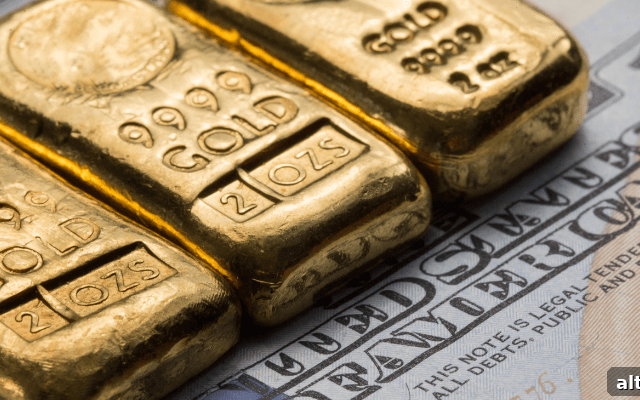
Gold prices have climbed roughly 40% this year while industrial metals such as copper are down about 10%. This striking divergence between a major safe-haven asset and a key benchmark for industrial demand is prompting investors and analysts to ask whether the market is signaling an economic slowdown, or whether gold’s surge is simply a crowded trade.
Why the Gap Matters
Markets rarely move in isolation. Copper is often viewed as a bellwether for global economic activity because of its widespread use in construction, manufacturing, electronics and infrastructure. When copper weakens, it can reflect cooling industrial demand. Gold, by contrast, is commonly seen as a store of value and a hedge against inflation, currency weakness, and geopolitical or financial uncertainty.
When both assets move in opposite directions—gold rising strongly while copper falls—it creates a clear message that investor priorities are shifting from growth to safety. That shift can be an early warning of reduced economic momentum, tighter financial conditions, or growing geopolitical risk.
Central Banks and Investor Behavior
Central banks and retail or institutional investors have been buying gold as a defensive position against inflationary pressures and political uncertainty. Central bank purchases can be particularly influential because they represent large, coordinated demand that supports prices. For individual and institutional investors, gold’s role as a safe haven becomes more attractive when confidence in markets or policy outlooks wavers.
These buying patterns tend to feed on themselves: higher gold prices attract more attention and inflows, which can push prices further up, while weaker indicators for industry and trade can reinforce selling pressure on industrial metals.
Is Gold in a Bubble?
Some observers worry that gold’s rapid rise is a sign of a speculative bubble—an asset whose price outpaces the fundamentals because the majority of market participants are buying simply because others are buying. This concern is understandable, particularly when some other financial markets, like equities, are trading near record highs and valuations seem stretched.
However, labeling gold a bubble requires more than a strong price move. It requires evidence that buyers are detached from any reasonable expectations of future returns and that buying is overwhelmingly speculative. Given gold’s historical role and the continued presence of macro risks—such as persistent inflation, central-bank policy uncertainty, or geopolitical tensions—many investors view current gains as justified defensive positioning rather than pure speculation.
Possible Scenarios Going Forward
There are a few realistic paths the market could take from here:
- Economic slowdown becomes clearer: If data reveal a sustained decline in manufacturing, trade, or corporate investment, copper and other industrial metals could weaken further while gold retains or extends its gains as a safe-haven asset.
- Risk assets correct sharply: A broad market downturn could push more capital toward perceived safe havens. In that case, gold might rise further even as stocks and industrial commodities fall.
- Confidence returns and growth resumes: If inflation eases, central-bank policies normalize, or economic indicators rebound sharply, industrial metals could recover, and gold might pull back as investors rotate back into growth-sensitive assets.
What Investors Should Watch
For those trying to interpret the signal from this divergence, key indicators to monitor include:
- Manufacturing and industrial production data, which directly affect demand for copper and similar metals
- Inflation measures and central bank communications, which influence gold’s appeal as an inflation hedge
- Sentiment indicators and flows into safe-haven assets, which can reveal whether buying is defensive or speculative
- Equity market breadth and valuation metrics, since a sharp re-pricing in stocks could shift capital into or out of gold
Conclusion
The current split—gold up about 40% this year and copper down about 10%—is a noteworthy signal. It reflects a market environment in which safety and preservation of capital are increasingly prized relative to bets on immediate industrial growth. Whether that divergence proves to be an early warning of broader economic trouble or a transitory imbalance driven by concentrated flows into gold remains to be seen. Investors should weigh both scenarios, remain attentive to incoming data, and consider diversification and risk management in light of these contrasting market signals.
Popular Topics
Picked from the archive
-
01
 Topics
Louisiana Bill Would Make Gold and Silver Legal Tender
-
02
Topics
Israel Considers Action on Iran as Oil Prices Rise
-
03
Topics
Platinum Prices Surge Toward Decade-Long Trading Range
-
04
Topics
Vietnam Ends State Gold Monopoly, Opens Market to Private Firms
-
05
Topics
Deutsche Bank Cuts S&P 500 Forecast, Wall Street Turns Cautious
-
06
Topics
ECB Cuts Rates to 2.25% as Trump Tariff Looms Over Eurozone
-
07
Topics
Gold Prices Surge as Western Investors Return
-
08
Topics
8 U.S. Cities Now Require Six-Figure Incomes to Rent