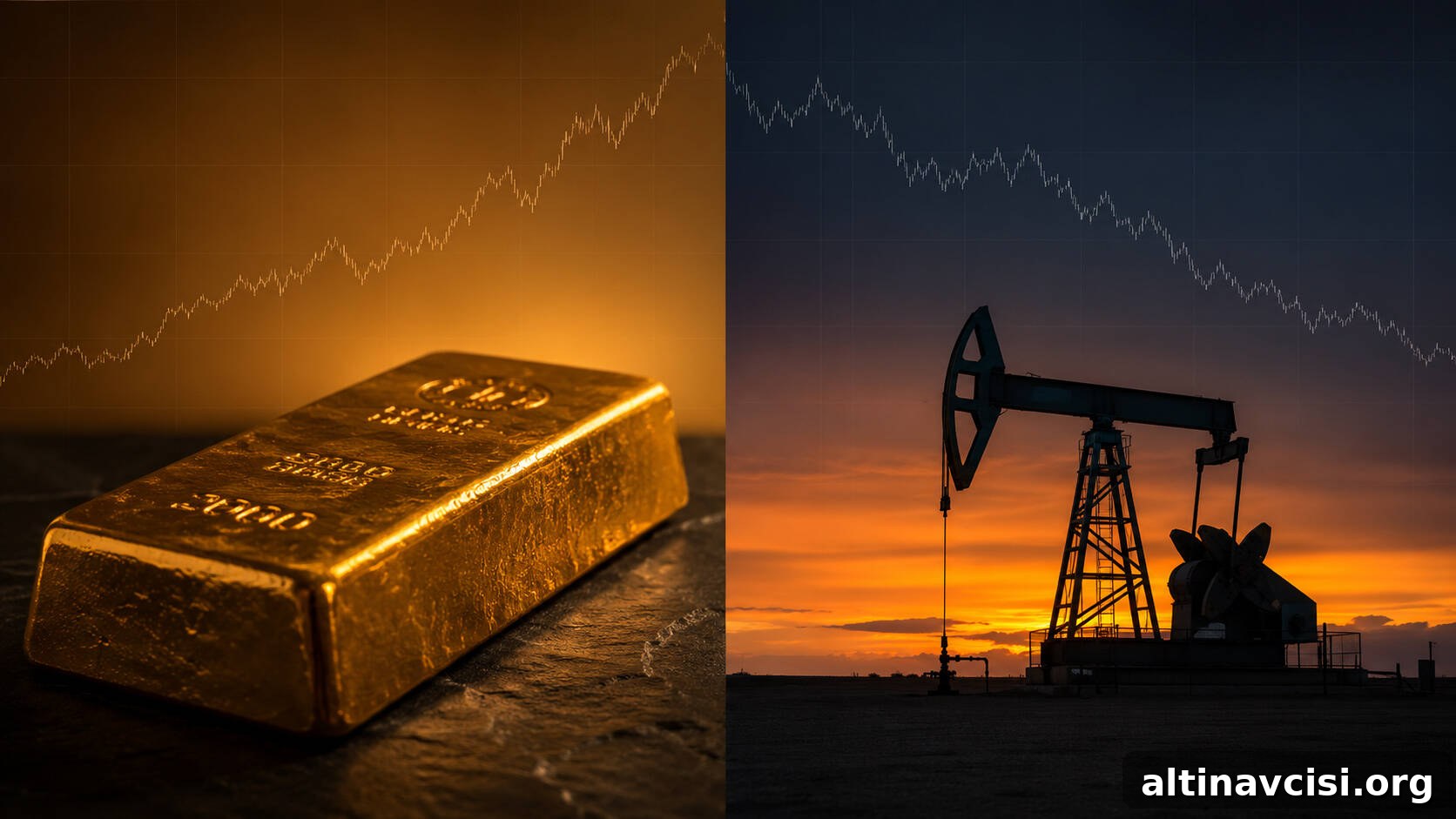
Gold and oil often tell two different stories about the economy. Gold typically rises when investors seek protection; oil rises when economic activity and energy demand are strong. That distinction is especially important today — and recognizing it can change how you think about portfolio risk and inflation protection.
In early May 2026, gold traded near $4,700 per ounce. At the same time, Brent crude swung from roughly $61 at the start of the year to an intraday peak near $126 before retreating toward $95. WTI climbed into the $105–$113 range during the same stretch, while the Brent-WTI spread widened to about $25 per barrel as disruptions in the Middle East affected Europe and Asia more than North America. In short: two major commodities moved in opposite directions for fundamentally different reasons.
That inverse pattern between gold and oil is the core story. Below is a clear look at what drives it and what it means for investors.
Why Do Gold and Oil Prices Move in Opposite Directions?
The short answer: they respond to different drivers.
Oil is a risk-sensitive, consumption-driven commodity. Its price reflects economic growth and energy demand: when growth accelerates, demand rises and oil prices climb; when growth slows, demand falls and oil weakens. Oil is also grounded in physical supply — production quotas, outages, and logistical issues can change prices quickly.
Gold is a monetary asset and a store of value. It is not consumed in the same way as oil; investors buy gold to preserve purchasing power when confidence in paper assets, currencies, or the financial system weakens. Gold tends to rise with uncertainty, persistent inflation, currency depreciation, or systemic stress.
The important point: the conditions that lift gold are often the same conditions that undermine economic activity and therefore oil demand. Over time that creates a persistent divergence. Measured statistically over recent years, gold’s correlation with crude oil is effectively negligible — illustrating the structural, not accidental, nature of the inverse relationship.
Your Gold Buying Guide Most investors overpay when they buy gold and again when they sell. This guide explains what to own — and why.
What Is the Gold-Oil Relationship?
The gold-oil relationship — sometimes described as the gold-to-oil ratio or the inverse correlation between the two — captures how they often diverge during periods of economic stress or geopolitical tension. When risk appetite and growth are strong, oil tends to outperform. When fear, persistent inflation, or monetary uncertainty dominate, gold usually leads.
This is not absolute. Both assets can rise together during broad commodity or inflation supercycles, but those episodes typically prove short-lived. Once inflationary pressure subsides, investors separate growth signals from safety signals and the divergence returns.
What Drives the Divergence Between Gold and Oil?
Three forces matter most: the US dollar, monetary policy (real interest rates), and the nature of geopolitical shocks.
The US dollar. Both commodities trade in dollars, so a weaker dollar can lift both. Gold, however, has a deeper inverse link to the dollar because it functions as a hedge against currency debasement. Oil’s ultimate anchor is supply and demand for energy rather than monetary confidence.
Monetary policy. Gold is highly sensitive to real interest rates. When real rates fall, holding a non-yielding asset like gold becomes less costly and therefore more attractive. Oil responds primarily to growth expectations; central bank policy influences oil only insofar as it affects demand.
Geopolitical shocks. The impact depends on the shock’s character. A supply disruption can spike oil prices rapidly while also creating inflation concerns that raise rate expectations. In those cases, oil and gold can move in opposite directions: oil up on tighter supply, gold down if the shock pushes up rates or reduces the attractiveness of a safe-haven trade.
Is Gold a Better Inflation Hedge Than Oil?
Yes — but it depends on the type of inflation. Oil spikes when supply-driven energy price pressure appears. That can protect against short-term, supply-led inflation. However, oil is cyclical and often falls sharply when central banks tighten and the economy slows, potentially erasing gains across a full cycle.
Gold hedges monetary debasement — the long-term erosion of purchasing power caused by sustained money-printing, fiscal deficits, or chronic currency weakness. That type of loss compounds over years and decades. Central banks increasingly treat gold as a strategic reserve asset rather than a short-lived inflation trade, which helps explain consistent central-bank buying in recent years.
How Do Gold and Oil Supply and Demand Differ?
Oil supply and demand react quickly to short-term factors: OPEC+ decisions, US shale output, weekly inventory reports, and geopolitical events can move prices within days. That responsiveness makes oil a real-time economic barometer but also a volatile hold during prolonged uncertainty.
Gold’s supply is far steadier. Mine production increases only modestly each year, and above-ground stocks dwarf annual output. As a result, gold prices are driven more by investment demand and monetary conditions than by short-term shifts in physical supply.
Recent years showed strong investment demand: ETF holdings and central-bank purchases added meaningful tonnage to global inventories, reinforcing gold’s role as a monetary asset rather than a short-term commodity play.
Does It Matter Which Commodity You Hold?
Yes. Gold and oil play different portfolio roles and are not substitutes.
Oil can act as a hedge during supply-led inflation or as a cyclical growth exposure, but it often underperforms through the recession phases that follow. Gold provides long-term protection against monetary deterioration and typically holds value when other assets face stress. Its low correlation to equities and to oil makes it uniquely positioned to preserve purchasing power when financial risks materialize.
The 2026 episode around the Strait of Hormuz illustrates this: oil surged after the disruption, while gold initially fell as rate expectations changed. When oil eased and rate-cut expectations returned, gold resumed its upward path and retained substantial year-over-year gains, underscoring its role as a monetary hedge.
Stay On Top of Gold & Silver Prices
Get important market alerts sent straight to your inbox.
People Also Ask
Why do gold and oil prices often move in opposite directions?
Gold is a monetary safe-haven that rises with uncertainty and currency weakness; oil is tied to economic growth and energy demand. The same forces that raise gold — fear, monetary instability, and currency debasement — often reduce oil demand, creating a structural divergence.
How does the gold-oil inverse relationship affect investment strategy?
They serve different functions. Gold is a long-term hedge against monetary deterioration and financial stress; oil provides cyclical exposure to growth and supply disruptions. Allocations should reflect these distinct roles rather than treating one commodity as a stand-in for the other.
What economic factors influence the gold-oil price correlation?
Key drivers are the US dollar, real interest rates, and growth expectations. A weaker dollar and lower real rates tend to favor gold; strong growth and rising energy demand favor oil. Short-lived oil-driven inflation can briefly align the two, but structural forces usually reassert the divergence.
Is gold a better hedge against inflation than oil?
For long-term monetary inflation, yes. Oil can protect during supply-driven energy shocks but is vulnerable to recessionary declines. Gold protects against gradual currency debasement and long-term loss of purchasing power.
What role does geopolitics play in driving gold and oil apart?
It depends on the shock. Supply disruptions push oil up quickly. If those disruptions trigger inflation fears and higher rates, they can suppress gold in the short term. Once supply pressures ease and monetary easing becomes likely, gold’s structural drivers typically regain strength.
So Which One Actually Protects You?
Oil signals where the economy is headed; gold signals whether your purchasing power will be preserved when it gets there. The 2026 episode demonstrated that distinction: oil became an inflation engine during a supply shock while gold briefly retreated as rate expectations changed, but gold later recovered and remained substantially higher year-over-year. For investors seeking long-term monetary protection, gold is the more reliable hedge.
SOURCES
1. U.S. Energy Information Administration — Crude oil and petroleum product prices increased sharply in Q1 2026.
2. FTSE Russell / LSEG — Research on gold as a strategic asset.
3. World Gold Council — Analysis of fiscal concerns and gold demand.
4. World Gold Council — Central bank gold reserves data.
5. Trading Economics — Crude oil historical data and market updates.
6. J.P. Morgan Global Research — Gold price outlook and research.
7. Morgan Stanley — Analysis of gold’s safe-haven status during conflict.
Disclaimer: This article is for informational and educational purposes only and does not constitute investment advice. Consult a qualified financial adviser before making any investment decisions.
You may also like:
- 7 Timeless Warren Buffett Rules for Gold & Silver Investors
- Gold vs. Bitcoin: Which Hard Asset Will Protect Your Wealth?
- Why Central Banks Sell Gold — And What It Means for Prices
- Why Gold Deserves a Permanent Spot in Your Portfolio
- Silver vs. Gold: A Clear 5-Year Investment Guide (2026–2031)
- $5,500 Gold by Q1 2027? The Central Bank Risk Driving It
- Why Gold Stabilizes — and Silver Amplifies
- COMEX Silver Coverage Ratio: Is Your Paper Silver Real?