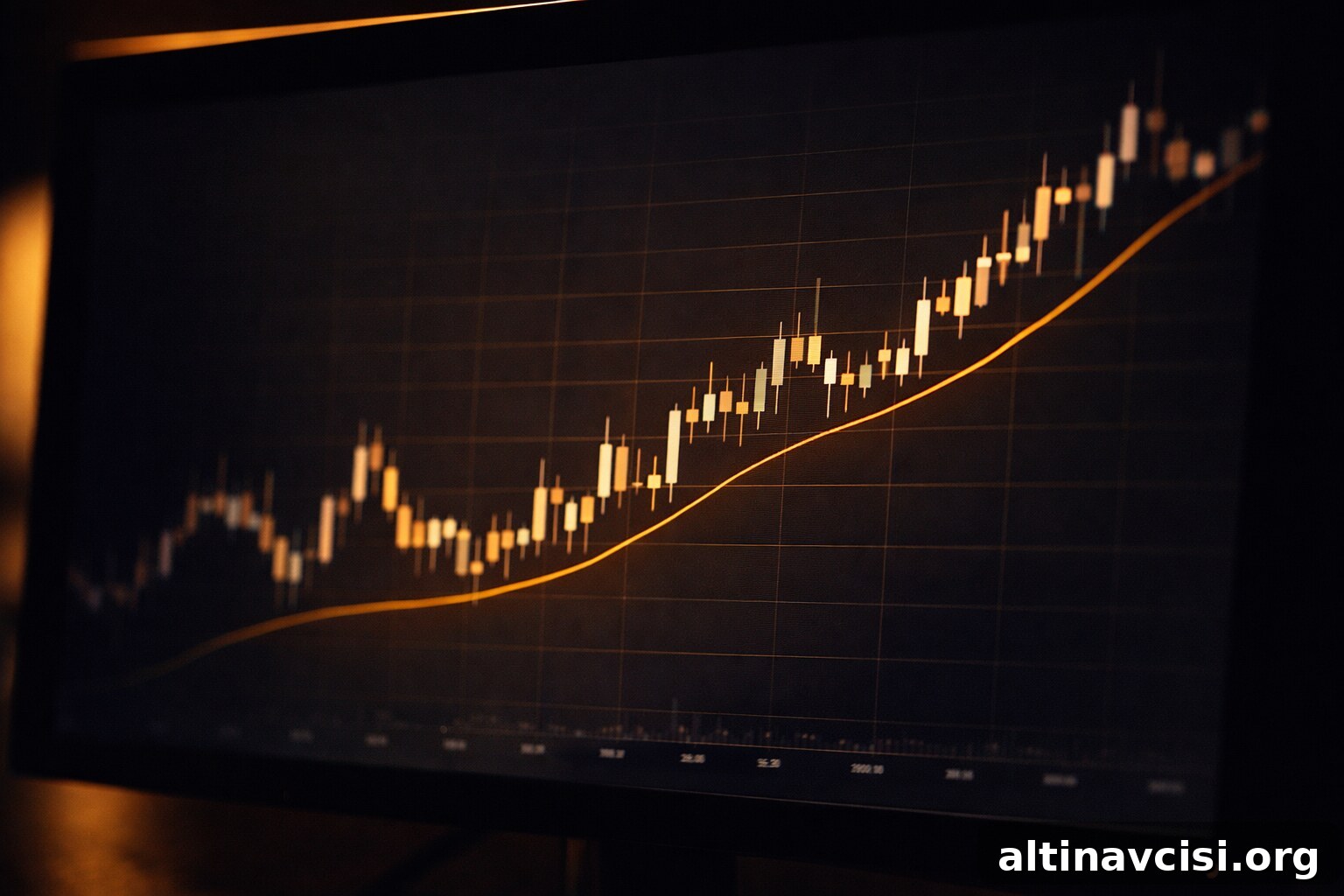
If you follow gold and silver prices, you know how quickly these markets can shift. Prices surge, pull back, consolidate and then resume movement — often within days. To filter out the noise and understand the underlying trend, many experienced precious metals investors rely on the 50-day Simple Moving Average (SMA).
This article explains what the 50-day SMA is, why it matters for gold and silver, and how to use it to make clearer, more disciplined investment decisions.
The 50-day SMA helps investors identify the medium-term trend, locate dynamic support and resistance, and time entries and exits with less emotion — all without complex tools or advanced trading experience.
What Is the 50-Day SMA?
The 50-day Simple Moving Average is a technical indicator that averages an asset’s closing prices over the most recent 50 trading days. Each new close adds to the calculation while the oldest day drops off, so the plotted line continually updates.
The SMA produces a smoothed trend line that reduces short-term volatility and highlights medium-term direction. Compared with the 200-day SMA, which tracks a longer-term trend, the 50-day SMA responds faster to momentum changes without reacting to every minor swing. That balance is why it is widely watched by traders and analysts covering precious metals.

Your Gold Buying Guide Most investors overpay when they buy gold and again when they sell. This guide explains what to own and why.
Why the 50-Day SMA Matters for Gold and Silver
Gold and silver respond to unique drivers: inflation expectations, central bank policy, geopolitical risk, and, for silver, industrial demand from sectors like solar and electronics. That mix makes trend-following tools particularly useful.
When price stays consistently above the 50-day SMA, buyers generally control the market and the medium-term trend is bullish. When price remains below the 50-day SMA, selling pressure is likely dominant and a bearish phase may be in place. Silver’s higher volatility means it crosses the 50-day SMA more often, so signals usually need extra confirmation.
Using the 50-day SMA helps investors avoid two common mistakes: panic-selling during brief pullbacks inside a healthy uptrend, and holding through the early stages of a true reversal.
The 50-Day SMA as a Support and Resistance Level
A practical use of the 50-day SMA is identifying dynamic support and resistance.
In rising markets, the 50-day SMA often acts as a floor. Pullbacks that find buyers near this average are common and can provide disciplined entry points. Conversely, in downtrends, the 50-day SMA frequently acts as a ceiling; rallies that fail at the average suggest the downtrend remains intact.
Knowing where the SMA sits helps set logical entry targets, stop-losses and position-sizing based on observable price behavior rather than emotion.
How to Read a 50-Day SMA Signal in Precious Metals
Here’s how to interpret 50-day SMA signals in practice:
Bullish signal: Price closes above the 50-day SMA after trading below it. Higher volume on the breakout strengthens the signal.
Bearish signal: Price breaks below the 50-day SMA on elevated volume, indicating momentum turning negative and potential further decline.
Trend continuation: Price that consistently rides above or below the 50-day SMA without crossing indicates a healthy trend. Pullbacks that hold above the SMA can be good opportunities to add to positions.
Flat or choppy SMA: A sideways 50-day SMA points to consolidation and is generally a poor environment for trend-following strategies.
Combining the 50-Day SMA with Other Indicators
The 50-day SMA is more effective when used with complementary indicators:
50-Day SMA + 200-Day SMA: When the 50-day crosses above the 200-day (a Golden Cross), it’s a widely followed bullish signal. The reverse (Death Cross) can indicate long-term weakness.
50-Day SMA + Volume: Moves through the SMA carry more weight when backed by above-average volume, which confirms conviction.
50-Day SMA + RSI: If price approaches the 50-day SMA from below while RSI recovers from oversold levels, the rebound is often stronger.
Used together, these tools improve the quality of market reads and reduce false signals.
Gold vs. Silver: Does the 50-Day SMA Behave Differently?
Yes. Silver’s smaller market size and industrial demand make it more volatile, so it crosses the 50-day SMA more often with less conviction. Traders typically wait for confirmation — for example, a second consecutive close on the new side of the SMA or supporting volume — before acting on silver crossovers. Gold tends to provide cleaner, more reliable 50-day SMA signals and is generally the steadier of the two metals.
What the 50-Day SMA Can and Can’t Tell You
The 50-day SMA is a lagging indicator based on past prices. It does not predict future moves. What it offers is a consistent, objective framework for judging whether a trend remains intact. Used regularly, it helps investors avoid emotionally driven decisions during volatile periods — for example, resisting the urge to sell into a shallow pullback when price still sits above the 50-day SMA.
Start Using the 50-Day SMA in Your Precious Metals Strategy
The 50-day SMA is simple to apply and is available on most charting platforms. The key is consistency: check the indicator regularly, combine its signals with broader market context and use it to guide measured decisions rather than reacting to headlines.
Whether you’re building a long-term gold position or managing active exposure to silver, tracking price relative to the 50-day SMA can give you an important edge in a market that often moves fast.
Stay On Top of Gold & Silver Prices
Get important market alerts sent straight to your inbox.
People Also Ask
What is the 50-day SMA and how does it apply to gold and silver prices?
The 50-day SMA averages an asset’s closing price over the past 50 trading days. For gold and silver it smooths short-term moves and reveals the medium-term direction, helping investors judge whether a bullish or bearish phase is underway.
How can the 50-day SMA help identify trends in gold and silver markets?
When price remains above the 50-day SMA, buyers are usually in control and the medium-term trend is bullish. When price falls and stays below the SMA, selling pressure tends to dominate. Tracking this relationship helps separate short-term noise from meaningful trend changes.
How do support and resistance levels relate to the 50-day SMA in gold and silver trading?
In uptrends the 50-day SMA often acts as dynamic support where buyers re-enter on pullbacks. In downtrends it can serve as resistance where rallies stall. These levels help set entry points, targets and stop-losses using observable price behavior.
Does the 50-day SMA work the same way for gold and silver?
Not exactly. Silver is more volatile and crosses its 50-day SMA more frequently. Traders typically seek additional confirmation for silver signals, while gold often gives cleaner SMA signals due to its relative stability.
What are the limitations of using the 50-day SMA for precious metals investing?
The 50-day SMA is lagging and based on historical prices, so it cannot predict future moves. For better results, pair it with tools like the 200-day SMA, RSI or volume analysis. Treat it as one component of a broader strategy, not a standalone solution.
SOURCES
1. Investopedia — Why Is the 50 Simple Moving Average So Common for Traders and Analysts?
2. TradingSim — 6 Guidelines for How to Use the 50 Moving Average
3. Sprott Money — The 80/50 Rule: Gold & Silver Explained
4. Ainsley Bullion — Gold’s 8-Year Cycle Shows Incredibly Long-Term Potential Ahead
5. GoldSilver.com — Best Tool to Track Gold and Silver Prices Effectively
6. GoldSilver.com — Silver Market Shock: CME Margin Hike Signals Bull Market
7. GoldSilver.com — Gold & Silver Market News and Analysis
This article was prepared by the GoldSilver.com Editorial team for educational and informational purposes only. It is not investment advice. Always do your own research or consult a qualified financial advisor before making investment decisions.
You May Also Like
- Best Tool to Track Gold and Silver Prices Effectively
- MARKET CRASH IMMINENT? The “Blood Indicator” Warns of Trouble Ahead
- Barclays’ Market Euphoria Indicator Hits Bubble Territory as Speculation Soars
- Gold On Pace for Historic 91.5% Annual Return Through Q1 2025
- “This Is Going to Be Horrific” — The Crisis on the Horizon