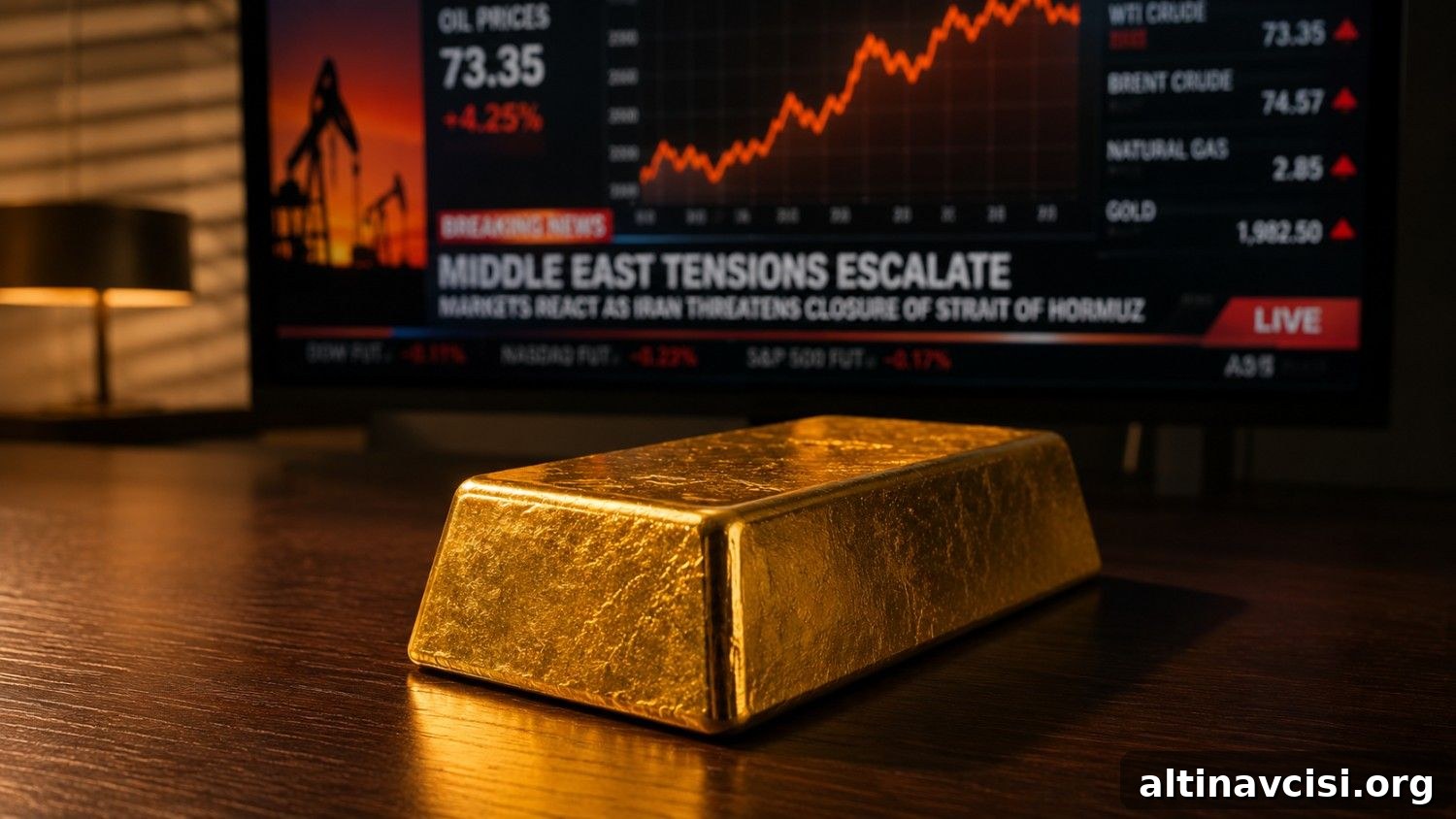
Every escalation involving Iran in 2026 has pushed oil prices higher, brought inflation concerns back into focus, and—counterintuitively—put downward pressure on gold. Today’s developments confirm that same pattern.
On July 10, 2026, President Trump posted on Truth Social that the United States would continue talks with Iran but declared the ceasefire “OVER.” U.S. forces carried out strikes on Iranian targets for a second consecutive day. Iran’s chief negotiator, Mohammad Bagher Ghalibaf, warned of an “all-out defense” if the U.S. violates the Memorandum of Understanding signed last month. The administration also announced new sanctions against Tehran following attacks on commercial vessels in the Strait of Hormuz.
As of 3:30 p.m. ET, spot gold traded near $4,102—down about $21, or 0.5%—while silver sat near $59.68, also off roughly 0.5%. Both metals opened the week higher but retreated as each new escalation headline hit. That outcome runs counter to what many investors expect when geopolitical tensions spike.
Why Does Iran Conflict Push Gold Down Instead of Up?
The answer lies in the impact these events have on inflation expectations and interest-rate outlooks, not in traditional safe-haven demand.
When attacks in the Strait of Hormuz lift oil prices, the effect is immediate. Brent crude jumped nearly 6% over the week, and rising oil feeds directly into headline consumer-price measures. Higher CPI expectations increase the likelihood of further Federal Reserve rate hikes. Market tools showed roughly a 50% chance of a September rate increase, a level that has constrained gold through much of July.
The link is straightforward: Iran strikes → oil prices rise → inflation expectations increase → Fed hike probability rises → real yields climb → gold weakens.
Because gold does not pay interest, higher real yields raise the opportunity cost of holding it. Each basis point of upward pressure on real yields—the difference between nominal Treasury yields and inflation expectations—makes non-yielding gold relatively less attractive. That logic explains why gold fell nearly 2% when the ceasefire was first declared over; today’s smaller move reflects that the market had already priced much of that risk.
The Edge Every Investor Needs
Smarter precious-metals investing starts with timely insights. Our Nuggets Newsletter delivers market context, Fed updates, and educational analysis straight to your inbox.
Why Gold’s Non-Reaction Today Is Actually Telling
The muted reaction on July 10 carries its own message.
Despite a substantial escalation—new sanctions, continued air strikes, a senior Iranian warning, and an emergency UN Security Council session—gold fell only about 0.5%. That limited move signals that markets have already priced a considerable portion of hawkish risk into rates and yields. The Fed’s June minutes showed a divided committee, with several members still projecting at least one more hike even as the policy rate was left unchanged. With those expectations baked in, each additional Iran headline has a smaller incremental effect on rate pricing.
A second factor is the market’s search for direction. Gold’s daily range on July 10 ran roughly $62, from about $4,073 to $4,135—more a sign of indecision than conviction. Real-time models such as the Cleveland Fed’s inflation nowcast have shown softer month-over-month readings for June and July, influenced by earlier declines in oil after the initial ceasefire period. When the official June CPI is released, its reading will likely influence gold more strongly than any single geopolitical event.
What the Sound Money Lens Shows About This Setup
Short-term headline noise—ceasefire on, ceasefire off, new sanctions, more strikes—has pushed gold both ways and hidden the longer-term backdrop.
That longer-term picture remains unchanged. The U.S. continues to run a fiscal deficit while the Federal Reserve keeps rates at levels that increase the real cost of servicing debt. The national debt is still rising. At the same time, central banks are continuing to accumulate gold: for example, the People’s Bank of China added almost 15 tonnes in June 2026, its largest single-month purchase in nearly three years, even as speculative investors reduced positions during a difficult quarter. Reserve managers buying through a quarter of weak speculative flows point to policy-driven demand rather than a short-term trade.
In the near term, gold’s direction now depends on the upcoming CPI release and scheduled testimony from Fed Chair Kevin Warsh. A June CPI print that comes in below about 3.8% would likely lower the odds of a September rate increase and ease the real-yield headwind that has capped gold since May. If that happens, the geopolitical risk premium and steady central-bank demand would become the primary drivers, rather than the latest missile strike.
The ceasefire is over, but gold’s most consequential test will arrive with the next economic data—less than 96 hours away.
Stay On Top of Gold & Silver Prices
Get timely market alerts sent straight to your inbox.
SOURCES
1. CNN — Trump Again Declares Ceasefire Over but Says U.S. Has Agreed to Talks with Iran, July 10, 2026
2. GoldSilver — Live Gold and Silver Spot Prices, July 10, 2026
3. CME Group — FedWatch Tool, September 2026 Rate Probability, July 10, 2026
4. Trading Economics — Gold Price, July 10, 2026
5. Yahoo Finance — Gold Prices Today, Friday, July 10, 2026
6. Benzinga — Cleveland Fed Inflation Nowcast Turns Negative for June and July, July 6, 2026
7. Bloomberg — Gold Holds Drop as U.S. Strikes in Iran Cloud Rate-Hike Outlook, July 7–8, 2026
8. BigGo Finance — Fed Chair Warsh to Testify Before Congress July 15, July 8, 2026
Disclaimer: This article is for informational purposes only and does not constitute financial or investment advice. Consult a qualified financial adviser before making investment decisions.
You May Also Like:
- HSBC Cut Its Gold Forecast by $304. Then Said Gold Will Hit $4,750 by Year-End.
- The Fed Named AI Its Top Inflation Risk. Gold Noticed.
- Five Days From Now, Two Numbers Will Decide Gold’s Second Half
- Bank of America Cut Its Gold Forecast. The Reason Is More Bullish Than It Looks.
- The Fed Is Split 9 to 8. Gold and Silver Are Paying the Price — Until July 14.
- Gold Is Sitting on $4,000. The World Gold Council Has a Model for What Happens Next.