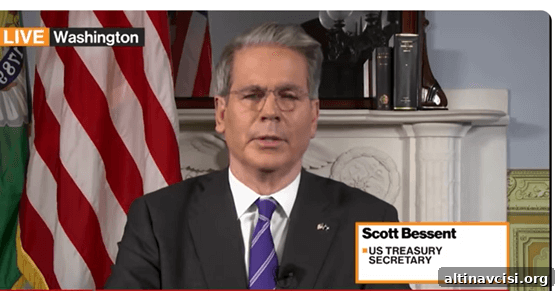
Scott Bessent argues that the Federal Reserve should conduct a comprehensive review of its non-core functions to guard against “mission creep” that could undermine its independence in setting monetary policy. He warns that taking on activities beyond its essential responsibilities can create conflicts that erode public trust and weaken the Fed’s ability to focus on controlling inflation and stabilizing the economy.
Bessent also raised concerns about the Fed’s decision to launch an extensive renovation project while it is reporting financial losses. He highlighted that undertaking large capital projects in such a context heightens questions about the institution’s accountability and transparency. According to him, major expenditures should be carefully justified and communicated, especially when the central bank faces fiscal strain.
In his view, a structured review would examine all ancillary programs and initiatives the Fed has adopted in recent years—assessing whether each aligns with the core mandate of price stability and maximum employment. The review should identify activities that could be scaled back, delegated, or transferred to other agencies better suited to carry them out. By narrowing its focus to primary responsibilities, the Fed could reduce potential conflicts of interest and preserve the public’s confidence in its independence.
Transparency is central to Bessent’s recommendations. He suggests clearer reporting on non-monetary activities, more rigorous cost-benefit analyses for large projects, and stronger oversight mechanisms to ensure decisions are made in the public interest. Enhanced disclosure would allow lawmakers, market participants, and the public to better evaluate whether Fed initiatives serve monetary-policy goals or represent an expansion into unrelated areas.
Regarding the renovation, Bessent contends that timing matters. Large-scale capital projects should be prioritized only after the Fed demonstrates stable financial footing and provides a compelling rationale tied to its mission. Without such justification, expensive renovations risk appearing as discretionary spending that detracts from the institution’s primary purpose and invites scrutiny from stakeholders concerned about fiscal stewardship.
He emphasizes that preventing mission creep and improving transparency are not about limiting the Fed’s ability to act when necessary, but about preserving clear boundaries that maintain credibility. A central bank perceived as overreaching or engaging in activities beyond its remit can face political pressure that compromises its policy independence—an outcome that would be costly for the economy.
Ultimately, Bessent calls for a careful reexamination of the Fed’s non-core roles and spending choices, including capital projects, to ensure they align with its essential mandate. Such a review, paired with stronger disclosure and oversight, would help safeguard monetary-policy independence and strengthen public trust in the institution.