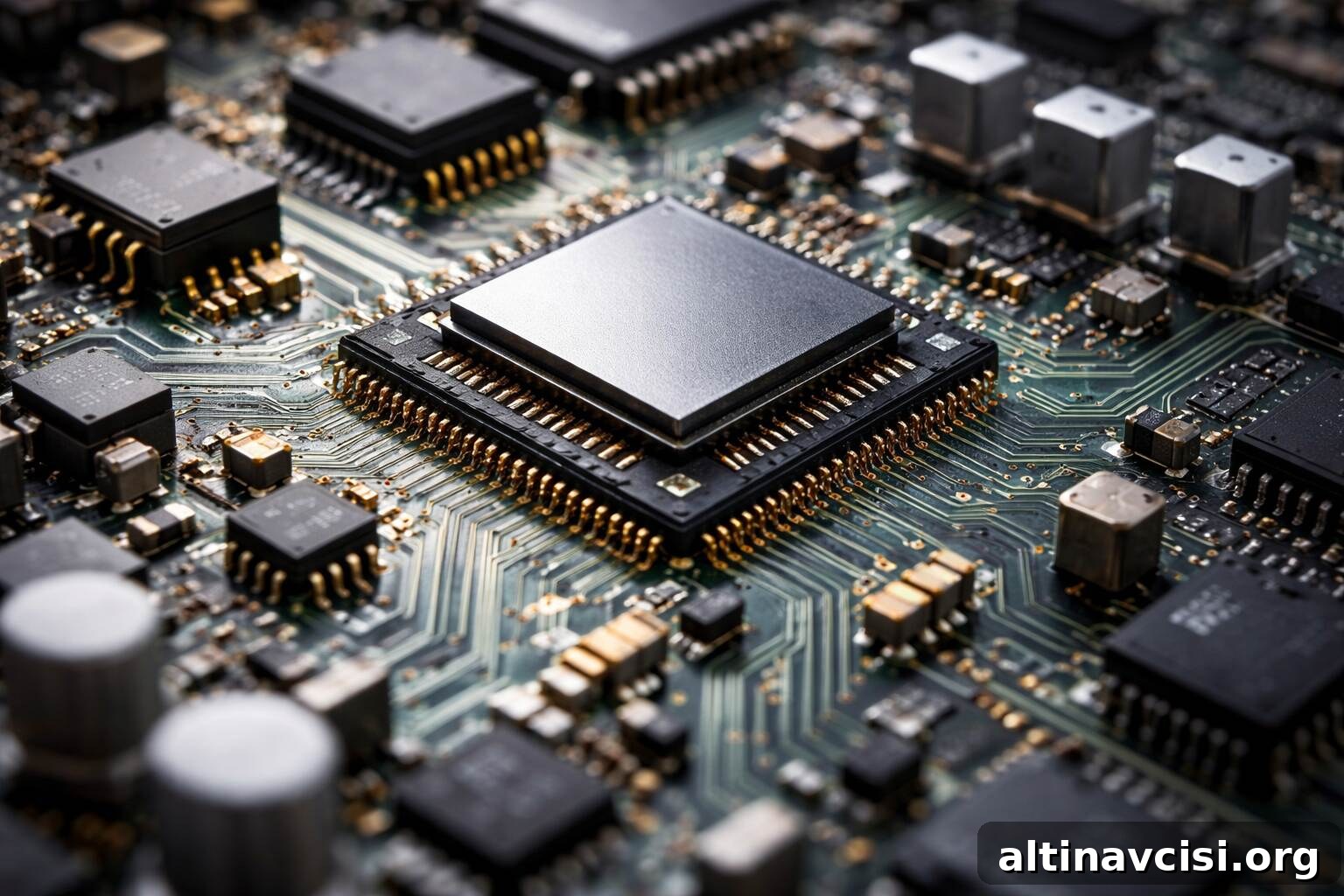
Every AI query you run — from image generation to large-scale reasoning and code generation — depends on physical infrastructure: servers, processors, cooling systems, and power distribution. Woven through much of that hardware is a metal most people associate with coins or investments: silver.
Silver.
The AI buildout is one of the most materials-intensive infrastructure booms in recent memory. The five largest U.S. hyperscalers plan to invest $736 billion in data centers in 2025–2026 combined. Global data center power demand is forecast to rise 165% by 2030 versus 2023 levels. IT power capacity has expanded dramatically since 2000 — from under 1 gigawatt to nearly 50 gigawatts today. That scale of growth happens in hardware, and hardware needs silver.
Key Facts: Silver and AI Infrastructure
- Global data center power demand is forecast to grow 165% by 2030 vs. 2023 (Goldman Sachs Research, 2025).
- The five largest U.S. hyperscalers plan to invest $736 billion in data centers in 2025–2026 (Goldman Sachs Research, 2025).
- Silver electronics and electrical demand reached a record 465.6 million ounces in 2024 — a 4% year-over-year gain (Silver Institute, World Silver Survey 2025).
- Total silver demand exceeded 1.2 billion ounces in 2024, with industrial applications accounting for more than half (Silver Institute, World Silver Survey 2025).
- The silver market has run a structural supply deficit for five consecutive years (2021–2025) (Silver Institute, World Silver Survey 2025).
- The cumulative silver supply shortfall from 2021 through 2025 is approximately 820 million ounces — roughly equal to a full year of global mine production (Silver Institute, World Silver Survey 2025).
Does AI Actually Use Silver? Here’s Exactly Where It Shows Up
Silver isn’t in the AI model software; it’s embedded throughout the physical systems that enable models to run: power, cooling, connectors, and signal pathways. The primary application areas are:
1. Power Distribution and High-Cycle Switching
AI data centers consume far more power per rack than traditional servers. Standard server racks draw 10–15 kW; AI racks often require 60–130 kW or more. That scale requires robust, reliable switching and distribution hardware. Silver is the preferred material in circuit breakers, relays, and switchgear because it resists arc erosion and oxidation better than practical alternatives. Silver-plated copper busbars and silver contact points preserve efficiency over millions of cycles. Although each component contains only small amounts of silver, the reliability requirement is absolute: contact failure in a live data center has severe consequences.
2. Connectors and High-Speed Interconnects
Servers and accelerators rely on physical connectors — PCIe slots, backplane contacts, power plugs, and high-speed signal interfaces. Silver plating is standard because silver has the highest electrical conductivity of any element at room temperature. In systems carrying enormous data throughput under sustained load, connector resistance creates heat and degrades signal quality. Even small inefficiencies across millions of daily queries compound into significant operational costs.
3. Thermal Management: Keeping AI Chips From Throttling
AI processors run hot and often operate at full load for extended periods. Thermal interface materials (TIMs) bridge microscopic gaps between chips and cooling solutions. Silver-loaded TIMs — micronized silver particles suspended in a carrier — offer far better thermal conductivity than many ceramic alternatives and have long been used in professional CPU and GPU cooling. Although the highest-density training clusters are moving toward direct liquid cooling, many server-class machines still depend on silver-enhanced TIMs to avoid throttling and maintain performance.
4. Printed Circuit Boards and Conductive Inks
Silver-based conductive inks and traces on PCBs carry both power and high-frequency signals inside servers, networking equipment, and accelerators. Silver’s low resistivity preserves signal integrity as clock speeds and data rates increase. In 2024, silver electronics and electrical demand — which includes PCB applications, connectors, and 5G hardware — reached a record 465.6 million ounces (Silver Institute, World Silver Survey 2025).
5. 5G: The Infrastructure That Feeds AI
AI services depend on networks to connect users and edge devices to cloud resources, and 5G is central to that picture. The 5G rollout relies on silver’s conductivity to minimize latency and handle large data volumes. As AI drives greater 5G adoption, and 5G expands to support AI workloads, silver demand grows in a reinforcing loop.

Your Gold Buying GuideMost investors overpay when they buy gold and again when they sell. This guide explains what to own and why.
Why Not Just Use Copper?
Copper is the default conductor for many applications and performs well for bulk power transmission. The trade-off between copper and silver is context-dependent: copper’s conductivity is about 94% that of silver, which is acceptable over long runs. In precision contact points, high-speed connectors, and high-cycle switching, the smaller difference in conductivity matters. Under sustained, extreme loads, minor inefficiencies add heat and wear, and the margin between reliable operation and failure can hinge on material choice.
Oxidation also plays a role: copper oxidizes in air, while silver resists surface oxidation under normal conditions. Contacts that open and close millions of times need a surface that remains clean; silver-plated contacts last longer and perform more predictably. Economically, the silver content per server is small, so substituting cheaper materials yields limited savings while risking significant operational costs if components fail.
Is the Silver Market Already Strained?
Yes. The silver market has been in a supply deficit every year from 2021 through 2025, with cumulative shortfalls approaching 820 million ounces — roughly a full year of global mine output. Those deficits have been filled by drawing down above-ground inventories, which are finite and declining.
Supply responsiveness is limited because 70–80% of silver is produced as a byproduct of base-metal mining (zinc, lead, copper). Production therefore follows base-metal economics rather than silver prices. Primary silver mines are uncommon, and bringing new primary production online requires years of permitting, capital, and development. As a result, supply cannot quickly scale to match sudden demand increases.
AI infrastructure adds to demand already driven by solar, electric vehicles, and 5G. Reports identify data centers and AI as contributors to projected industrial demand growth through 2030. Governments have classified data centers as critical infrastructure in several jurisdictions, providing incentives and fast-track approvals that tend to insulate AI-driven demand from economic cycles.
What Does a Persistent Deficit Mean for Silver Prices?
Short-term price forecasts are inherently uncertain, but the structural picture is clear: multiple long-term industrial demand drivers are pulling on a supply base that responds slowly. Silver is being drawn by solar, EVs, 5G, defense modernization, and AI — many tied to multi-decade commitments or government mandates. Each year of deficit lowers inventory buffers, making a reprice more likely over time.
Because silver serves both industrial and monetary roles, competing buyer categories increase price sensitivity. The question is less whether a reprice will occur and more when it will happen and how much of that adjustment is already reflected in market prices.
Stay On Top of Gold & Silver Prices
Get important market alerts sent straight to your inbox.
People Also Ask
Does AI infrastructure use silver?
Yes. While silver is not part of AI software, it is used extensively in the hardware that runs models: power switching systems, high-speed connectors, thermal interface materials, circuit board conductive inks, and 5G network hardware.
Why is silver used in data centers instead of copper?
Silver has the highest electrical conductivity of any element and resists surface oxidation under normal conditions. In high-cycle switching and precision connectors, these properties translate to greater long-term reliability. The amount of silver per server is small, but substituting it can introduce unacceptable performance risk.
Is AI demand for silver significant enough to affect the market?
AI is one of several concurrent industrial demand drivers — solar, EVs, and 5G among them. The silver market was already in deficit before AI intensified demand. Total demand topped 1.2 billion ounces in 2024, and supply has fallen short since 2021. AI adds persistent, policy-supported demand to an already tight market.
Can silver be substituted in AI hardware?
Partially. Copper is suitable for bulk power transmission, but in precision connectors, contact points, and certain thermal applications, silver’s conductivity and resistance to oxidation present real engineering advantages. Industry projections indicate industrial silver demand will continue to grow, suggesting large-scale substitution is not practical in many critical applications.
What is the silver supply deficit?
Since 2021, global silver consumption has exceeded mine production each year. The cumulative shortfall through 2025 approaches 820 million ounces — roughly one full year of global mine output. Because most silver is produced as a byproduct of base-metal mining, supply cannot quickly adjust to rising demand, and the deficit has been covered by drawing down finite inventories.
Silver Institute December 2025. silverinstitute.org
Silver Institute, World Silver Survey 2025, April 2025. silverinstitute.org
Goldman Sachs Research, “How AI Is Transforming Data Centers and Ramping Up Power Demand,” August 2025. goldmansachs.com
Goldman Sachs Research, “AI Is Poised to Drive 160% Increase in Data Center Power Demand,” May 2024. goldmansachs.com
Dell’Oro Group, quoted in CoreSite, “AI and the Data Center: Driving Greater Power Density,” December 2024. coresite.com
This article is for informational purposes only and does not constitute financial or investment advice. Always consult a qualified financial advisor before making investment decisions.
You May Also Like:
- Gold Price Forecasts for 2026, Revisited After Q1
- How to Read the Gold-Silver Ratio — And What to Do About It
- Is a Policy Reversal Coming? What the Conflict Pressure Index Means for Gold
- Gold ETFs Are Booming. But Do You Actually Own Gold?
- Silver Demand by Sector: Industry, Jewelry & Investment
- Small Market, Big Swings: Why Silver Is More Volatile Than Gold
- How to Roll Over Your 401(k) Into a Gold IRA