Daily News Nuggets | Today’s top stories for gold and silver investors
February 10th, 2026 | Brandon Sauerwein, Editor
Safe Haven Demand Powers Precious Metals Rally
Gold has climbed back above $5,000 an ounce, extending an extraordinary rally to record levels. The rebound followed a turbulent stretch that included the metal’s biggest weekly sell-off in decades, then a rapid recovery as buyers stepped in to purchase the dip.
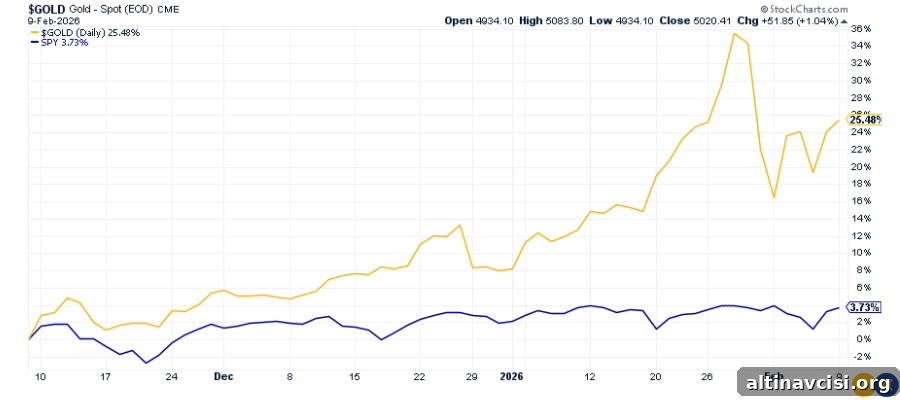
This resilience reflects growing safe-haven demand amid geopolitical tensions and mounting economic uncertainty. A softer U.S. dollar has also supported prices by making gold more attractive to international buyers. Central bank purchases remain an important foundation for the market: China has continued buying through its 15th straight month, underscoring a deliberate effort to diversify reserves away from dollar-heavy assets.
Investors are watching key U.S. data this week, including inflation readings and the January jobs report, which could alter expectations for Federal Reserve rate cuts. For market participants, gold’s ability to hold elevated levels signals that investors may be pricing in policy risk, slower growth, and the prospect that financial conditions remain tighter for longer.
The Edge Every Investor Needs
Smarter precious metals investing starts here. The Nuggets Newsletter delivers market insights, Fed updates, global trends, educational videos, and more.
Silver Bounces Back: 7% Rally Sparks Bullish Calls
After a volatile week, silver jumped roughly 7% on Monday, ending a choppy stretch and restoring interest in precious metals. The move mirrored strength in gold and prompted analysts to suggest both metals may be positioning for another run toward, or past, recent highs.
The rebound reflects a mix of macro drivers: rising economic uncertainty, a weaker dollar, and lingering inflation concerns combined with slower growth expectations. These conditions tend to favor hard assets over higher-risk investments.
Volatility remains elevated and some risk models still point to possible pullbacks. Nonetheless, many strategists view silver’s recovery as part of a broader market reset rather than a fleeting bounce. Bullish scenarios are gaining traction as investors reassess silver’s dual role as both an industrial commodity and a defensive store of value.
That renewed interest is visible not only in trading activity but also in physical demand.
The Affordable Hedge: Buyers Pivot to Silver
In Pakistan, rising gold prices are pushing many consumers toward silver as a lower-cost way to participate in the precious metals rally. With gold trading above $5,000 an ounce, buying even modest amounts has become prohibitively expensive for many households, while demand for tangible assets remains strong.
Silver’s lower price point is increasing its appeal for both investment and jewelry. Local jewelers report growing interest in silver bars and coins as traditional gold purchases decline. For many buyers, silver offers a practical alternative when gold is out of reach.
Gold continues to hold cultural significance, but affordability is reshaping buying behavior. Silver’s relative affordability and recent price strength are attracting new buyers, especially in high-inflation environments, reflecting a global pattern of consumers seeking value while maintaining financial protection.

The Financial System Isn’t Safer — And You Know It
As risks mount, learn why gold and silver are expected to remain relevant in 2026 and beyond.
Hidden Tax: How Tariffs Are Raising Consumer Costs
New research indicates that broad U.S. import tariffs are quietly increasing household expenses. Analysts estimate the average American household paid about $1,000 in tariff-related costs in 2025, and that figure could rise toward $1,300 this year if current policies remain in place.
Tariffs on goods from electronics to automobiles act like a consumer tax. Although importers remit the levies at the border, most of the cost is passed on to buyers. A report from the Kiel Institute finds Americans absorb roughly 96% of the tariff burden, which challenges the notion that foreign producers shoulder these costs.
The effect stretches beyond trade balances: higher import costs feed into everyday prices and complicate the inflation outlook. That pressure dampens household spending when consumers already face rising living costs and tighter financial conditions.
China Quietly Pulls Back from U.S. Treasuries
China is reportedly accelerating a gradual move away from U.S. Treasuries, urging state-linked banks to reduce exposure to dollar-denominated debt. The guidance appears driven by market volatility and heightened geopolitical risk.
Regulators have asked banks to limit new Treasury purchases and pare back oversized holdings as part of a broader strategy to diversify foreign-exchange reserves and lower concentration risk. China’s Treasury holdings have fallen from prior peaks, reflecting a longer-term caution about heavy reliance on U.S. assets.
So far, global bond markets have remained calm, with yields and prices largely stable. But sustained foreign selling could push U.S. yields higher and weigh on the dollar—conditions that typically support gold and other non-dollar assets.
Stay On Top of Gold & Silver Prices
Get important market alerts sent straight to your inbox.
You May Also Like
- Gold Holds Above $5,000 as Hedge Funds Brace for Turbulence
- Gold and Silver Rally Through Ongoing Market Volatility
- Gold Rebounds as Fed Risk, Weak Jobs, and Crypto Stress Collide
- Gold (+6%) and Silver (+10%) Stage Dramatic Comeback
- JP Morgan Sees $6,300 Gold After Historic Crash
- Gold’s Week: $9T Swing, Trump’s Fed Pick, and Record Premiums