Daily News Nuggets | Today’s top stories for gold and silver investors
December 10th, 2025
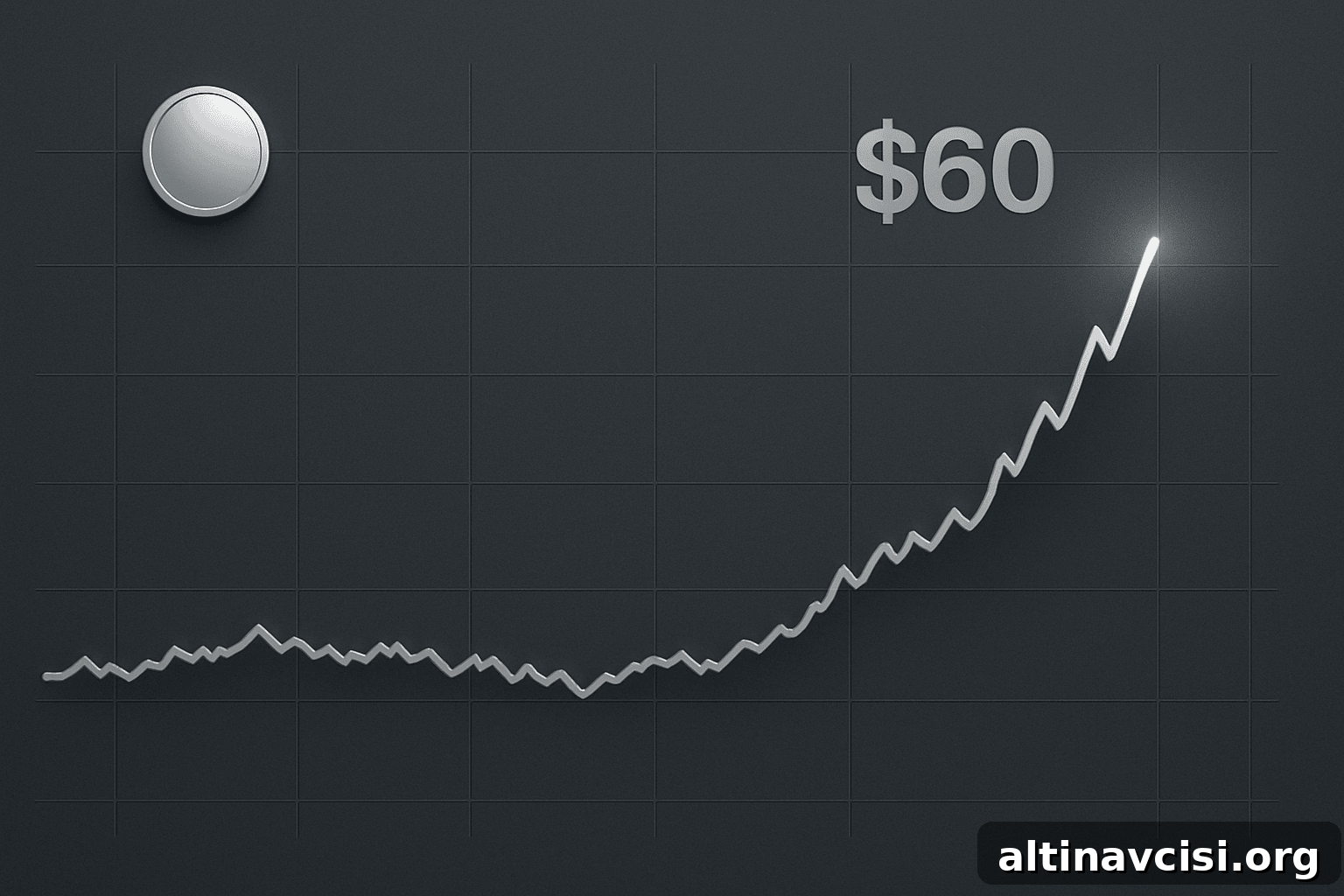
Silver Breaks $60 for First Time in History
Silver surged to record highs this week, climbing above $60 per ounce for the first time ever. The metal reached an intraday high of $61.44, capping a year in which its price more than doubled — outpacing gold’s roughly 60% gain.
Several factors are lifting silver: expectations of Federal Reserve rate cuts make non-yielding assets more attractive, the U.S. dollar has weakened, and industrial demand from solar panels, electric vehicles and semiconductors continues to grow. Crucially, silver is experiencing its seventh consecutive year of supply deficits. London vault inventories have fallen from about 31,000 metric tons in 2022 to roughly 22,000 today, tightening physical availability.
That physical shortage has pushed borrowing costs sharply higher — reported at times near 200% annualized — and created logistical pressure as traders rush to secure and move bars to meet delivery deadlines. With the gold-silver ratio near multi-year lows, investors who find gold expensive are increasingly turning to silver for similar portfolio protection at a lower cost. Institutional buyers, not just retail investors, are adding to the current demand surge.
Stay On Top of Gold & Silver Prices
Get important market alerts sent straight to your inbox.
Central Banks Ramp Up Gold Buying to Highest Level This Year
Central banks accelerated gold purchases in October, buying 53 tonnes — the largest single-month total of 2025. Poland and Brazil were among the biggest buyers, each adding about 16 tonnes. Poland’s purchases brought its holdings to a record level, while Brazil continued a renewed buying streak after a multi-year pause.
Through October, year-to-date central bank purchases reached approximately 254 tonnes, making 2025 one of the strongest years for official gold accumulation this century. Since 2022, central banks have added more than 1,000 tonnes annually, more than double the pace seen in the 2015–2019 period. That sustained demand reflects a broader strategy to diversify reserves away from dollar-denominated assets amid geopolitical tensions and economic uncertainty.
Analysts note that, for the first time in decades, central banks now hold levels of gold comparable to other major reserve assets, illustrating a notable shift in reserve management priorities.
Trump Sets “Immediate” Rate Cuts as Litmus Test for Next Fed Chair
President Trump stated this week that his nominee for Federal Reserve chair must commit to “immediate” rate cuts if appointed. In interviews and public comments, he emphasized quick action on borrowing costs as a key test for whoever replaces Jerome Powell when his term ends in May.
The president has criticized Powell’s past approach to tightening, and his preferred advisors have signaled support for faster easing. Still, some of those advisers stress the importance of flexibility, warning against overly explicit forward guidance that could undermine central bank independence. The debate over timing and the trade-off between inflation control and labor market support remains a central tension among policymakers.
Trump’s comments add political pressure to the Fed appointment process, increasing uncertainty about the central bank’s near-term policy path.
Rate Cuts Won’t Fix What’s Broken in the Housing Market
Although markets widely expect a Fed rate cut, that adjustment may not translate into meaningful relief for homebuyers. Mortgage rates typically follow 10-year Treasury yields rather than the Fed’s policy rate, and those yields respond to inflation expectations and growth outlooks.
After the Fed reduced rates in September, 30-year mortgage rates actually climbed in the weeks that followed. Economists estimate mortgage rates would need to fall by roughly 100 basis points — to around 5.5% — to materially boost home sales. Complicating matters, the average existing mortgage rate remains near 4.1% while new loans are priced close to 6.5%, creating a large incentive for homeowners to stay put. That gap constrains inventory, supports higher prices and perpetuates affordability challenges that rate cuts alone are unlikely to resolve. Many forecasters expect mortgage rates to remain elevated through 2026.
Trump Announces $12 Billion Farm Bailout as Tariffs Bite
President Trump unveiled a $12 billion aid package for U.S. farmers this week, acknowledging that his tariff policies have strained the agricultural sector. The package includes roughly $11 billion in one-time payments for major row-crop producers and about $1 billion for specialty crops, with payments expected to be distributed by late February.
Although the administration framed the support as funded by tariff revenues, the payments will come from a USDA emergency fund, meaning the cost is borne by taxpayers. Farmers have faced reduced export demand — including a significant slowdown in purchases from China for several months — while higher input costs from tariffs have squeezed margins. Many producers are locking in sales at lower prices, which could produce losses through 2025. Economists describe the plan as temporary relief that does not address the underlying trade and market disruptions.