Daily News Nuggets | Today’s top stories for gold and silver investors
October 9th, 2025
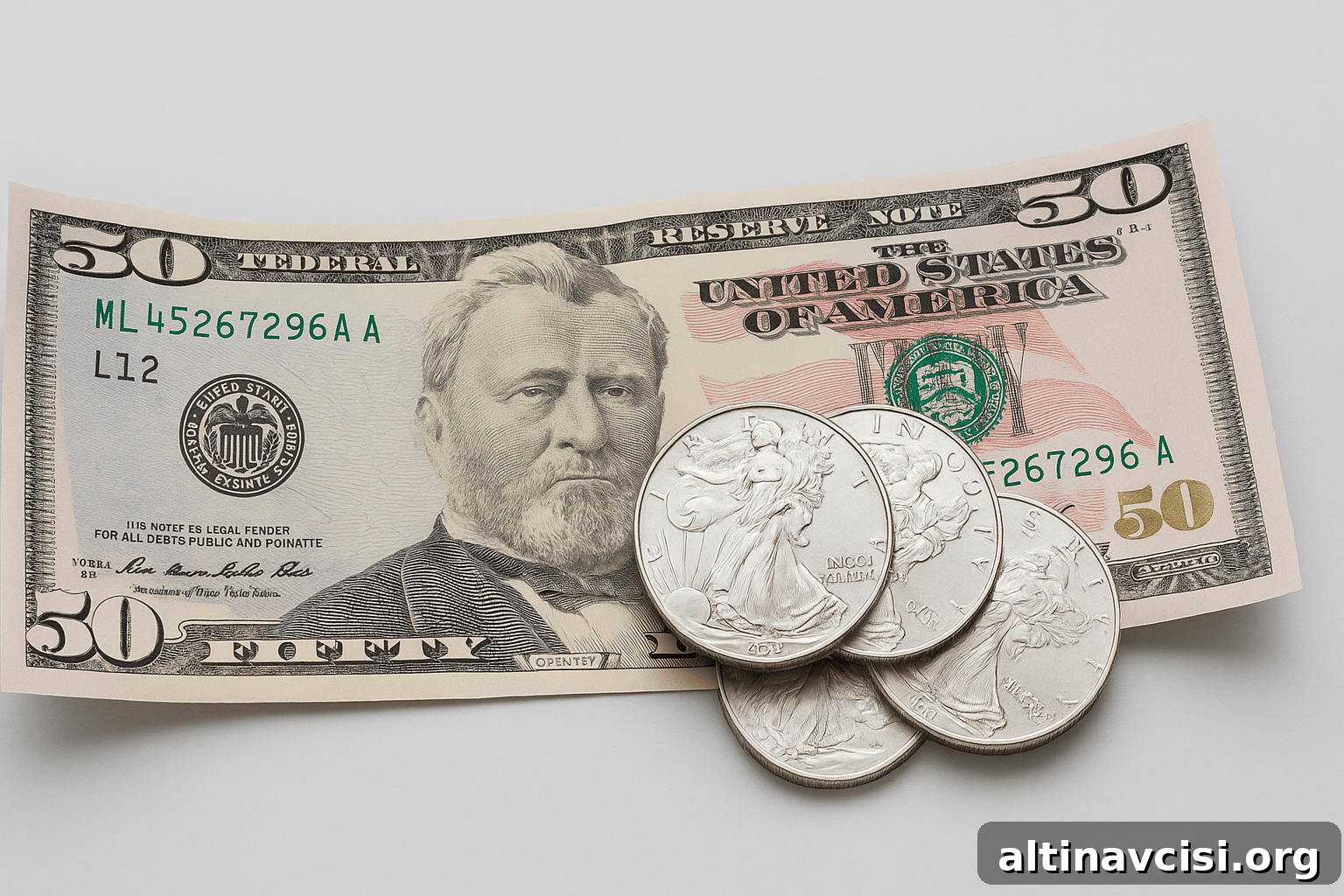
Silver Breaks $50 Overnight
Silver closed in London at $49.45 per ounce yesterday — the highest closing price on record, surpassing the January 1980 mark that stood for 45 years. The rally extended into overnight trading when silver briefly topped $50.07, crossing that psychological threshold for the first time in modern records.
The metal is now within striking distance of historical intraday highs: $52.80 on the CBOT and $50.36 on the LBMA, both set during the inflation shock following the 1970s oil crisis.
Over the past 30 days, silver has gained roughly 19%, with year-to-date returns near 73%. The surge reflects a combination of rising industrial demand, tight physical supplies, and growing investor appetite for hard assets. Silver’s dual role as both a precious metal and an industrial commodity has made it especially attractive amid trade tensions and expectations for interest-rate cuts.
Wall Street is taking notice as traders and institutional investors reassess exposure to metals in diversified portfolios.
Morgan Stanley Shakes Up Wall Street with 20% Gold Allocation
Morgan Stanley has proposed a significant change to conventional portfolio allocations. The firm’s Chief Investment Officer, Mike Wilson, is recommending a 60/20/20 split — 60% equities, 20% gold, and 20% bonds — departing from the long-standing 60/40 model used by many institutions.
Wilson argues gold now serves as a more reliable hedge than Treasuries given persistent inflationary pressures, volatile real rates, and concerns about fiscal sustainability. He described gold as an “anti-fragile” asset within a fragile financial system, noting the metal’s historical performance during periods of policy uncertainty and negative real yields.
This endorsement from a major Wall Street firm reinforces the view among gold investors that hard assets deserve a larger role in portfolios as sovereign debt levels grow and confidence in fiat currencies faces pressure.
Institutional interest in metals is rising at a pivotal moment for central bank policy and market positioning.
Fed’s Williams Backs More Rate Cuts in 2025 Amid Labor Risks
New York Fed President John Williams said in a recent interview that he is open to additional rate cuts this year if labor market data softens and economic drag increases. He emphasized the need to balance inflation control with employment protection and warned that cutting too aggressively could threaten central bank credibility.
Markets interpreted the comments as supportive of further easing. Lower policy rates tend to reduce real yields, shrinking the opportunity cost of holding non-yielding assets like gold and silver and making precious metals more appealing when confidence in traditional hedges weakens.
Those potential rate cuts are especially relevant given concerns that official inflation measures do not fully reflect many households’ real costs.
CPI Has Greatly Underestimated the Real Cost of Living for Young Adults
For many young adults, official inflation figures do not match their lived experience. The Consumer Price Index (CPI) often understates the actual cost of living because it underweights housing relative to what people, particularly renters, spend on shelter.
While CPI calculations assume housing comprises about a third of household budgets, rent in many major metropolitan areas now consumes 40–50% of take-home pay for younger workers. CPI’s national averages also mask regional extremes: rents in cities such as Austin, Miami, and New York have climbed substantially over recent years, creating a much heavier burden for those who reside there.
The disconnect means that even as official inflation appears to cool, many younger Americans feel real wages are stagnant or falling when facing high housing costs. That gap between statistics and daily realities helps explain why interest in hard assets and inflation hedges remains elevated.
Dollar at a Two-Month High — But It’s Mostly an Illusion
The U.S. dollar has strengthened this week and is on track for its best weekly showing in nearly a year, supported by weakness in the yen and turbulence in Europe. Japan’s currency has slid amid political uncertainty, which has pushed expectations for more dovish policy there.
However, the broader picture shows the U.S. Dollar Index (DXY) down about 10% year-to-date — one of the steeper declines in recent decades. This week’s bounce largely reflects weaker performance among other currencies rather than a resurgence in absolute dollar strength.
In short, the dollar can appear strong in relative terms while still losing ground in a longer-term context, a dynamic that influences commodity prices and cross-border investment flows.