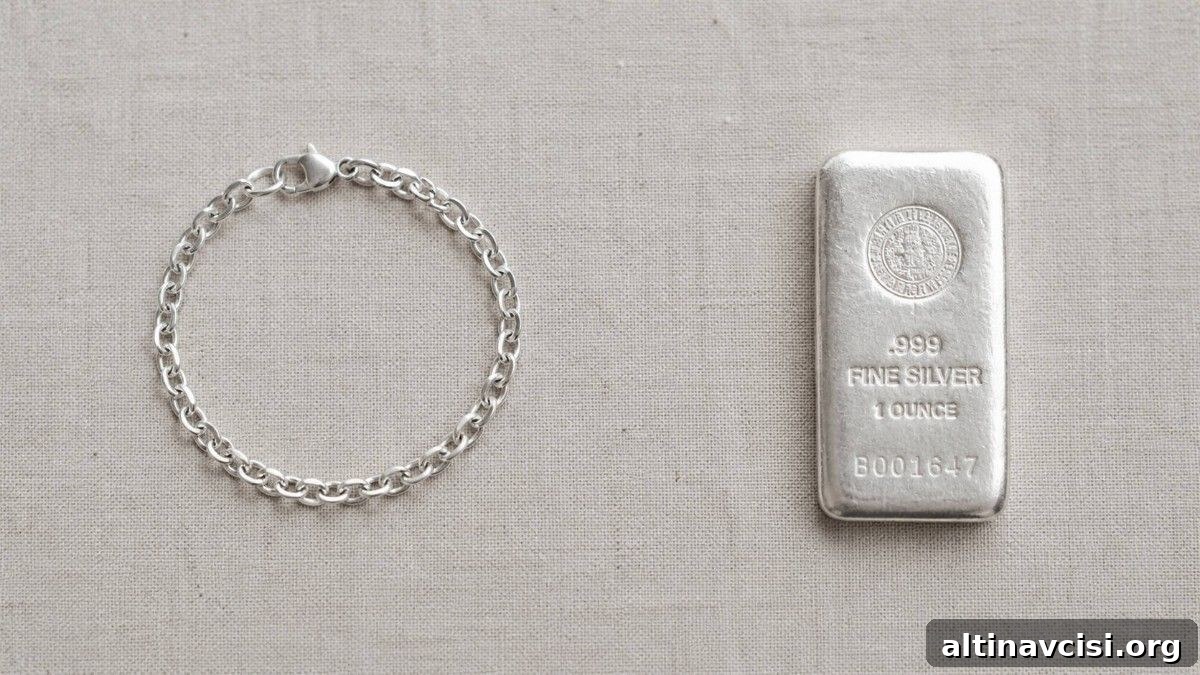
Silver jewelry and silver bullion are very different investments. Jewelry often carries retail markups of 200–300% over the metal’s intrinsic value and typically recovers little of that on resale. Bullion, by contrast, trades in a narrow premium above the spot price — in early May 2026 that premium ranged roughly $73–$82 per ounce — and is designed to be bought, held, and sold for its metal content. If your goal is to protect purchasing power or build long-term wealth with silver, the physical form you choose matters.
Silver was among 2026’s most volatile assets. It surged to an intra-day high of $121.67 on January 29 — more than a 140% year-on-year gain — then pulled back to trade in the high $70s in early May amid continued geopolitical uncertainty. New buyers often overlook an important question: does the form of silver you buy actually change the outcome? It does. A sterling silver bracelet and a one-ounce silver bar are not interchangeable from an investment perspective.
What Is Silver Bullion — and How Is It Different from Jewelry?
Silver bullion refers to physical silver produced primarily for investment: bars, coins, and rounds at .999 purity or higher. Its value follows the live spot price traded on exchanges such as COMEX. When you buy a one-ounce bar from a reputable dealer, you typically pay spot plus a dealer premium — commonly around 5–15% in normal conditions, and higher during demand spikes. Government-minted coins like the U.S. Silver Eagle are usually at the higher end of that premium range because they offer guaranteed purity, legal tender status, and strong secondary market liquidity.
Silver jewelry, on the other hand, is manufactured as an aesthetic product. Sterling silver contains 92.5% silver, but the retail price reflects much more than metal content: labor, design, branding, overhead, and retailer margin are all built into the price. As a result, markups of 200–300% above the metal’s melt value are common. Purchasing jewelry gets you craft and style; the silver itself is only one component of the cost.
What Happens to Resale Value — Bullion vs. Jewelry?
Silver bullion typically resells close to spot. Dealers buy back standard bars and widely recognised coins at or near the bid price, only a few percentage points below spot, and the spread often tightens as prices rise. This creates a narrow, predictable resale gap.
Jewelry follows a different dynamic. Scrap buyers price pieces by metal weight, usually at or below spot, and ignore design, brand packaging, and retail markup. For example, a $150 sterling bracelet containing roughly 30 grams of .925 silver may only hold about $72 of silver at current spot — less than half the retail price before the buyer’s margin. Exceptions exist for high-end designer names and rare vintage pieces, where brand equity and collector demand can maintain value, but most standard retail jewelry does not qualify.
Is Silver Jewelry a Good Investment?
Short answer: not for most people seeking a financial investment.
When jewelry makes sense: If you want something wearable and enjoy daily use, jewelry serves that purpose. In some regions — notably parts of South Asia and the Middle East — high-purity silver jewellery sold and traded by weight functions as a traditional savings vehicle with historical and cultural logic. High-end designer pieces with proven collector markets can also retain value.
Where it fails as an investment: For most retail buyers in Western markets, the economics are unfavourable. Heavy retail markups, diluted purity in sterling alloys, and a slow, less liquid secondary market mean you recover only a small fraction of what you paid. Industry forecasts in 2026 point to declining jewelry demand in some markets, which also undermines any investment case for typical retail silver jewelry.
Why Do Serious Silver Investors Choose Bullion?
Bullion is engineered for liquidity, transparency, and easy pricing. It comes in standard weights, offers guaranteed purity, and bears hallmarks dealers worldwide recognise and price on sight. Those features make buying and selling straightforward.
The 2026 market backdrop strengthens the case for bullion: analysts projected a sixth consecutive annual supply deficit and continued drawdowns of above-ground stocks. At the same time, demand for physical bars and coins was expected to rise, supporting a strategy of holding standardised, fine silver close to spot with a narrow resale spread.
That said, bullion has its trade-offs. It lacks sentimental or aesthetic value, requires secure storage and insurance, and larger bars are less convenient to liquidate in portions. Silver itself is volatile — large intra-day moves occur — so bullion buyers should treat it as a commodity investment rather than a guaranteed savings vehicle.
Bullion or Jewelry — Which Is Right for You?
It depends on your objective.
If you want to wear something attractive, buy jewelry. If your goal is to build wealth, hedge inflation, or gain exposure to silver’s supply-demand fundamentals, choose silver bullion. Jewelry’s retail markup rarely returns on resale, because craft and branding premiums evaporate when a piece is priced by metal content. The investment case for silver in 2026 — driven by structural deficits and industrial demand — is captured by bullion, not by a sterling pendant.
In practice, owning silver close to spot in a sellable form means choosing .999 fine silver bars or recognised government coins rather than jewellery.
What Drives Silver’s Value Over Time — for Bullion vs. Jewelry?
Bullion: The dominant driver is the spot price. Secondary factors — like the collectibility of limited-mint coins or market liquidity — matter only at the margins. Because bullion tracks spot directly, holders benefit or suffer from price moves in real time and should monitor prices accordingly.
Jewelry: Value depends on many variables: silver content, brand equity, condition, provenance, and changing fashion cycles. Most retail jewelry depreciates at purchase because the large markup is non-recoverable on the secondary market. Only true collector or designer pieces can reliably command a premium above melt value, and identifying those requires expertise.
In short, the immediate gap between purchase price and metal value is the clearest illustration of the difference. Understanding how spot price relates to retail pricing is the first step for any intelligent silver purchase.
Stay On Top of Gold & Silver Prices
Get important market alerts sent straight to your inbox.
People Also Ask
What are the key differences between silver jewelry and silver bullion?
Bullion is investment-grade silver (bars, rounds, coins) at .999+ purity and trades close to spot with modest dealer premiums. Jewelry is priced for design, labor, and brand and commonly contains 92.5% silver (sterling). The two serve different purposes: bullion for preservation of wealth, jewelry for wear and aesthetic enjoyment.
Is silver bullion a better investment than silver jewelry?
For investment goals, yes. Bullion tracks spot and can be resold near spot value. Jewelry typically resells at scrap value — the melt price of its metal content — which is generally far less than the retail purchase price unless the piece is collectible.
What factors affect the value of silver jewelry compared to bullion?
Bullion value is driven mainly by the spot price. Jewelry value depends on metal content plus brand, condition, provenance, and fashion trends. Retail markups make jewelry much less efficient as an investment.
How does the resale value of silver jewelry compare to silver bullion?
Bullion resells at or near spot with a small dealer spread. Jewelry typically resells at scrap — the silver melt value — which for sterling pieces is often less than half the original retail price. Exceptions are rare, high-demand designer or vintage items.
How does silver’s supply deficit affect the case for bullion investing in 2026?
Persistent supply deficits and drawdowns in above-ground stocks support a constructive case for holding physical bullion. Those structural market conditions strengthen the argument for owning standardised bars or recognised coins if your objective is investment exposure to silver.
So Which Should You Actually Buy?
Both forms contain silver, but their purposes diverge. If you want to wear something beautiful, buy jewelry. If you want to hold silver as a financial asset — to protect purchasing power, hedge inflation, or participate in structural market dynamics — choose bullion. A one-ounce silver bar and a sterling bracelet may contain similar metal quantities, but what you pay and what you can recover are often worlds apart.
Buying physical silver the right way means transparent pricing near spot from a reputable dealer and selecting a form that can be resold close to spot when needed. That is typically fine silver bullion or recognised government coins, not retail jewelry.
SOURCES
1. GoldSilver.com — Silver Spot Price vs Retail: What Investors Need to Know
2. Silver Recyclers — Sterling Silver Melt Value Calculator
3. Silver Institute — World Silver Survey 2026
4. The Street — Analysis of silver supply challenges
5. Industry commentary on silver demand and markets
Disclaimer: This article is for informational and educational purposes only and does not constitute investment advice. Consult a qualified financial adviser before making investment decisions.
You may also like:
- Gold and Oil Move Opposite Ways. Here’s Why That Matters
- 7 Timeless Warren Buffett Rules for Gold & Silver Investors
- Gold vs. Bitcoin: Which Hard Asset Will Protect Your Wealth?
- Why Central Banks Sell Gold — And What It Means for Prices
- Why Gold Deserves a Permanent Spot in Your Portfolio
- Silver vs. Gold: A Clear 5-Year Investment Guide (2026–2031)
- $5,500 Gold by Q1 2027? The Central Bank Risk Driving It
- Why Gold Stabilizes — and Silver Amplifies