
Written by: The MacroButler
Andrew Niccol’s early concept for The Truman Show—originally darker and titled The Malcolm Show—imagined a man trapped unknowingly in a corporate fishbowl. Peter Weir turned that premise into satire and cast Jim Carrey in a restrained performance. When the film premiered in 1998, it offered an early critique of media manipulation and surveillance, a theme that resonates even more today as social media and reality television normalize constant self-observation. The core warning remains clear: whoever controls the camera shapes what people accept as truth.
Modern financial markets echo that Truman Show set. Central banks write the script, financial media stages the messaging, and algorithms choreograph the action. In that environment, gold stands out as the quiet dissenter—an asset that tends to rise amid debt, war, and inflation. Yet the price of gold is often constrained by derivatives markets and policy interventions. Savvy investors, however, are acting like Truman: eyeing the exit, ignoring the set, and treating physical gold as more than another market instrument.
Capital has always shaped history, from ancient trade routes to modern electronic transfers. Wars, economic cycles, and capital flows are interlinked: money chases opportunity and security. Historical episodes—from Cicero’s warnings to colonial plunder, from industrial-era capital shifts to Bretton Woods—show how finance and geopolitics move in tandem and how capital often migrates to perceived safe havens in times of distress.
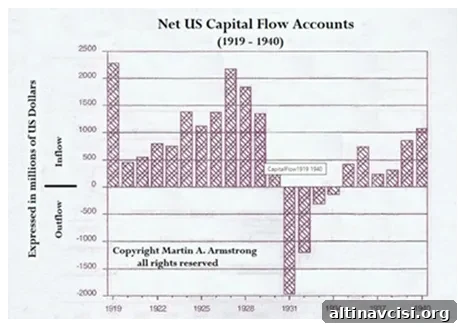
Speculative manias are not a new phenomenon. The South Sea and Mississippi bubbles of the 1700s and the U.S. monetary crises of the 19th century illustrate how capital crosses borders chasing promises and how foreign investors often swoop in to buy depressed assets. We are seeing echoes of these dynamics today. Contrary to much mainstream attention on technology stocks and speculative tokens, the dominant capital flow of 2025 appears to be into gold. Physical metal is increasingly moving from London and Zurich vaults to Comex storage in Manhattan. Publicly cited reasons include tariffs, but many market participants suspect preparations for capital controls in Europe amid rising geopolitical tensions. Gold often signals such shifts first.
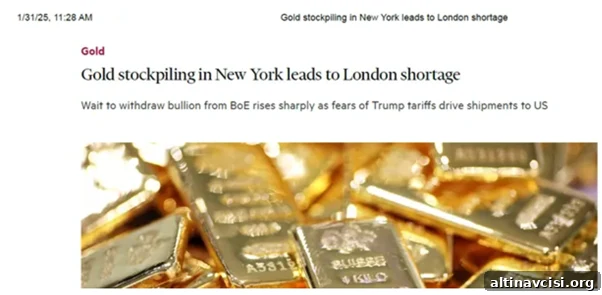
The Comex, operated by CME Group, functions as Wall Street’s paper-gold marketplace. Most trading happens via futures contracts rather than physical transfers. Two sides—those betting prices will rise and those betting they will fall—trade contracts with the exchange acting as intermediary. Very few participants ever take delivery of bars; most roll contracts forward or settle in cash. But the framework allows for physical delivery: if a buyer demands metal, the seller must provide it by a stipulated date.
Futures trading is highly leveraged. A small margin can control a large notional amount of gold, which keeps most exposure virtual. Yet when a market participant insists on taking delivery—paying the full contract value rather than rolling—the situation changes. Delivered bars typically become “Registered” inventory in Comex vaults, meaning they are warrant-backed and available for transfer to claimants.
The dynamics become real when delivery volumes spike. Since the U.S. election on November 5th, institutions and traders shifted roughly 24 million troy ounces—about 746 tonnes—into Comex vaults. Total Comex inventory of 39.15 million ounces is near a 35-year high, outpacing even the surge of May 2020 when investors sought refuge from pandemic uncertainty.
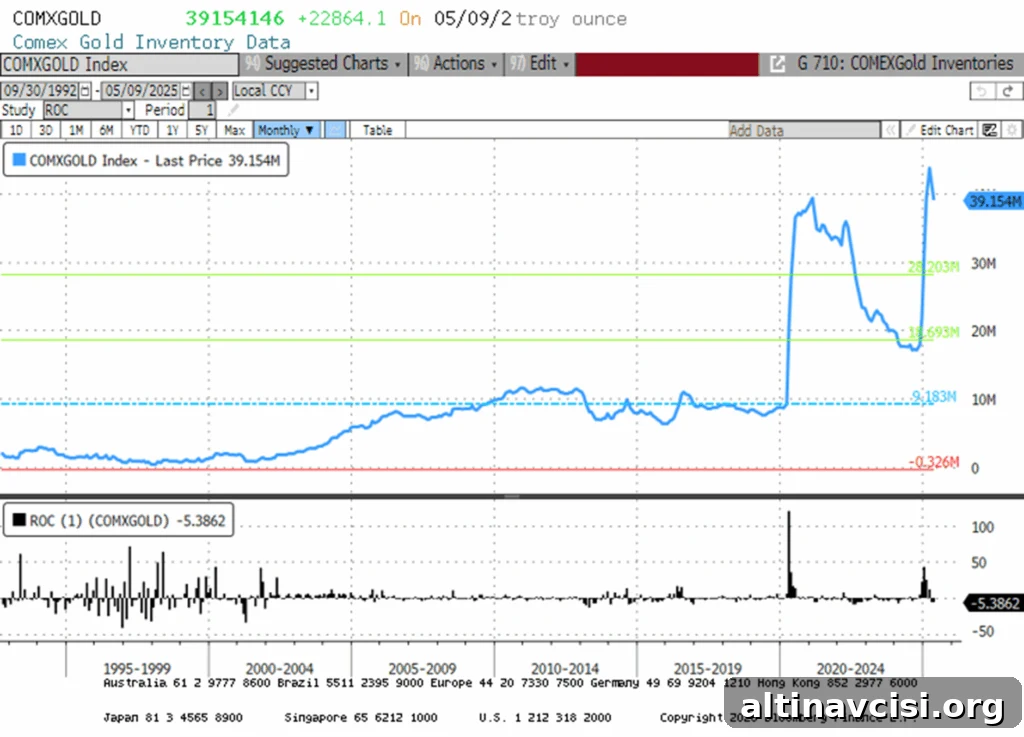
Delivery data offers insight into the real intent behind paper markets. When investors take delivery, they accept storage and insurance costs, signaling a preference for tangible metal. Increasing delivery requests can indicate a shift from paper exposure to physical ownership—effectively a form of a bank run on bullion inventories. Since 2019 and especially after 2020, more participants have been electing delivery. If that trend accelerates, pressure on available physical supply could push gold and silver prices materially higher.
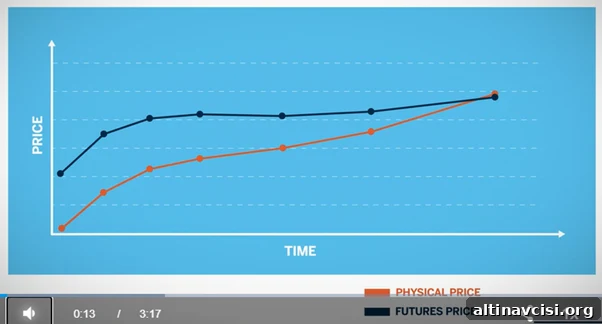
Comex deliveries recently reached historically high levels, driven partly by arbitrage opportunities between spot and futures markets. April alone recorded 64,514 contracts delivered—roughly $21.3 billion worth of gold—making it one of the largest delivery months on record. Such volumes show that significant participants are taking possession of metal rather than remaining in the paper market.
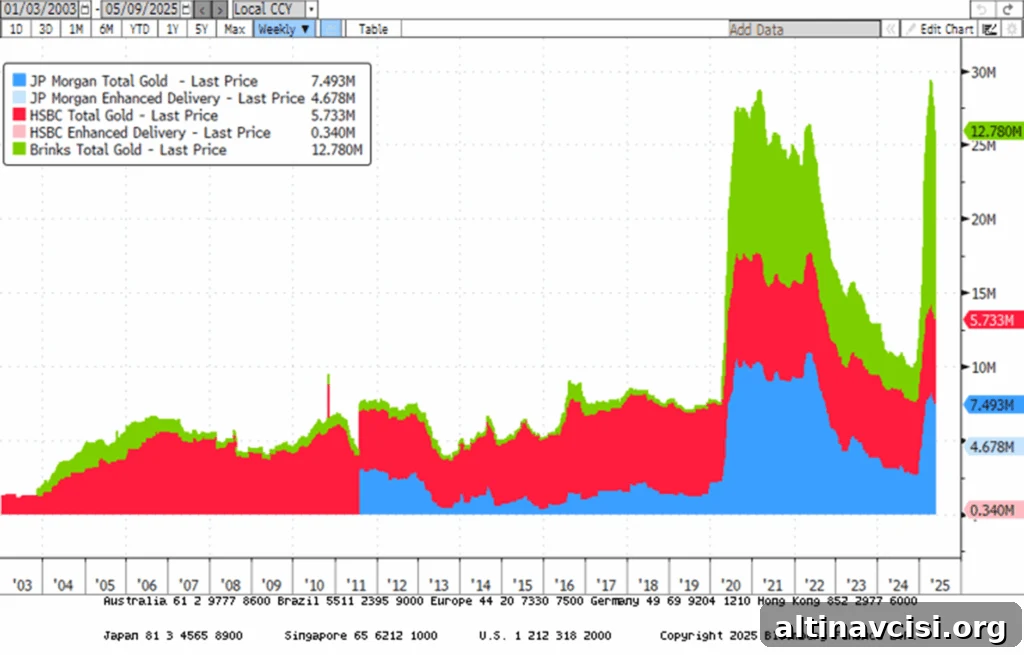
Comex inventory is tracked as Eligible and Registered. Eligible gold meets exchange standards and resides in approved vaults but lacks a delivery warrant. Registered gold has that warrant and is available for physical transfer; pledged gold—Registered metal used as collateral—is also counted within Registered totals. Inventory declines since April suggest some metal left vaults for final claimants, while the presence of substantial Registered inventory indicates more metal is prepared for delivery than in prior episodes when Registered supplies fell nearly to zero.
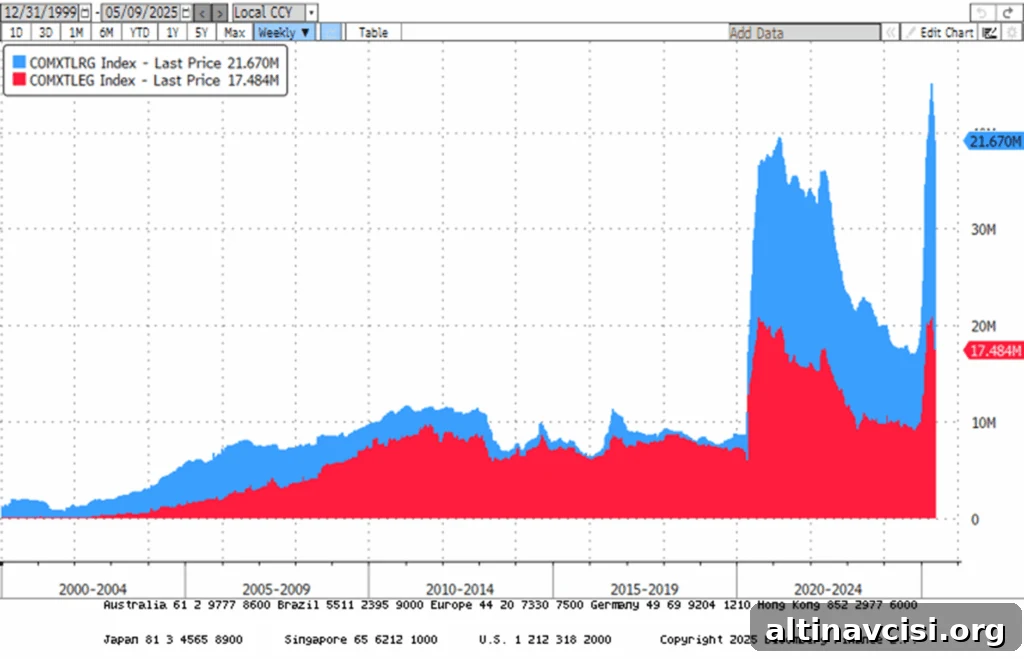
Despite Comex’s paper-dominated nature, only a tiny fraction of contracts have historically led to physical settlement. In 2018, for example, about 1.6 million ounces changed hands physically—just a sliver of total open interest. Today, most Registered inventory is concentrated in a few vaults—Brink’s, HSBC, and JPMorgan—holding over 80% of Comex stocks. That concentration gives these custodians outsized importance if physical demand increases sharply.
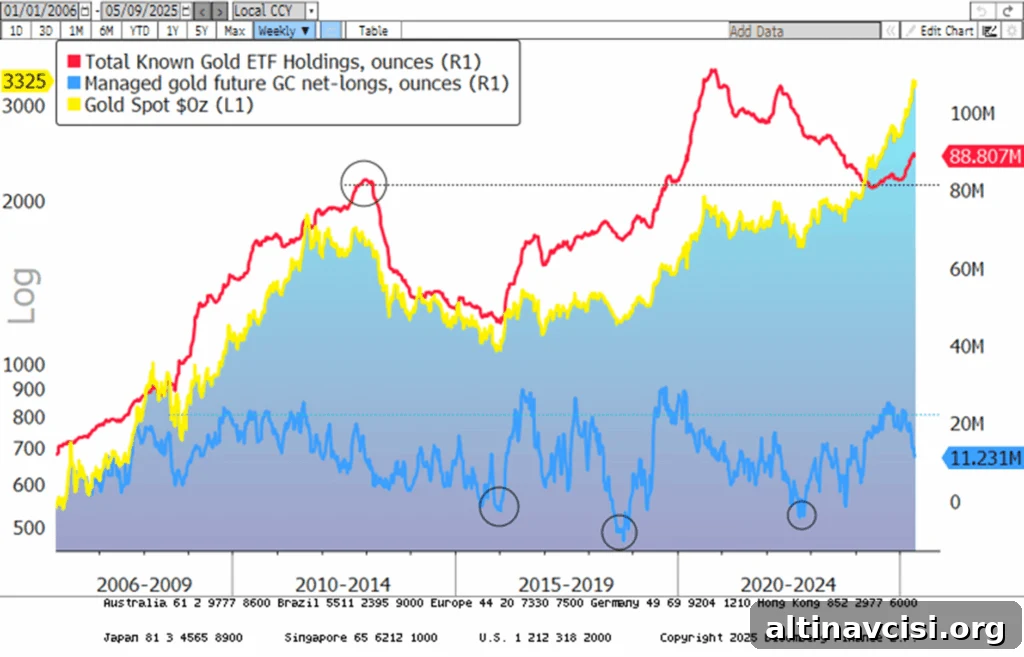
Gold’s recent advance has been notable for occurring without heavy speculative futures positions. Implied holdings peaked in early February and have declined even as spot prices have pushed higher. Non-commercial net positions are notably low compared with recent price levels, making this one of the more underappreciated rallies in Comex history. Retail U.S. investors have largely favored ETFs and paper proxies rather than physically holding bullion, and ETF holdings only began net inflows in late February 2025. Total ETF-managed ounces remain below the peak seen in 2020, suggesting wide scope for further physical demand.
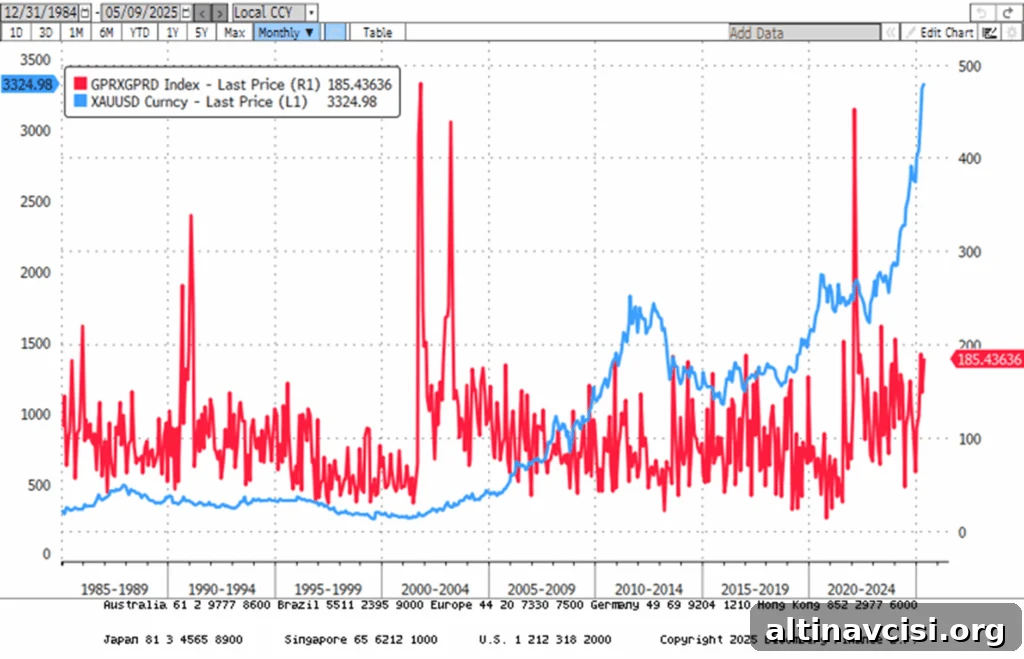
Geopolitical tensions are rising—trade disputes, regional conflicts, and elevated tariff rhetoric are all contributing to a higher Geopolitical Risk (GPR) Index. Historical analysis shows that spikes in geopolitical risk tend to lift gold prices: on average a significant event leads to roughly a 10% price increase over several weeks, with rallies often taking longer to unwind. During the 2008 financial crisis, for example, gold climbed 26.5% in three months and then took over a year to normalize. The relationship between geopolitical stress and gold demand is robust because gold carries no counterparty risk and is viewed as a durable store of value.
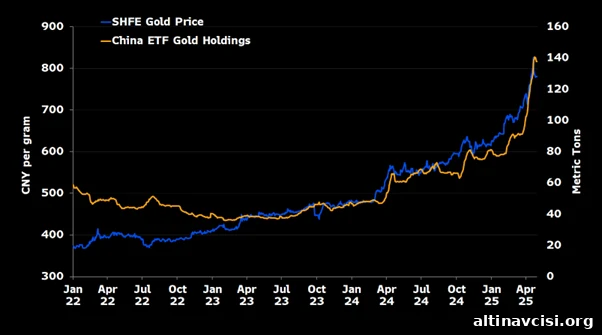
The shifting geography of gold flows is also important. Increasing volumes are moving from European vaults to the U.S., reflecting concerns about potential capital controls and the appeal of U.S. custody during geopolitical stress. Concurrently, China has emerged as a decisive buyer. With domestic challenges in property markets and currency pressures, Chinese institutions and retail investors have been accumulating physical gold more strategically, supported by strong ETF inflows and state-backed purchasing patterns.
China’s approach to gold is strategic: long-term accumulation, significant state participation, and deep integration into national planning. That demand matters for global markets, because when a major economy steadily increases its holdings, it reduces available supply for other buyers and supports higher prices.
For investors, the implications are practical: physical ownership of gold and silver remains the most direct hedge against counterparty and systemic risk. Holding metal outside centralized digital systems preserves autonomy and minimizes policy exposure. Complementary strategies include disciplined cash management using short-dated, investment-grade USD instruments and Treasury bills for liquidity, and favoring equities with low leverage and strong free cash flow—especially in energy and commodity producers rather than consumer-facing businesses.
As macro conditions shift from an inflationary boom toward an inflationary bust, preserving capital should take priority over chasing high returns. That means emphasizing return of capital through tangible assets and short-duration, high-quality fixed income rather than long-duration government bonds, which offer limited protection in a stressed environment.
KEY TAKEAWAYS.
Practical lessons for investors as geopolitical risk rises:
- Markets resemble a staged show: gold acts as the unscripted hedge while Comex remains a largely paper-driven venue.
- Significant gold flows into Comex vaults suggest safe-haven accumulation rather than simple hedging.
- Concentration of Registered inventory in a few custodians heightens the importance of physical availability.
- Recent gold advances occurred with limited speculative participation, making the rally structurally different from prior hot-money episodes.
- Geopolitical shocks historically lift gold prices; the asset’s lack of counterparty risk makes it a natural refuge.
- China’s strategic accumulation is reshaping global supply and demand dynamics for physical gold.
- Investors should prioritize capital preservation—physical gold and silver, short-duration investment-grade USD instruments, and exposure to commodity and energy producers.
- Expect greater volatility and muted real returns ahead; prepare portfolios for higher uncertainty.
HOW TO TRADE IT?
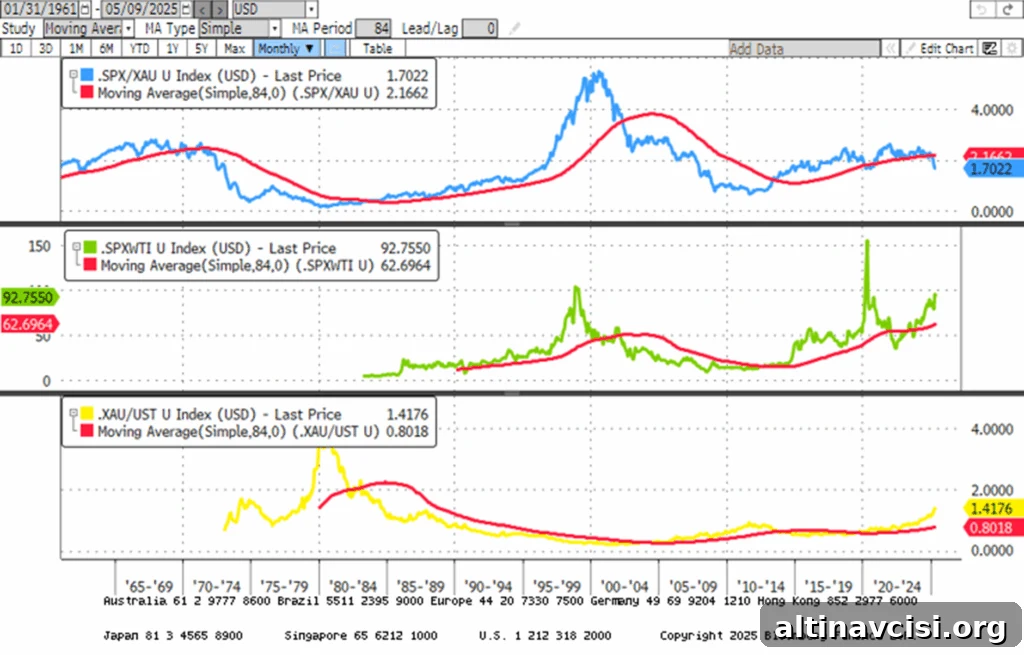
With the macro backdrop becoming more fragile and the S&P 500 to gold ratio below its longer-term moving average, investors should remain disciplined and use data to anticipate business cycle shifts. Consider increasing allocations to physical precious metals held outside centralized digital systems, maintain liquidity in short-dated investment-grade USD instruments and T-bills, and favor low-leverage companies with resilient cash flows. Reassess custodial arrangements and geographic exposure to mitigate the risk of capital controls or regional instability.
Ultimately, physical gold remains a time-tested store of value that operates outside the liabilities of modern financial systems. Owning bullion in private vaults reduces compliance friction, counterparty exposure, and dependence on centralized infrastructures. In uncertain times, physical metal preserves autonomy and acts as a durable hedge against currency debasement, financial instability, and geopolitical disruption.

Gold has protected wealth across centuries. In a world of rising geopolitical risk and uneven trust in public institutions, it remains a foundational hedge for preserving capital. Gold matters now more than ever.
This analysis first appeared on the MacroButler’s Substack.