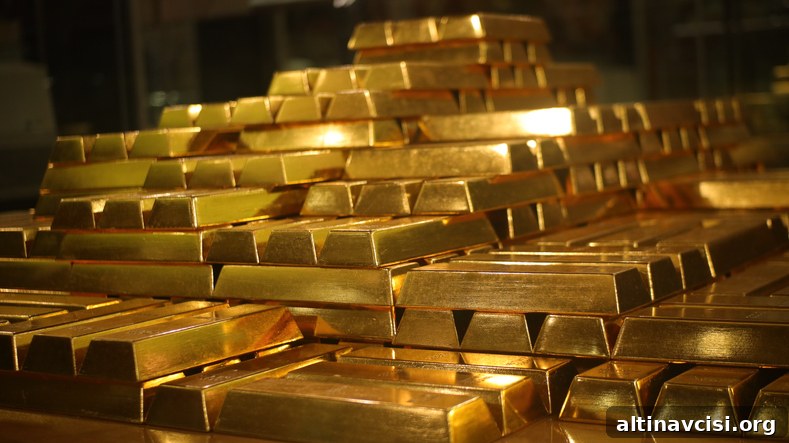
Russia’s gold reserves have climbed to a record value of $217.4 billion as of March 1, 2025, placing the country among the world’s top five gold holders and ahead of China. Gold now represents 34.4% of Russia’s foreign reserves, underscoring the Central Bank’s long-running accumulation strategy that intensified after diplomatic and economic ties with Western nations frayed following the 2014 annexation of Crimea.
The shift toward bullion has been accompanied by a reduction in US Treasury holdings. In 2017, Russia added roughly 224 tonnes of gold, funded primarily through sales of US government securities, part of a broader effort to lower exposure to the US dollar. Despite this trend, the United States remains the largest official gold holder by a significant margin, with approximately 8,133.5 tonnes—about 74% of its official reserves. Germany, Italy and France each hold more than 2,400 tonnes.
Global demand for gold surged in 2024, according to the World Gold Council, reaching a record 4,900 tonnes as investors and central banks sought safe-haven assets amid heightened economic uncertainty. Gold prices rose about 27% during the year and set fresh records repeatedly, reflecting both demand for physical metal and broader market volatility.
Domestic pricing illustrates the metal’s value in Russia: by mid-March 2025, gold traded at roughly 8,181 rubles per gram. At that price, a standard 10-kilogram gold bar would be worth approximately 81.8 million rubles, or about $1.09 million, highlighting why central banks and private investors continue to view bullion as a core component of diversified reserves and portfolios.
Russia’s long-term accumulation and diversification strategy has multiple drivers: reducing currency exposure, preserving value during geopolitical uncertainty, and building a buffer against international financial pressures. While central bank gold purchases have grabbed attention, global market dynamics—including demand from jewelry, technology and investment sectors—also shape prices and strategic reserve decisions.
As central banks and investors reassess risk and liquidity in a changing geopolitical landscape, gold’s role as a store of value appears to remain central. Russia’s record holdings and the broader increase in global demand underscore the continued importance of precious metals in national reserve strategies and private asset allocation.