

A report that President Trump had offered Iran a deal briefly rattled markets, then he denied making any offer. Gold didn’t wait for clarity: futures fell sharply, reflecting both the headlines and broader interest-rate moves.
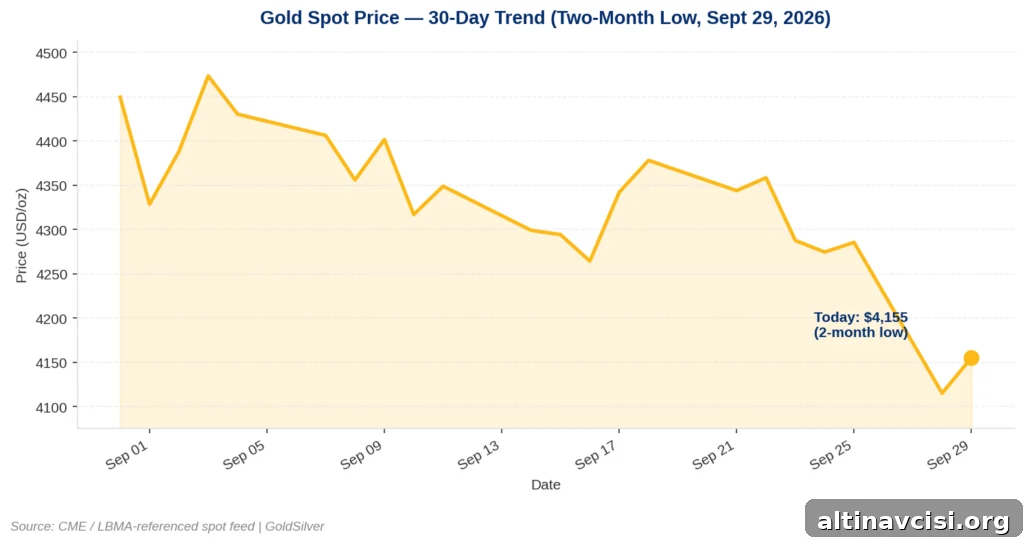
As of Tuesday, gold is trading near $4,155 per ounce, the weakest level in almost two months after Monday’s roughly 4% drop. Silver sits near $60.92, and the gold-to-silver ratio has widened to about 68, up from the low 60s just two weeks ago.
Key takeaways:
- Gold fell to its lowest level since early August after conflicting reports that Trump offered Iran sanctions relief in return for nuclear concessions, an account he later denied.
- U.S. Treasury yields have climbed sharply; the 10-year yield recently reached its highest point since June 2007. The rise in real yields increases the opportunity cost of holding non-yielding assets like gold.
- Markets now assign roughly a 70% chance to an October rate increase, up from lower odds earlier in the week, according to CME FedWatch.
- Commitments of Traders data show a crowded gold futures market: managed money holds a large net-long position, increasing the potential for rapid unwind on negative news.
- Key events to watch this week include Wednesday’s PCE inflation release, Friday’s jobs report, and diplomatic talks in New York concerning Iran.
Why Did a Denied Report Still Move Gold and Silver?
Major outlets reported that the president had offered Iran potential sanctions relief in exchange for nuclear concessions. Hours later, the president publicly denied the report. Despite the contradiction, mediators continued talks in New York, and U.S. officials described those discussions as constructive. Even without a signed agreement, the mere possibility of de-escalation changes market expectations.
Markets are sensitive to geopolitical developments because they affect oil prices and inflation expectations. For the past two weeks, traders priced gold assuming tensions in the Strait of Hormuz would keep oil and inflation elevated, supporting further Fed tightening. When a credible possibility of de-escalation appears—even if denied publicly—traders reassess that assumption. The result: rapid repositioning in precious metals markets as participants price in a lower inflation path or a reduced risk premium.
Why Are Treasury Yields Pushing Gold to a Two-Month Low?
A larger, steadier force behind gold’s decline is the bond market. The 10-year Treasury yield has climbed above 5.2% recently—the highest level in many years—while measures of real yields have surged. Because gold does not pay interest, rising yields increase its relative cost as an investment compared with interest-bearing assets.
Rising rate expectations are reflected in market-implied probabilities of further Fed hikes. The rise in both nominal and real yields over the last three weeks has made holding gold more expensive. Added to that, the gold futures market is highly net-long, which magnifies price moves; when a crowded trade faces negative news, liquidations can accelerate the decline.
What Does This Mean for the Long-Term Case for Gold and Silver?
None of the recent price action alters the long-term forces that have supported gold for years: a very large federal debt burden, rising net interest payments, and the structural limits on how long central banks can keep raising rates without damaging fiscal sustainability. Historically, gold reacts to changes in real yields rather than nominal rates, and while real yields have risen recently, the broader fiscal and monetary dynamics that support demand for gold remain intact.
Sustained higher rates are not a permanent solution to a large public debt load. Over time, policymakers often resort to keeping real interest rates below inflation—a form of financial repression—which historically pushes savers toward non-interest-bearing stores of value like gold. In short, near-term price dips driven by yields or headlines shouldn’t be mistaken for a reversal of the long-term structural case.
What Should Investors Watch This Week?
Important data points this week include Wednesday’s Personal Consumption Expenditures (PCE) inflation report and Friday’s employment numbers—any surprise could shift the market’s view of Fed policy and Treasury yields. Meanwhile, follow developments in the New York diplomatic talks about Iran: a credible move toward de-escalation would likely reduce oil-driven inflation risks and could accelerate the move lower in gold prices. Conversely, renewed tensions would likely push safe-haven demand back toward bullion.
SOURCES
1. Axios, Sept. 28, 2026 — Trump Iran War Sanctions Blockade Nuclear
2. CNN Politics, Sept. 28, 2026 — Trump Open to Iran Sanctions Relief for Nuclear Concessions
3. Reuters via KFGO, Sept. 28, 2026 — Trump Denies Offering Iran Sanctions Relief
4. Investing.com, Sept. 28, 2026 — Gold Slips as Yields, Fed Hike Bets Weigh on Bullion
5. FRED (Federal Reserve Bank of St. Louis), data as of Sept. 24, 2026 — 10-Year and Real Treasury Yield Series
6. CFTC, report dated Sept. 22, 2026 — Commitments of Traders, Gold and Silver (COMEX)
Disclaimer: This article is informational only and is not investment advice. Past performance does not guarantee future results. Consult a qualified financial advisor before making investment decisions.
You May Also Like:
- Gold’s 7-Week Low: What the Chart Says Happens Next
- Gold Sank 4% Today. Five Other Signals Point to a Steadier Market Underneath.
- Gold Fields’ $27 Billion Bid Got Rejected. The Reason Is a Risk Bullion Doesn’t Carry.
- Gold Falls 3% as Hormuz Standoff Lifts Fed Hike Odds to 66%
- Sentiment Rose to 48.1. Gold Sold Off Anyway. The Number That Mattered Was 4.6%.
- Five Institutions Just Changed How You Can Own Gold and Silver
- Gold and Silver Rebound as the Dollar and Treasury Yields Take a Pause
- India’s Gold Imports Fell 58%. Silver Imports Rose 127%.
- Municipal Bonds Just Broke a 15-Year Record. Gold Doesn’t Have This Problem.