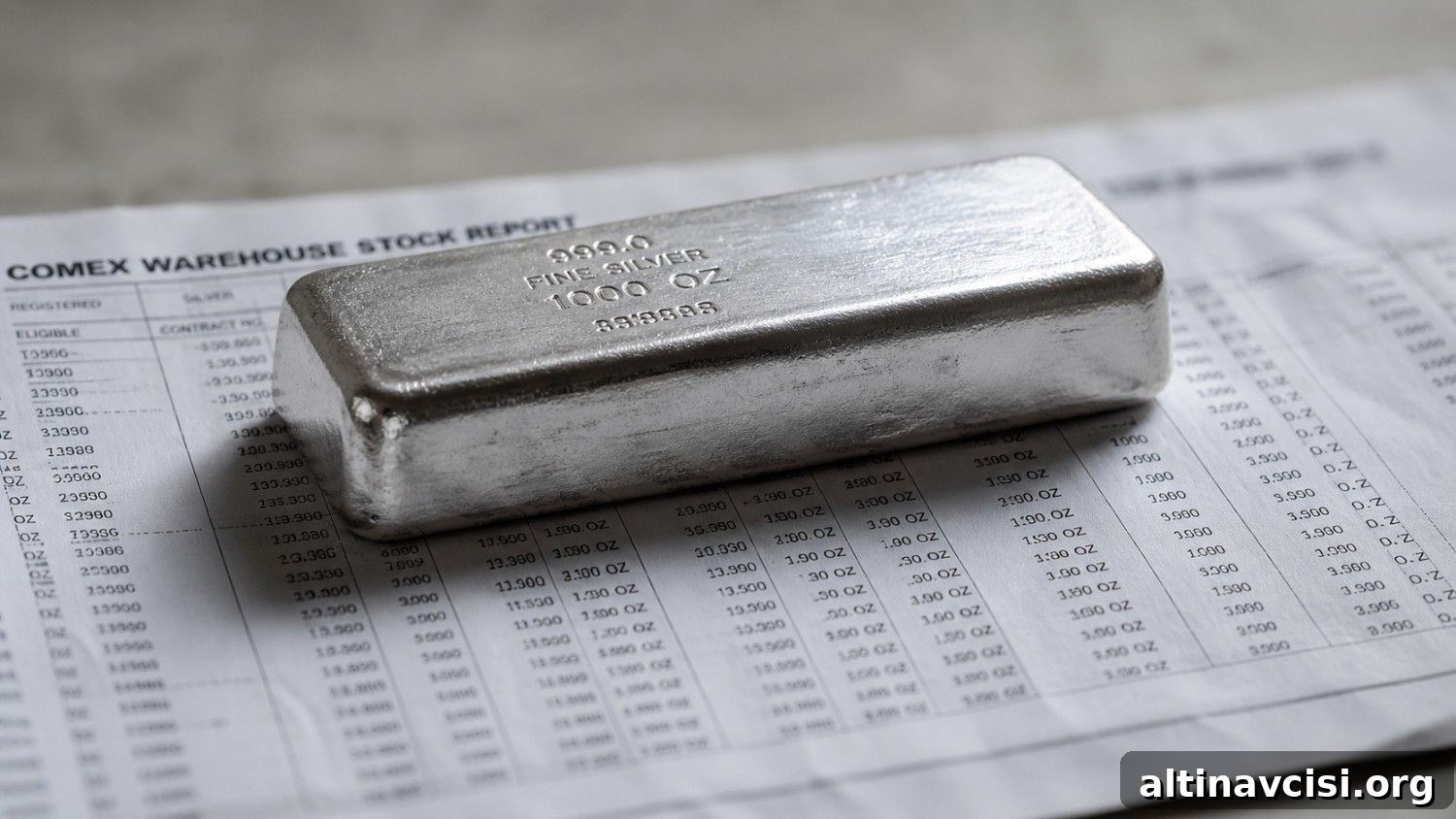
The COMEX silver coverage ratio indicates how much physical silver is available for immediate delivery against outstanding paper futures contracts. Today that ratio is roughly 13–14% — fewer than one deliverable ounce for every seven ounces of open paper claims. The market functions because most futures contracts are rolled or cash-settled and never require physical metal. Still, the ratio has remained below the 15% stress threshold for six straight months, and a single week in January 2026 removed 26% of the entire deliverable pool. The physical side of the silver market is tighter than it has been in years.
Many investors who gain exposure to silver through futures, ETFs, or unallocated accounts rarely consider what actually backs those claims. Right now, the backing is thinner than most assume. While prices cooled after January’s highs, the physical supply picture did not improve accordingly.
What Is the COMEX Silver Coverage Ratio?
The COMEX silver coverage ratio measures the portion of the silver futures market that could be settled with deliverable metal held in exchange-approved warehouses. It is calculated by dividing registered inventory by the total open interest in ounce-equivalents. A 100% ratio would imply every paper claim is backed by on-hand metal — a theoretical ideal that never exists in modern markets. At 13–14%, however, the margin between paper promises and deliverable silver is historically narrow. Exchange analysts classify readings below 15% as stress territory.

Your Gold Buying Guide Most investors overpay when they buy gold. Then overpay again when they sell. This guide shows you exactly what to own — and why.
What’s the Difference Between Registered and Eligible Silver?
Not all silver stored in COMEX-approved vaults is available for delivery, and that distinction matters. Registered silver has been allocated and designated for delivery, so a holder requesting physical settlement can receive it. Eligible silver meets exchange standards and is vaulted in approved facilities but remains under private ownership and cannot settle a contract until the owner converts it to registered status.
The COMEX coverage ratio uses registered inventory only. Combining registered and eligible figures can give a misleading sense of deliverable supply because eligible metal may not be converted to registered status quickly, especially when demand spikes. Under routine conditions the difference is largely academic; in tight delivery cycles it becomes essential.
How Does Paper Leverage in the Silver Market Work?
Each standard COMEX silver futures contract represents 5,000 troy ounces. Open interest aggregates all outstanding paper claims, translating to total ounce exposure. With roughly 76.88 million ounces in registered inventory versus about 575.5 million ounces of open interest, paper leverage is near 7.5×. In plain terms, there are more than seven paper ounces for every ounce immediately available to deliver.
That leverage falls within COMEX’s historical operating range of roughly 5–8× and functions because most contracts — 97–99% — are rolled or cash-settled rather than physically delivered. The risk emerges if delivery demand rises significantly above the usual 1–2% of open interest. If delivery requests climb to 5–10%, the registered pool could face stress it was not structured to handle.
What Do the Current Numbers Actually Tell Us?
January 2026 demonstrated how quickly deliverable inventories can decline. In a single week, 33.45 million ounces left registered COMEX inventory — about 26% of the entire deliverable pool — and the pool was not fully replenished afterward. By the May 2026 delivery cycle, registered inventory remained smaller than it had been before January’s drawdown.
The broader supply backdrop adds pressure. The World Silver Survey 2026 reported a sixth consecutive annual deficit, estimating a 2026 shortfall of 46.3 million ounces and a cumulative drawdown of 762 million ounces since 2021. The report describes silver as entering an era of reduced stocks, with thinner liquidity and larger potential price moves. Those declining above-ground stocks are the wider supply context behind a stressed COMEX registered pool.
Does the COMEX Coverage Ratio Actually Matter for Silver Investors?
Yes — but its relevance depends on how you hold silver. If you own allocated physical silver — coins, bars, or segregated storage in your name — COMEX registered inventory and its coverage ratio do not directly affect your holdings. That metal sits outside the COMEX delivery system.
If you hold exposure through unallocated accounts, ETFs, or futures, your position depends on the paper market functioning smoothly. Unallocated or pooled holdings are claims on metal, not specific, audited bars in a named vault. When registered inventories are thin, the difference between holding physical metal and holding a claim becomes operationally meaningful and can influence liquidity, premiums, and settlement mechanics.
The COMEX ratio does not predict the timing of a delivery event. It does show how little buffer exists before physical constraints feed into pricing. Multiple years of deficits, substantial cumulative drawdowns from above-ground stocks, and a registered pool that experienced a historic withdrawal in January are infrastructure signals that increase the potential for volatility.
Stay On Top of Gold & Silver Prices
Get important market alerts sent straight to your inbox.
People Also Ask
What is a good COMEX silver coverage ratio?
Exchange analysts consider readings below 15% stressful. Ratios above 30–40% suggest a healthy buffer. The current 13–14% level has remained below the stress threshold for six months, representing one of the longer sustained periods of thin registered supply.
What is the difference between registered and eligible silver at COMEX?
Registered silver is allocated for delivery and can settle futures contracts immediately. Eligible silver meets quality standards and is held in approved warehouses but is privately owned and cannot be delivered until converted to registered status. Only registered metal counts toward the COMEX coverage ratio.
Can a COMEX silver short squeeze actually happen?
Partial squeezes have occurred: January 2026 saw 33.45 million ounces leave registered inventory in a week. A complete squeeze would require sustained, elevated delivery demand, which is historically rare. Still, the current combination of thin registered inventories and high open interest creates conditions that could make partial squeezes more likely.
Does a low COMEX coverage ratio mean silver prices will rise?
A low ratio does not automatically drive prices up. It signals physical supply stress, which can increase price volatility. If delivery demand rises, the market must either attract more metal into registered status or adjust prices to curb demand, so low coverage tends to amplify price swings in either direction.
Is silver in a silver ETF backed by the COMEX registered inventory?
Major silver ETFs typically hold allocated physical silver in their own custodial vaults, separate from COMEX warehouses. However, authorised participants interact across markets during creation and redemption, so sustained physical tightness can still affect ETF premiums and redemption dynamics under stress.
What This Means for Your Silver
The COMEX silver coverage ratio is not a timing tool for market crashes. It is a measure of the buffer between paper claims and deliverable metal — and that buffer is thin today. Registered coverage has remained below 15% for six months, the projected 2026 deficit stands at 46.3 million ounces, and 762 million ounces have been drawn down from above-ground stocks since 2021. January 2026’s rapid withdrawal of 26% of the deliverable pool is a notable structural event. Together these factors point to reduced inventories and thinner liquidity going forward.
Holding allocated physical silver means you own the metal itself rather than a claim. That ownership can reduce counterparty and settlement risk compared with unallocated positions, ETFs, or futures. If you want to evaluate the fundamentals behind silver’s supply and what owning physical metal entails, review reputable industry analyses and consult qualified advisors before making decisions.
SOURCES
1. CME Group — COMEX Daily Metal Stocks Report, Silver
2. Investing.com — Silver Coverage Ratio Near Stress Levels Ahead of COMEX May Delivery
3. Silver Institute / Metals Focus — World Silver Survey 2026
4. GoldSilver.com — Silver Market Deficit 2026: Six Years and Getting Worse
Disclaimer: This article is for informational and educational purposes only and does not constitute investment advice. Consult a qualified financial adviser before making any investment decisions.
You may also like:
- What the Gold Price Per Ounce Really Tells You
- The Gold Inflation Paradox Most Investors Miss
- Insurance vs. Upside: Balancing Your Portfolio with Gold and Silver
- Gold Bullion vs. Jewelry: Why Serious Investors Choose the Bar
- Gold & Silver IRA: Why Starting Early Costs You Less
- Silver Fair Value: What the Data and History Show
- Gold or Silver Price Dip: Temporary Correction or Trend Reversal?
- What Switzerland’s Gold Freeze Means for Investors