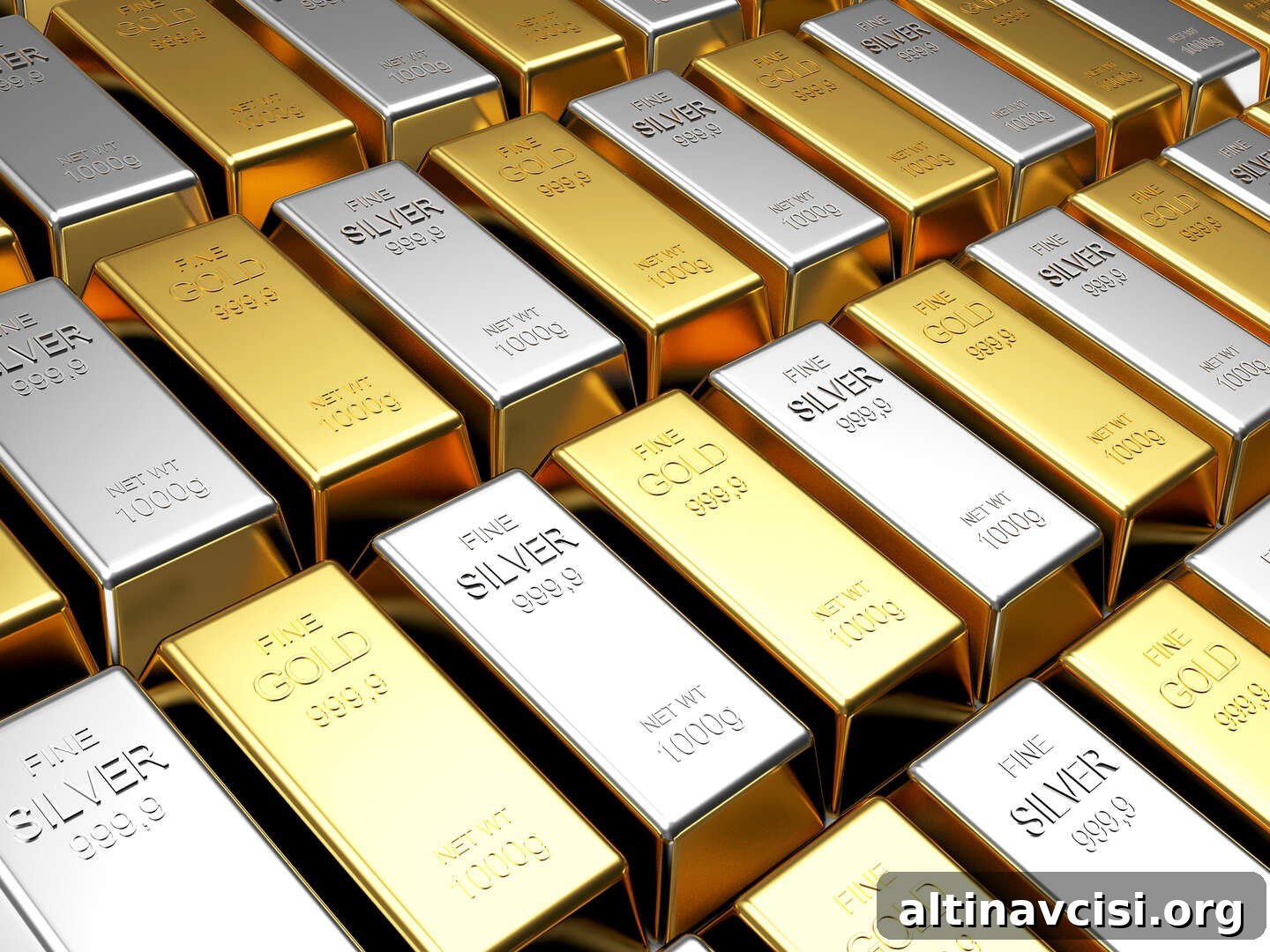
Wall Street traders are increasingly turning to precious metals as uncertainty over trade policy and global economic shifts pushes investors toward traditional safe-haven assets. This year, gold has risen roughly 27.5%, silver about 24%, and platinum near 36%, significantly outpacing the S&P 500’s modest gain of approximately 3%.
The rally in metals reflects a search for alternatives amid tariff worries, a softer dollar and heightened geopolitical uncertainty. Gold remains the primary refuge, trading near record levels above $3,300 per troy ounce as both private investors and central banks boost purchases. Silver’s advance is supported by its dual nature: it is valued both as a precious metal and as an industrial input used in solar panels, electronics and data centers, sustaining demand from multiple sectors. Platinum’s strong performance is largely driven by ongoing supply deficits and a resurgence of interest from Chinese jewelry buyers, increasing tightness in that market.
Investors view these metals as “politically neutral” assets that can provide protection against volatility without the same counterparty exposure inherent in many bonds and some currency strategies. That perceived independence from financial intermediaries, combined with physical demand from industry and consumers, has strengthened the case for metals as portfolio hedges in the current climate.
Market participants also point to central bank buying as an important underpinning for prices. Several large reserve managers have been diversifying foreign-exchange reserves into bullion, reducing reliance on any single currency and supporting long-term demand dynamics. Meanwhile, supply-side constraints—mining output challenges, geopolitical risks affecting production regions and limited above-ground inventories—have amplified price sensitivity to shifts in demand.
From a practical perspective, portfolio managers use a mix of physical holdings, futures, exchange-traded products and strategically allocated mining equities to gain exposure to the metals complex. Each instrument carries different liquidity, storage and counterparty considerations, so investors balance those trade-offs depending on time horizon and risk tolerance. For investors focused on pollution-control and clean-energy trends, silver’s industrial applications and platinum’s role in certain green technologies add an additional layer of fundamental support.
Despite the strong year-to-date gains, analysts caution that precious metals can remain volatile. Prices react to changes in interest-rate expectations, real yields, and shifts in the dollar, as well as short-term flows into and out of exchange-traded products. Still, for many market participants, the recent performance underscores the value of precious metals as a hedge against policy uncertainty and macroeconomic unpredictability.
As financial markets navigate trade negotiations, currency swings and evolving central bank policies, precious metals are likely to remain an important component of diversified portfolios. Their combination of safe-haven characteristics, industrial demand and central bank accumulation supports the view that metals will continue to play a meaningful role for investors seeking protection and potential upside in uncertain times.