Yesterday, the Bureau of Economic Analysis released two connected data points. Headline PCE inflation climbed to 3.8% year-over-year in April — the highest reading since May 2023 — while Q1 GDP was revised down to a 1.6% annualized pace from the initial 2.0% estimate. Slow growth alongside hotter inflation evokes a term economists hoped to retire: stagflation.
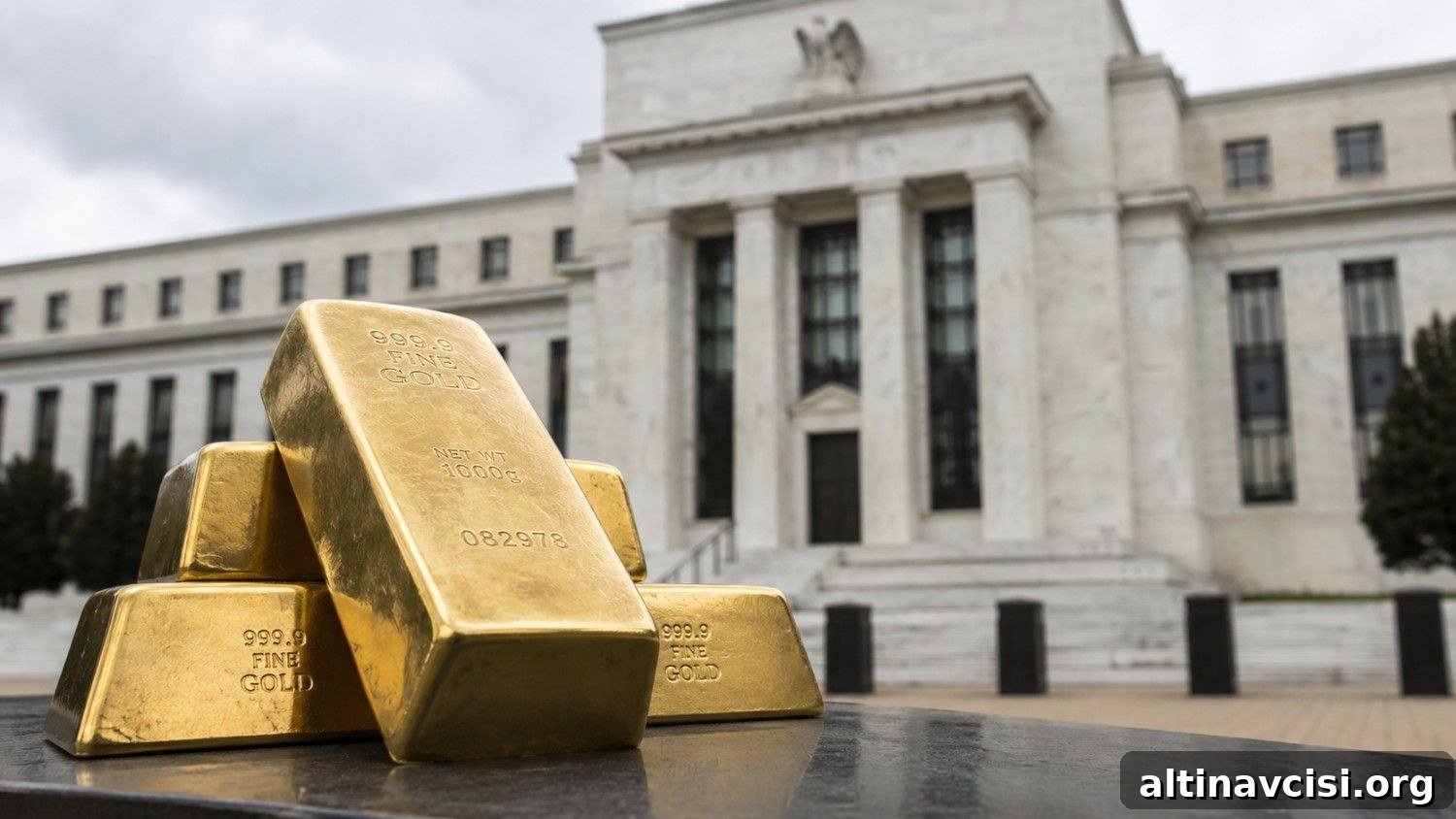
Gold closed up 1.5%, trading near $4,563. A precious metal rallying the day after the Fed’s preferred inflation gauge hit a three-year high may seem odd at first. In reality, it highlights gold’s role in a diversified portfolio better than any bullish market argument.
Why Did Gold Rise After a Hot Inflation Report?
On the monthly basis, core PCE was 0.2%, softer than the 0.3% consensus. That softer monthly reading eased real yields and gave gold a straightforward mechanical boost.
Bond markets reacted: the 10-year Treasury yield slid to about 4.44%, its lowest level in more than two weeks. When nominal yields fall while inflation expectations remain elevated, real yields compress — and lower real yields are the most direct driver of higher gold prices.
Put simply: a government bond paying 4.44% against 3.8% inflation yields a real return near 0.64%. That narrow margin is the opportunity cost of holding non-yielding physical gold — and right now that cost is minimal.
The annual figures paint a tougher picture for households. Core PCE rose to 3.3% year-over-year, up from 3.2% in March. Energy costs jumped sharply year-over-year, adding pressure to household budgets. Real disposable income fell 0.5% in April, the third consecutive monthly decline, and the personal savings rate dropped to 2.6%, the lowest since June 2022. Consumers aren’t splurging; they’re spending to keep up.
Those conditions describe a mild form of stagflation: not a sudden collapse, but a persistent erosion of purchasing power as prices rise faster than incomes while GDP growth stalls.
The Edge Every Investor Needs
Smarter precious metals investing starts here. The Nuggets Newsletter brings essential market insights, Fed updates, global trends, educational videos, and more.
What Makes Stagflation the Hardest Problem a Fed Chair Can Face?
Kevin Warsh takes his first FOMC meeting on June 16–17 facing no easy choices. Cutting rates risks embedding inflation; raising them risks tipping 1.6% growth into contraction.
Warsh was sworn in as the 17th Federal Reserve chair on May 22, 2026, after a contentious 54–45 Senate confirmation. He joins a divided committee: the April 29 FOMC vote was split 8–4, the most divided outcome since 1992. The dilemma is structural: the Fed’s dual mandate—maximum employment and price stability—assumes crises that are typically one-dimensional. Recession calls for rate cuts; high inflation calls for hikes. Stagflation combines both problems and limits the effectiveness of standard policy tools.
Market expectations shifted quickly. CME FedWatch currently assigns roughly a 46% chance of at least one rate hike by December 2026, up from near zero five months ago. Warsh’s first meeting will occur before two key data releases — May employment and May CPI — so he will lack some important new data when the committee meets.
How Has Gold Performed Historically During Stagflation?
Long-term research using World Gold Council and historical datasets shows gold has historically outperformed other major asset classes during stagflationary regimes. One study covering 1973–2024 found an annualized return for gold of 19.16% during stagflation periods — the strongest result among major asset classes.
The 1970s illustrate the point. From roughly $35 per ounce in 1971 to a peak near $850 by 1980, gold delivered outsized nominal gains while equities produced near-zero real returns and bonds lost ground as inflation eroded fixed coupons. In those conditions, physical gold functioned as one of the few reliable stores of value.
Mechanically, stagflation compresses real yields toward zero or negative territory, reducing the opportunity cost of holding non-yielding assets like gold. Today’s 10-year real yield of about 0.64% is thin; further PCE or CPI surprises could tighten that margin and strengthen gold’s near-term catalysts.
What Should Gold Investors Watch at Warsh’s June 16–17 Press Conference?
Three signals will help determine whether the June meeting is a short-term drag on gold or an added catalyst:
1. Whether Warsh removes the dovish bias from the policy statement. Removing an easing bias would signal a hawkish tilt, pushing real yields higher and exerting near-term pressure on gold.
2. Whether he signals faster quantitative tightening. An accelerated QT program tightens financial conditions independently of the policy rate and could reduce liquidity that supports gold.
3. Whether he commits to structural balance-sheet reduction. A credible plan to shrink the Fed’s holdings faster would likely strengthen the dollar, which is often a near-term headwind for dollar-priced gold.
All three are important to watch, but they don’t erase the medium-term backdrop: an expanding fiscal deficit, structurally higher energy prices, falling real incomes, and depleted savings. These are the conditions where gold’s role as a reserve asset outside the financial system has historically been strongest.
Gold remains about 18% below its all-time high of $5,589.38 set on January 28, 2026. It has already absorbed an energy shock, a historic Fed leadership change, and elevated policy uncertainty. The forces that propelled gold from $2,000 to $5,589 remain present, and some are intensifying.
Slow growth, hot inflation, and a Fed chair with limited clean options: that environment is not a reason to panic. It is precisely the kind of environment physical gold was designed to mitigate.
Stay On Top of Gold & Silver Prices
Get important market alerts sent straight to your inbox.
SOURCES
1. U.S. Bureau of Economic Analysis — Personal Income and Outlays, April 2026
2. U.S. Bureau of Economic Analysis — GDP Second Estimate and Corporate Profits, Q1 2026
3. U.S. Bureau of Labor Statistics — Consumer Price Index, April 2026
4. Federal Reserve — FOMC Statement, April 29, 2026
5. Federal Reserve — FOMC Minutes, April 28–29, 2026
6. CME Group — FedWatch Tool, May 29, 2026
7. Federal Reserve — Kevin Warsh Takes Oath of Office as Chairman, May 22, 2026
8. World Gold Council — Gold Price Data (all-time high $5,589.38, January 28, 2026)
9. ProActive Advisor Magazine — Evaluating Gold’s Performance Under Classic Economic Regimes
Disclaimer: This article is for informational purposes only and does not constitute financial or investment advice. Always consult a qualified financial adviser before making investment decisions.
You May Also Like:
- Gold Targets Are Falling. The $8,000 Forecast Isn’t.
- Gold Radar: 5 Stories the Price Chart Isn’t Telling You
- Silver Lost 3.3% While Gold Lost 1.6%. That Gap Is Not Random.
- Gold Down 1.2%, Silver Down 2.8% — The Floor Holds
- UBS Just Cut Its Gold Target by $400. The Part They Kept Is the Real Story.
- Why Gold Is Falling Today — And Why $4,500 Is Holding.
- Gold Is Down Today. Here’s Why Smart Money Is Still Buying.
- Silver Up 3%. Gold Up 1.3%. The Ratio Tells You Everything.