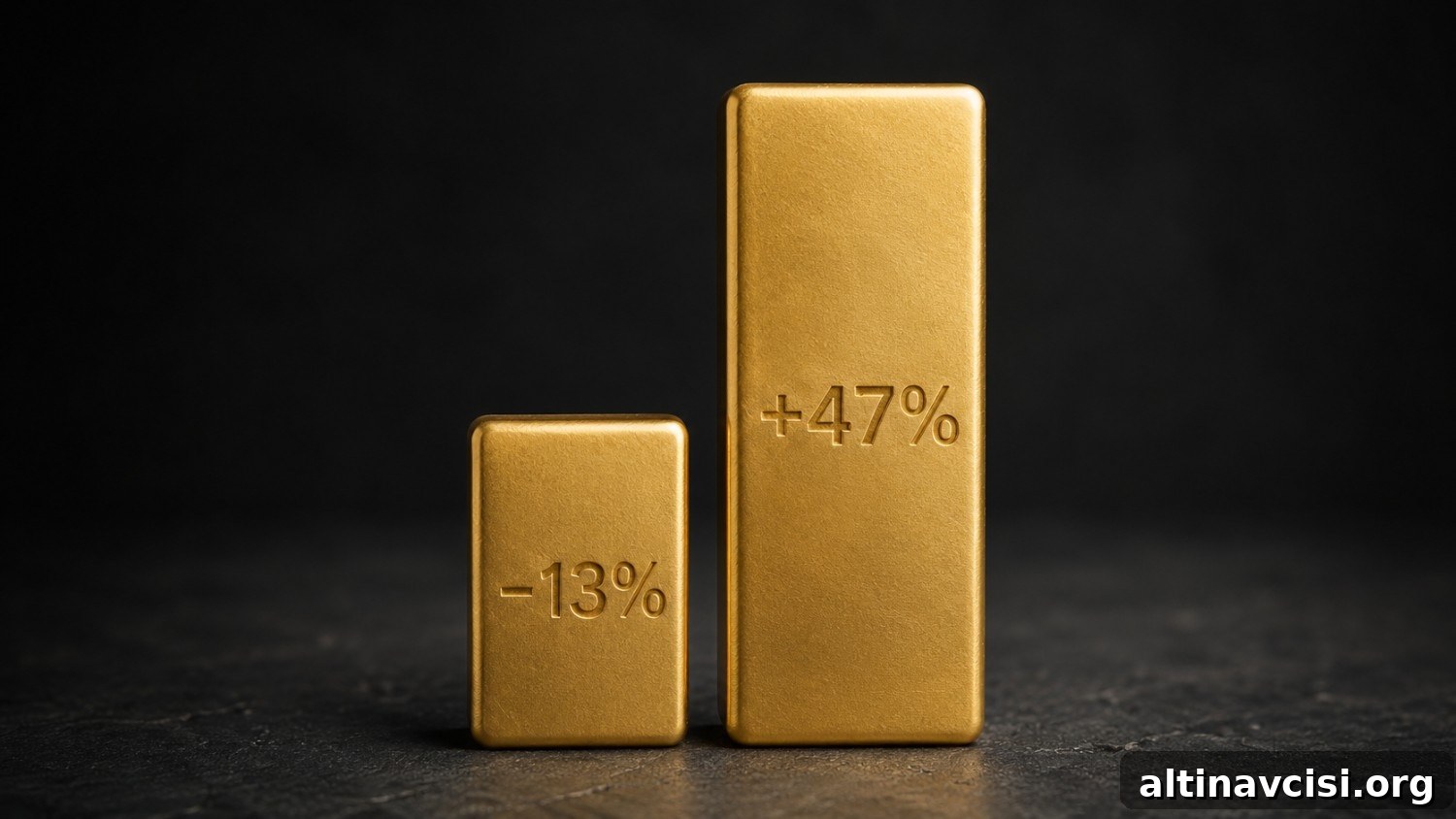
Newmont Corporation, the world’s largest gold producer, released its second-quarter 2026 results on July 23 and surprised many observers. Even though the gold price declined about 13% between April and June, Newmont reported a 47% increase in adjusted earnings per share year-over-year, generated record second-quarter free cash flow, and returned $1.9 billion to shareholders. That outcome reflects how gold mining economics work in practice: fixed costs, wide realized margins, and production scale can amplify earnings movements relative to the metal price. Understanding this dynamic matters for anyone invested in miners, holding physical gold, or following commodity market signals.
What Is Gold Miner Operating Leverage?
Operating leverage explains why a miner’s earnings can change more sharply than the underlying metal price. Mines carry substantial fixed costs — infrastructure, heavy equipment, long-term labour commitments, and permitting — so the per-ounce cost does not move one-for-one with the gold price. When the metal price rises, each additional dollar above those fixed costs translates largely into profit. When the price falls, margins compress and the decline in profitability is amplified. This asymmetric response is a core reason miners often report stronger earnings momentum than the movement in gold itself.
For Q2 2026, Newmont reported an all-in sustaining cost (AISC) of $1,621 per ounce on a by-product basis, while its average realized gold price was $4,414 per ounce. That equates to roughly $2,793 in gross margin per ounce before exploration, development capital, and corporate expenses — a historically wide margin that buffered the business against the recent correction in spot prices. In short, despite a notable pullback in the gold price from earlier highs, Newmont’s margins remained substantial enough to lift adjusted earnings significantly year-over-year.
The Edge Every Investor Needs
Smarter precious metals investing starts here. The Nuggets Newsletter delivers market insights, central bank updates, global trends, educational videos, and more.
Why Did Newmont’s Earnings Grow Faster Than the Gold Price?
The simple explanation is that, even after the recent correction, gold prices were materially higher in Q2 2026 than in Q2 2025. A more detailed view shows that the correction did not erase Newmont’s year-over-year pricing advantage, so margins remained strong. Newmont reported adjusted earnings of $2.10 per share in Q2 2026 versus $1.43 per share in Q2 2025, a 47% increase driven by higher realized prices and sustained production levels.
Revenue also rose meaningfully: Newmont posted $6.12 billion in revenue for Q2 2026, up from $5.32 billion the prior year, a roughly 15% gain. Adjusted EBITDA was reported at $3.8 billion. Management returned $1.9 billion to shareholders since the last earnings call through dividends and share buybacks, and declared a $0.26 per share dividend for the quarter. CEO Natascha Viljoen framed the results as another quarter of strong operational and financial performance, noting attributable gold production of about 1.3 million ounces and reaffirming the company’s full-year production guidance of roughly 5.3 million ounces.
Newmont did miss revenue expectations versus some analyst forecasts, in part because the company’s average realized price of $4,414 per ounce fell short of pre-quarter estimates closer to $4,774. That shortfall reduced headline revenue versus consensus but did not prevent the company from beating on adjusted earnings, because the cost structure and sizable per-ounce margin absorbed the gap without collapsing profitability.
What Does Newmont’s Q2 Tell Gold Investors About the Structural Case?
Newmont’s quarter reinforces a structural point for precious-metals investors: the difference between what it costs to produce an ounce of gold and the market value of that ounce tends to widen over time in environments where fiat-denominated costs inflate while gold trades on a global market. If operating costs rise moderately over a decade but gold’s market price rises by a larger percentage, mining margins can expand despite higher nominal costs. That dynamic helps explain why Newmont achieved large per-ounce margins even during a quarter when the gold price had retraced from its peak.
Management highlighted one cost area to watch for the second half of 2026: elevated oil prices. Higher diesel and fuel costs affect haul trucks, generators, and processing equipment at every major mine, so spikes in crude can add pressure to operating costs. Newmont maintained full-year AISC guidance around $1,680 per ounce and noted that different sites use varied fuel arrangements, which can partially mitigate the impact.
Looking ahead, the next sector data point will come from other large producers reporting quarterly results, and macro events such as central bank decisions will remain influential for both gold and silver prices. For holders of physical metal, Newmont’s record free cash flow provides a practical example of how mining economics can magnify gains in a favorable price environment; it is not merely theoretical.
Stay On Top of Gold & Silver Prices
Get important market alerts sent straight to your inbox.
SOURCES
1. Newmont Corporation — Newmont Reports Robust Second Quarter 2026 Results, July 23, 2026
2. Yahoo Finance / Zacks — Newmont Q2 2026 Key Metrics: Average Realized Price, EPS, Revenue, July 24, 2026
3. GoldSilver — Live Gold & Silver Spot Prices
4. News coverage on energy and geopolitical developments, July 23–24, 2026
5. Yahoo Finance / Zacks — Agnico Eagle Mines Q2 2026 expectations, July 24, 2026
Disclaimer: This article is for informational purposes only and does not constitute financial or investment advice. Consult a qualified financial adviser before making investment decisions.
You May Also Like:
- The US Has Over $1 Trillion in Gold. Washington Carries It on the Books at $11 Billion.
- 187,000 Jobless Claims. The Lowest of 2026. Here Is What It Means for Gold.
- A War Just Expanded Into a New Shipping Lane. Gold Fell. Here Is Exactly Why.
- Gold Is About to Trade 24/7. A Prediction Market Just Filed to Make It Never Expire.
- Gold Hit a Two-Week High This Morning. Three Forces Arrived at Once.
- The Fed Meets July 29. Gold Says Hold Is Already Priced In. Silver Says Something Else.