Market Movers Aug 25: Gold Pullback, Jackson Hole, Intel Warning
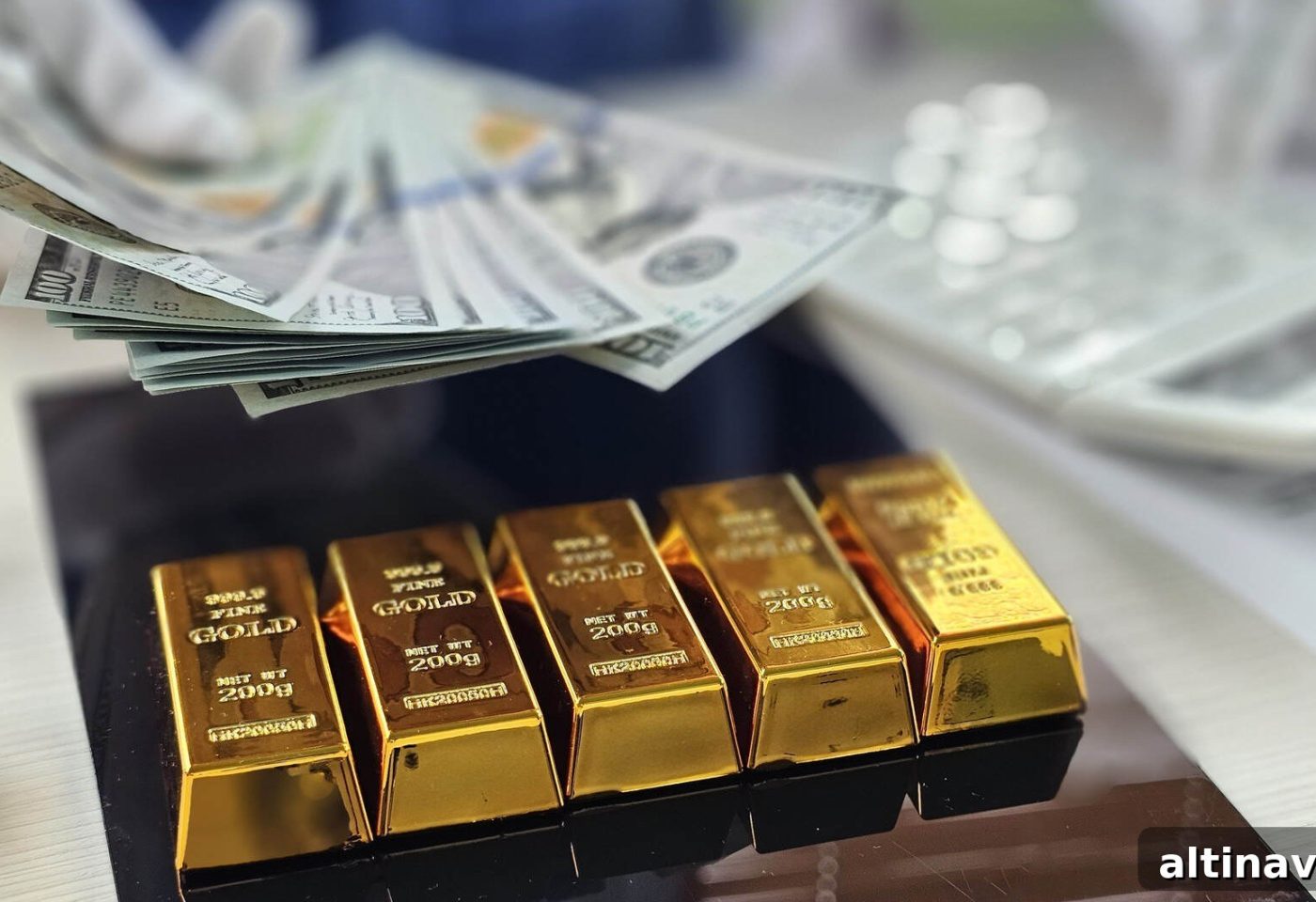
Gold Retreats from Two-Week High as Dollar Gains
Gold eased after a strong finish on Friday as a firmer dollar made bullion more expensive for overseas buyers. Spot gold dipped about 0.2% to $3,364 per ounce, while December futures cooled to roughly $3,410. The pullback followed a move to the highest levels since August 11, driven in part by market reactions to Federal Reserve Chair Jerome Powell’s remarks at the Jackson Hole symposium.
Market participants still assign an 85–90% probability to a 25 basis-point Fed cut on September 17, an outlook that supports gold over the medium term. In the short term, however, bullion is closely tracking the dollar’s swings. UBS analyst Giovanni Staunovo observed that Powell’s comments implied a modest quarter-point easing, a stance that has underpinned the dollar and applied near-term pressure on precious metals. Silver nudged down around 0.3% to $38.72, and platinum slipped roughly 1.1% to $1,346.21.
Analysts remain constructive on gold’s longer-term prospects. Han Tan of Nemo.Money forecasts spot gold rising toward new record highs above $3,500 if the Fed proceeds with gradual easing and if central banks continue to add to their bullion reserves. Continued central-bank buying combined with a softer rate outlook would likely provide additional support for the metal.
Jackson Hole: Easier Policy Talk, Tough Trade-offs
At Jackson Hole, Powell signaled a willingness to consider rate cuts as risks in the labor market become more apparent, but he also stressed that inflation has not fully cooled. That left policymakers divided on the timing and size of any easing. Powell described the economy as presenting a “challenging situation,” noting inflation remains above the 2% target even as some labor-market indicators soften.
Financial markets have leaned toward a quarter-point cut in September, yet the path forward looks uneven: political pressure, divergent policies among global central banks, and internal Fed disagreements all complicate the outlook. The conference underscored those divisions—two governors dissented at the July policy meeting when rates were held steady—and heightened security and political tensions were notable this year. Powell outlined a revised policy framework that places a more balanced emphasis on both inflation and employment, moving away from the narrower focus adopted in 2020.
Bottom line: the Fed appears closer to easing than a few months ago, but officials face difficult trade-offs, and rate cuts are not guaranteed.
Fed Chair Search: No Rush on Powell’s Replacement
NEC Director Kevin Hassett said a decision on President Trump’s choice to replace Chair Powell is likely “another few months” away. Treasury officials are reportedly conducting a thorough candidate review and interviewing multiple contenders. The longer timeline reduces the likelihood of a pre-announced “shadow chair” and suggests the administration is taking a measured approach.
Prediction markets currently favor Kevin Hassett and former Fed governor Kevin Warsh, each receiving notable support in trader tallies. Both figures are generally associated with a preference for lower interest rates. Other potential names under consideration include sitting Fed officials. Powell’s term does not end until May 2026, leaving time for a deliberative selection process, but markets are already debating how closely any successor might align with White House priorities.
Stablecoins Poised to Influence Short-Term Treasuries
New U.S. stablecoin regulations are steering issuers toward holding more Treasury bills as backing, which could create a sizable, institutionalized buyer at the short end of the market. The stablecoin market—about $250 billion and up roughly 22% this year—could expand substantially over the coming years, with some analysts projecting it could reach into the trillions by decade’s end if adoption continues.
The recently enacted rules require stablecoin issuers to hold dollars or high-quality liquid assets as reserves, effectively positioning short-term T-bills as preferred collateral. Treasury officials have described the change as broadening access to the dollar while also increasing demand for Treasuries. Already, large issuers such as Tether rank among significant buyers of U.S. government paper. Bank for International Settlements analysis suggests that concentrated stablecoin flows—measured over short windows—can nudge short-term bill yields by a few basis points within days.
Although stablecoins remain modest compared with traditional institutional Treasury holders, rapid growth means their influence on bill yields and short-term market dynamics warrants close attention from investors and policymakers.
Intel Warns U.S. Government Stake Could Hurt Business
Intel disclosed that the U.S. government’s new roughly 10% equity stake—created by converting $8.9 billion in CHIPS Act grants into stock—poses tangible risks for the company’s international business. With approximately 76% of revenue generated outside the United States and about 29% coming from China, Intel warned that being perceived as partially government-owned could invite foreign regulatory scrutiny or restrictions under other countries’ subsidy laws.
The government acquired its shares at a discount relative to the last close, a move that diluted existing shareholders. Intel also cautioned the shareholder shift could complicate efforts to secure future public support, as other agencies or foreign partners might treat the company differently. The conversion transaction was expected to close following recent high-level discussions, and the company framed the development as a material change to its shareholder base.
The gold angle: political ownership raises corporate risk. Gold, by contrast, carries no board, no management team and no counterparty—an asset that cannot be directed or pressured by governments.
Investing in Physical Metals Made Easy
Get Gold & Silver Insights Direct to Your Inbox
Join thousands of investors who receive expert analysis, timely market updates, and curated offers every week.
Popular Topics
Picked from the archive
-
01
 Topics
Gold Could Reach $4,000 as Silver Surges and Oil Falls
-
02
Topics
July Minimum Wage Hikes in 15 States and Cities
-
03
Topics
Silver Prices Jump 35% YTD as Rally Accelerates
-
04
Topics
4 Trillion AI Milestone Sparks Valuation Concerns
-
05
Topics
Reuters Poll: Flight to Safety Boosts Gold and Silver Forecasts
-
06
Topics
Industrial Demand Sends Silver and Platinum 28% Ahead of Gold
-
07
Topics
Can Gold Hold at $4,300? Price Outlook for Investors
-
08
Topics
Barclays’ Euphoria Gauge Signals Bubble as Speculation Surges