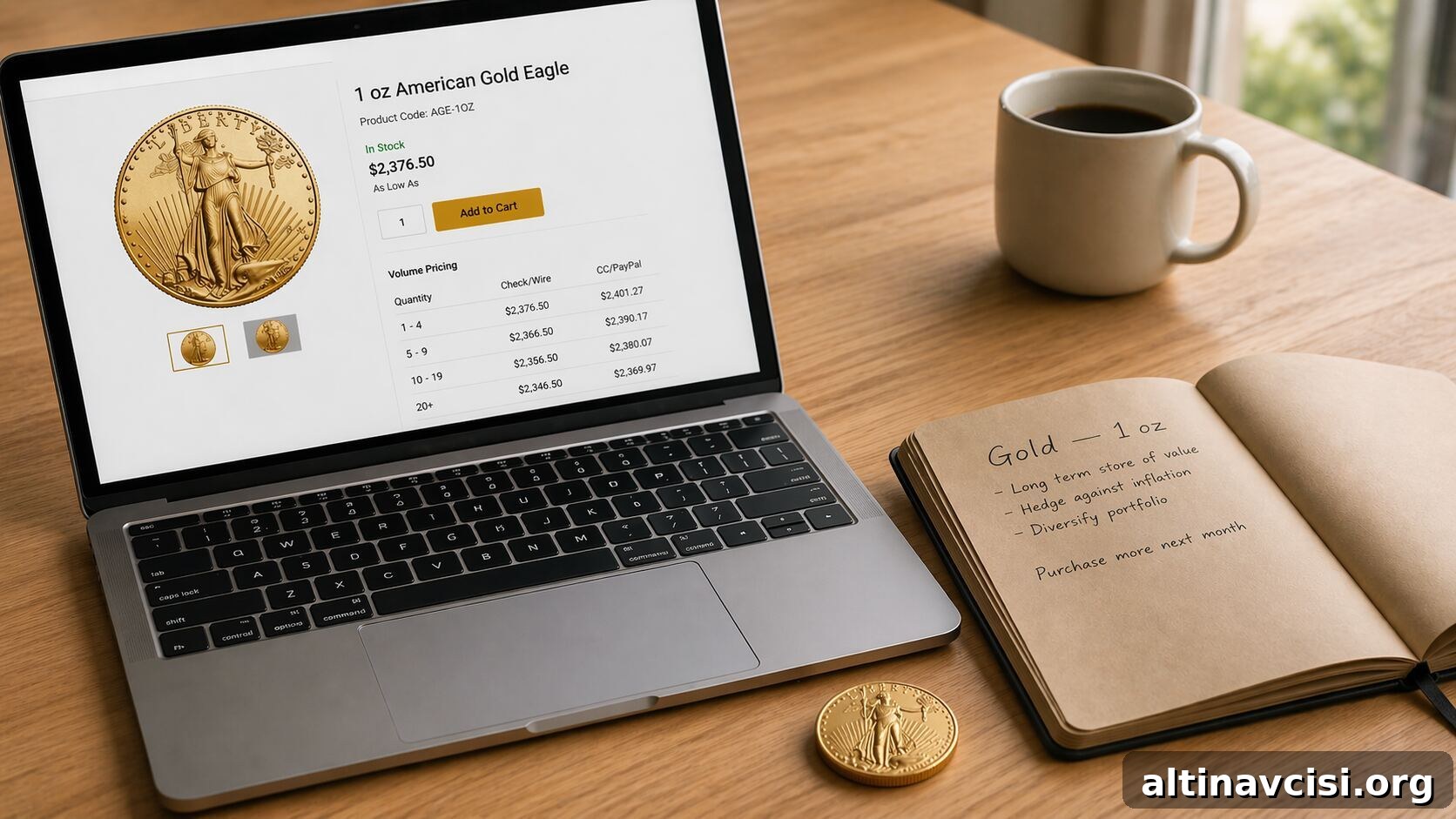
Gold is trading near $4,800 per ounce in April 2026 — about 14% below its all-time high of $5,589.38 set on January 28, 2026. For first-time buyers, the safest route is to purchase recognised bullion coins or bars from a reputable dealer and arrange secure storage, either in a professional vault or at home with appropriate safeguards. Structural drivers such as persistent inflation, central bank purchases, and monetary debasement continue to support gold’s value. This guide walks you through each step.
Buying gold for the first time is more straightforward than it appears. After the record high in January 2026, prices have pulled back roughly 14% to around $4,800 — a gap many investors view as an opportunity.
The more important question is the process. If you’ve never owned physical gold, choices about coins versus bars, physical versus paper exposure, and storage can feel overwhelming. This guide removes the guesswork so you can buy gold safely, efficiently, and with confidence.
Why Should Beginners Buy Gold Right Now?
Gold has three core roles in a portfolio: inflation hedge, crisis insurance, and a long-term store of value. All three remain relevant in 2026.
Inflation has proved persistent despite years of monetary tightening. Every dollar that loses purchasing power strengthens the case for an asset that cannot be printed. Gold returned roughly 67% in 2025, its strongest annual performance since 1979. Such moves reflect structural dynamics rather than short-term noise.
Institutional demand is also notable. Central banks are forecast to buy substantially more gold in 2026 than they did before 2022, signalling concerns about currency debasement and geopolitical risk. When large reserve managers accumulate at scale, it underscores long-term strategic demand for gold.
Gold does not pay interest or dividends. Its value lies in preserving purchasing power and providing protection when fiat currencies weaken.
What Types of Gold Can You Buy?
Gold falls into two main categories: physical gold and paper gold. Many beginners underestimate how different these options are, and that misunderstanding often causes costly mistakes.
Physical Gold — Coins, Bars, and Rounds
Physical gold is the metal itself: you can hold it and own it outright. The main forms are:
- Sovereign coins: American Gold Eagle, Canadian Maple Leaf, South African Krugerrand. These are government-backed for weight and purity, widely recognised, and highly liquid — a solid choice for first-time buyers.
- Gold bars: Available in sizes from 1 oz to kilo bars. Bars typically carry lower premiums over spot than coins, making them more efficient for larger investments.
- Private mint rounds: Often cheaper than sovereign coins but less recognised in secondary markets. These suit experienced buyers who accept reduced liquidity.
For most beginners, sovereign coins like the American Gold Eagle or Canadian Maple Leaf are the best starting point because of recognition and ease of resale.
Paper Gold — ETFs, Futures, and Mining Stocks
Paper gold provides price exposure without owning metal. ETFs track the price of gold, futures are derivative contracts, and mining stocks provide equity exposure to producers.
The key distinction is ownership: paper gold represents a financial claim, not the physical commodity. In normal markets the difference may seem academic; in a severe crisis, physical ownership delivers benefits — protection, tangibility, and privacy — that paper instruments cannot.
How Do You Buy Gold? Step by Step
Buying physical gold typically involves four steps: choose a trusted dealer, select your product, pay, and decide on storage. Once familiar with the process, a transaction can take minutes.
Step 1 — Choose a Trusted Dealer
Look for transparent pricing, clear buyback policies, verified reviews, and a published contact number. Avoid high-pressure sales, opaque fees, or evasiveness about storage and buybacks.
Step 2 — Select Your Product
Begin with a 1 oz American Gold Eagle or Canadian Maple Leaf. These coins are government-backed and easy to resell. For investments above several thousand dollars, consider bars to reduce per-ounce premiums.
Step 3 — Pick Your Payment Method
ACH bank transfers generally offer the lowest cost. Wire transfers work well for larger orders. Credit cards are convenient but usually add processing fees. For retirement accounts, a self-directed IRA rollover is a separate process covered later.
Step 4 — Choose Storage or Delivery
Decide whether to take physical delivery or use professional vault storage before you buy. That choice affects insurance, liquidity, and logistics.
Where Should You Store Your Gold?
Storage options are home storage or professional vaults. Both are valid, but many long-term investors prefer vault storage for improved security, insurance, and ease of liquidation.
Home Storage
Pros: Immediate access, full personal control, no recurring storage fees.
Cons: You bear the security burden. Standard homeowner policies often exclude bullion without a rider. For holdings beyond a few thousand dollars, a high-quality safe is essential, and risks like theft, fire, and flood remain.
Home storage suits smaller positions or investors who want immediate possession.
Professional Vault Storage
Vault storage places your allocated metals in an institutional facility. They are insured, segregated in your name, and can be sold or delivered on request. For larger holdings, vaults remove many practical risks of ownership.
Should You Try to Time the Gold Market?
No. Even professionals struggle to time gold reliably. Dollar-cost averaging — buying a fixed dollar amount regularly — is a more effective strategy. It eliminates emotional timing and smooths entry prices over time. In bull markets, the cost of waiting often exceeds the cost of imperfect timing.
Can You Buy Gold in an IRA?
Yes. A self-directed IRA allows physical gold in a tax-advantaged account. The IRS requires specific purity standards (.995 for most bars; some coins have exceptions). The process requires opening a self-directed IRA, funding it via rollover, selecting approved products, and storing metals in an IRS-approved depository. Tax treatment depends on account type—traditional IRAs defer tax, while Roth IRAs offer tax-free qualified withdrawals.
What Mistakes Do First-Time Gold Buyers Make?
Mistakes usually stem from impatience or lack of research, but they are avoidable.
- Buying from unverified dealers. Stick to established dealers with transparent pricing and independent reviews.
- Overpaying for collectibles. Numismatic premiums add little investment value; focus on bullion for investing.
- Choosing illiquid products. Obscure rounds and unusual bar sizes are harder to resell than sovereign coins and major-brand bars.
- Skipping storage planning. Decide on secure storage before purchase, not after.
- Trying to time the market. Regular, disciplined purchases outperform attempting perfect timing.
- Confusing paper gold with ownership. ETFs are financial products; physical gold is a tangible asset with no counterparty risk.
People Also Ask
Is it safe to buy gold online?
Yes, when you use a reputable dealer with transparent pricing, insured shipping, and a clear buyback policy. Check independent reviews and avoid dealers who hide fees.
What is the best gold coin for beginners?
The American Gold Eagle is the standard recommendation. It is widely recognised, liquid, and backed by the U.S. government for weight and purity, making it an ideal starting coin.
How much does it cost to buy 1 oz of gold in 2026?
As of April 2026, gold trades around $4,800 per ounce. Expect dealer premiums on top of spot — typically $50–$150 per ounce for sovereign coins and less for bars. Confirm live pricing with your dealer before ordering.
Is physical gold better than a gold ETF?
They serve different purposes. ETFs provide price exposure; physical gold offers direct ownership and no counterparty risk. For portfolio protection during severe systemic stress, physical gold is the stronger option.
Where is the safest place to store gold?
A professional vault operated by established security firms provides the highest protection. Allocated, segregated storage in your name with full insurance offers the best combination of security and liquidity.
Gold Rewards the Investor Who Starts
Buying gold does not need to be complicated. Start with recognised bullion — sovereign coins for newcomers and bars for larger allocations. Use a reputable dealer, confirm buyback terms, plan storage in advance, and think in years rather than months.
The structural case for gold remains intact: central bank buying is strong, inflation is persistent, and the macro trend that drove gold from low levels to its 2026 highs is grounded in real forces. Gold rewards disciplined, long-term investors rather than those waiting for a perfect entry.
SOURCES
1. World Gold Council — Gold Market Commentary, December 2025
2. J.P. Morgan Global Research — Gold Price Predictions 2026
3. GoldSilver — Vault Storage
4. IRS — Publication 590-A
5. Office of the Law Revision Counsel — U.S. Code, Title 26, Section 408
This article is for informational purposes only and does not constitute investment advice. Precious metals investing involves risk, including possible loss of principal. Price data referenced as of April 2026. Consult a qualified financial advisor before making investment decisions.
You May Also Like
- Silver Price Forecast 2026-2027: The bull case and bear case laid out
- How to Buy Silver Bars: The Investor’s Guide
- Why Silver Falls While Gold Rises: What It Means for You
- Why Are BRICS Countries Buying So Much Gold?
- Gold Price Forecast 2026–2027: Key Predictions from Top Analysts
- Is Now a Good Time to Buy Gold? Here’s the Macro Case
- Is Gold a Better Investment Than Bitcoin Right Now?
- What the Silver-to-CPI Ratio Reveals That Spot Price Hides