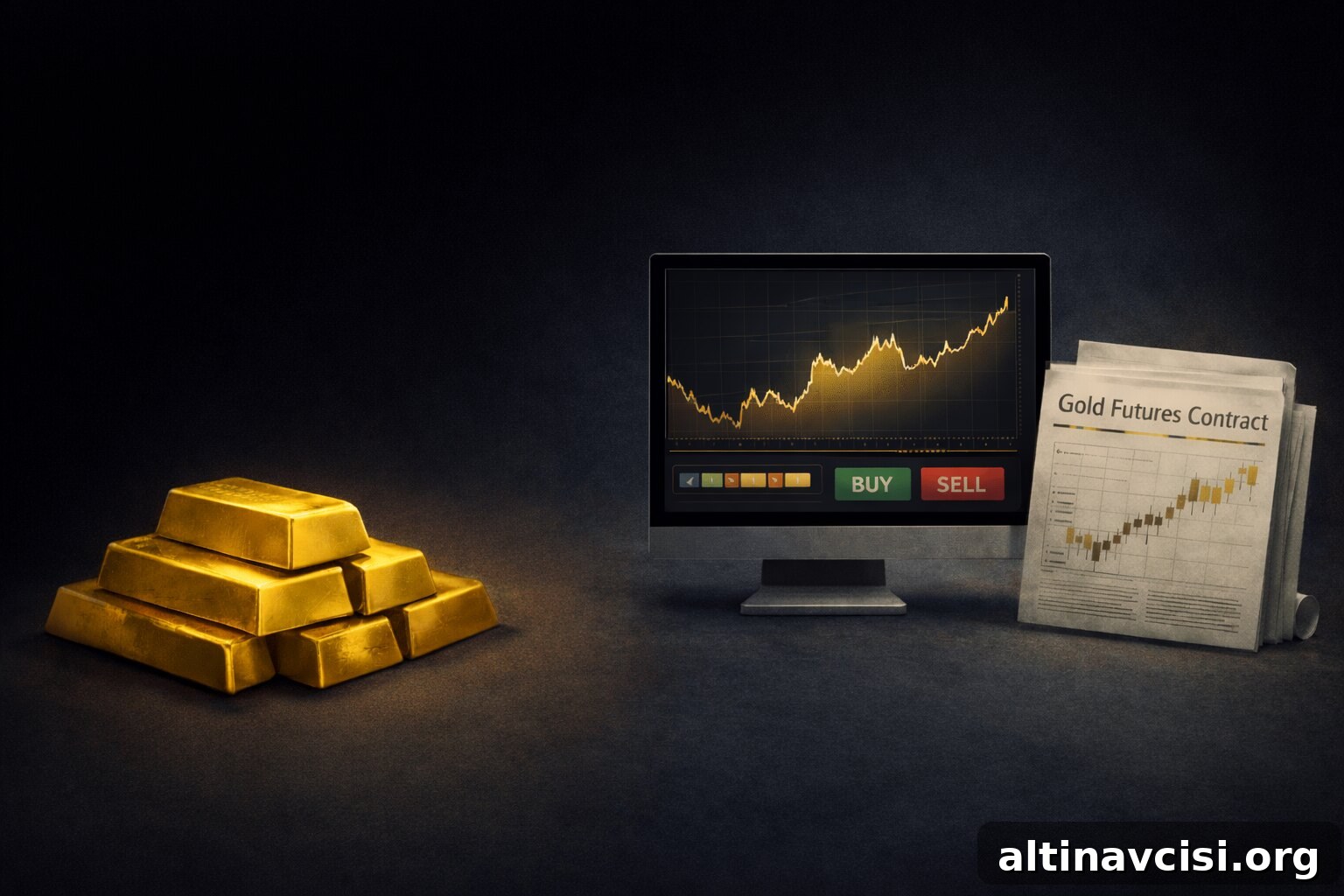
If you follow the gold market, you’ve likely wondered: what is COMEX, and why does it seem to move gold prices every day?
Many investors who own physical bullion don’t realize that the global gold price is not primarily set by coin dealers or vaults. Instead, it is largely driven by trading on a futures exchange in New York — the Commodity Exchange, commonly known as COMEX.
Understanding COMEX is important for making sense of short-term price swings, volatility, and the occasional disconnect between futures contracts — often called “paper gold” — and physical demand.
Here’s a clear explanation.
What Is COMEX?
COMEX is a division of CME Group in New York where futures contracts for gold, silver, copper and other metals trade. Founded in the 1930s, it became the dominant marketplace for precious metals futures and today serves as the primary price-discovery venue for gold worldwide.
When news reports state a gold price — for example, “gold is trading at $5,000 per ounce” — that level typically comes from the most active COMEX gold futures contract, not from retail coin sales or private bullion transactions. That distinction matters for anyone trying to interpret moves in the market.
How Gold Futures Pricing Works
A gold futures contract is a standardized agreement to buy or sell a fixed quantity of gold (commonly 100 troy ounces) at a specified price on a future date.
Example:
- A trader buys a December gold futures contract at $5,000 per ounce.
- Each contract represents 100 ounces.
- The contract’s notional value is $500,000.
Traders do not usually pay the full notional amount up front. Futures are leveraged: only a margin deposit — a fraction of the contract value — is required to control the position. Crucially, most traders never intend to take physical delivery of 100 ounces of gold; they are speculating on price movements or hedging exposure.
If the price rises to $5,200, the trader can close the position and realize a $200-per-ounce gain, or $20,000 on the contract. If the price falls, the position incurs a loss. In most cases the contract is closed or cash-settled before delivery.
In short, COMEX functions primarily as a financial marketplace rather than a physical gold warehouse.
Why Most Contracts Never Result in Delivery
Although COMEX contracts can represent large amounts of gold on paper, only a small fraction ever leads to physical delivery. In many months, typically less than 5% of open contracts are taken to delivery. The majority are closed out, rolled into later contracts, or settled financially before expiration.
That’s because most participants — hedge funds, institutional traders, banks and algorithmic firms — trade for exposure, leverage or hedging, not to store metal in a vault. This gives rise to the so-called “paper gold” market, where the total gold represented by open contracts can exceed the physical gold available for delivery by a wide margin.
This system isn’t inherently fraudulent; it reflects how futures markets are designed: they provide liquidity, enable price discovery and allow risk management rather than mass physical settlement.
Why Physical Demand Can Diverge from Paper Prices
Sometimes coin shops report shortages, dealer premiums increase, retail demand surges and central banks accumulate bullion — yet the quoted gold price stalls or falls. That can happen because short-term pricing is driven mainly by futures flows, not by retail coin sales.
If large funds sell contracts aggressively, COMEX prices can drop quickly even while physical demand remains strong. Conversely, heavy speculative buying on COMEX can push prices higher despite subdued retail demand. These temporary disconnects between paper markets and physical markets are common and explain why many long-term buyers prefer to focus on owning metal rather than reacting to daily price noise.
Over time, physical supply and demand reassert influence, but day-to-day moves are often dominated by futures positioning.
Does COMEX Control Gold Prices?
COMEX doesn’t centrally “control” gold prices. It is the main venue where buyers and sellers meet and establish prices through competitive bids and offers. Because futures volumes are large — often many times annual mine production — financial flows can sway prices in the near term.
Long-term drivers such as inflation, currency depreciation, real interest rates, central bank purchases and geopolitical risk tend to determine trends over extended periods. But short-term volatility is frequently shaped by futures market positioning.
Why COMEX Matters to Physical Gold Investors
Even if you own physical gold as protection against inflation or systemic risk, COMEX matters because it sets the spot price used to value holdings, influences short-term volatility, shapes investor sentiment and drives media narratives.
Knowing how COMEX works helps you separate temporary market noise from structural demand for hard assets. That perspective can prevent emotional reactions to daily swings and support better long-term allocation decisions.
The Bigger Picture: Paper Markets vs. Monetary Reality
Gold has been a monetary anchor for millennia. Futures markets are a modern financial overlay: useful for liquidity and price discovery, but ultimately dependent on the underlying asset.
When confidence in the financial system is strong, paper markets tend to dominate. When confidence falters — during high inflation, currency stress or geopolitical crises — demand for physical gold usually becomes more pronounced.
Experienced investors watch indicators such as central bank purchases, real interest rates, debt levels, currency trends and COMEX delivery volumes, because over the long run monetary fundamentals matter more than short-term leverage-driven moves.
Final Thoughts: Why Understanding COMEX Gives You an Edge
If you are serious about protecting purchasing power, you cannot ignore how the gold price is set. Knowing what COMEX is and how futures positioning affects short-term price behavior helps you:
- Stay rational during volatility
- Distinguish short-term noise from long-term trends
- Avoid panic during paper-driven selloffs
- Build conviction in your allocation strategy
Gold is more than another asset class; it is monetary insurance. The more you understand pricing mechanics, the more confidently you can navigate market swings and position yourself for what comes next.
Stay On Top of Gold & Silver Prices
Get important market alerts sent straight to your inbox.
People Also Ask
What is COMEX and how does it affect gold prices?
COMEX is the primary futures exchange for gold contracts and plays a central role in setting the global gold price. Short-term price moves are often driven by futures trading activity rather than retail coin or bar sales, so understanding COMEX helps interpret volatility.
Does COMEX control the price of gold?
COMEX does not centrally control prices; it is the main marketplace where buyers and sellers establish price through futures contracts. Still, large trading volumes can influence near-term price action more than physical fundamentals.
Why doesn’t most COMEX gold trading result in physical delivery?
Most futures traders speculate or hedge and do not intend to take physical possession. Only a small percentage of contracts are taken to delivery each month; most are closed, rolled or cash-settled before expiration.
Why can gold prices fall even when physical demand is strong?
Short-term prices are often driven by futures market positioning. Large institutional selling can push prices lower even as physical demand and dealer premiums rise. Over time, underlying fundamentals typically reassert themselves.
What is the difference between paper gold and physical gold?
“Paper gold” refers to financial instruments that track gold’s price, like futures contracts, without requiring metal ownership. Physical gold means owning coins or bars. Many long-term investors prefer physical metal as a hedge against systemic risk.
You May Also Like
- What Are Margin Requirements? Why CME’s Hike Triggered a Silver Crash
- Why Margin Hikes Could Make Gold and Silver Prices More Volatile
- Silver Price Forecasts Revisited: Why Wall Street Got It Wrong
- Why Metals Dominated Every Asset Class in 2025 [and What It Means for 2026]
- Best Investment Of 2026: Silver’s Setup Is Hard To Ignore