Key Takeaways
- The gold volatility index (GVZ) is published by Cboe Global Markets and quantifies the market’s expectation of 30-day price movement in gold by using options on the SPDR Gold Shares ETF (GLD).
- A GVZ reading of 25 indicates the options market is pricing in annualized movement of about 25% over the coming 30 days.
- GVZ has spiked both during market crises (for example in 2008 and during the COVID-19 shock) and during strong gold rallies; high readings can reflect very different underlying dynamics.
- When GVZ rises during a bull market it often reflects demand for upside calls—investors buying exposure to further gains—rather than panic selling.
- For long-term owners of allocated physical gold, a high GVZ is primarily a paper-market signal and does not directly affect the intrinsic value or security of physical holdings.
If you follow gold markets, you’ve likely seen references to the gold volatility index, commonly known as GVZ. A jump into the 30s or 40s can feel alarming at first, but a high GVZ reading does not automatically mean something is wrong with your holdings. Below is a clear, practical overview of what GVZ measures and how to interpret it.
Short answer: GVZ measures expected magnitude of moves, not their direction. Read on for the fuller explanation.
What Is the Gold Volatility Index (GVZ)?
The GVZ is a real-time index produced by Cboe Global Markets. It estimates how much the market expects the gold price to move over the next 30 days, expressed as an annualized percentage. The calculation uses option prices on GLD, the large, physically backed gold ETF. Option premiums reflect traders’ willingness to pay for the right to buy or sell at set prices, and when those premiums rise, the GVZ rises as well.
Because GVZ is an implied volatility measure, it tells you how big market participants expect swings to be over the next month, but it does not say whether those swings will be up or down.
The Knowledge That Changes Everything
Two essential guides — yours free. Learn why gold matters and why fiat currencies tend to lose value over time.
How Is the GVZ Different From the VIX?
The VIX and the GVZ use the same methodology: both are forward-looking, derived from option prices, and expressed as annualized percentage volatility. The critical difference is their subject: VIX tracks expected volatility for the S&P 500, while GVZ applies the same framework to gold via GLD options.
Because gold has different drivers than equities—monetary policy, real yields, geopolitical risk, and central bank behavior—the GVZ can spike for reasons unrelated to panic about a falling gold price. Context is essential when interpreting each index’s moves.
What Do Different GVZ Levels Mean for Investors?
Historical patterns suggest useful regimes for reading GVZ:
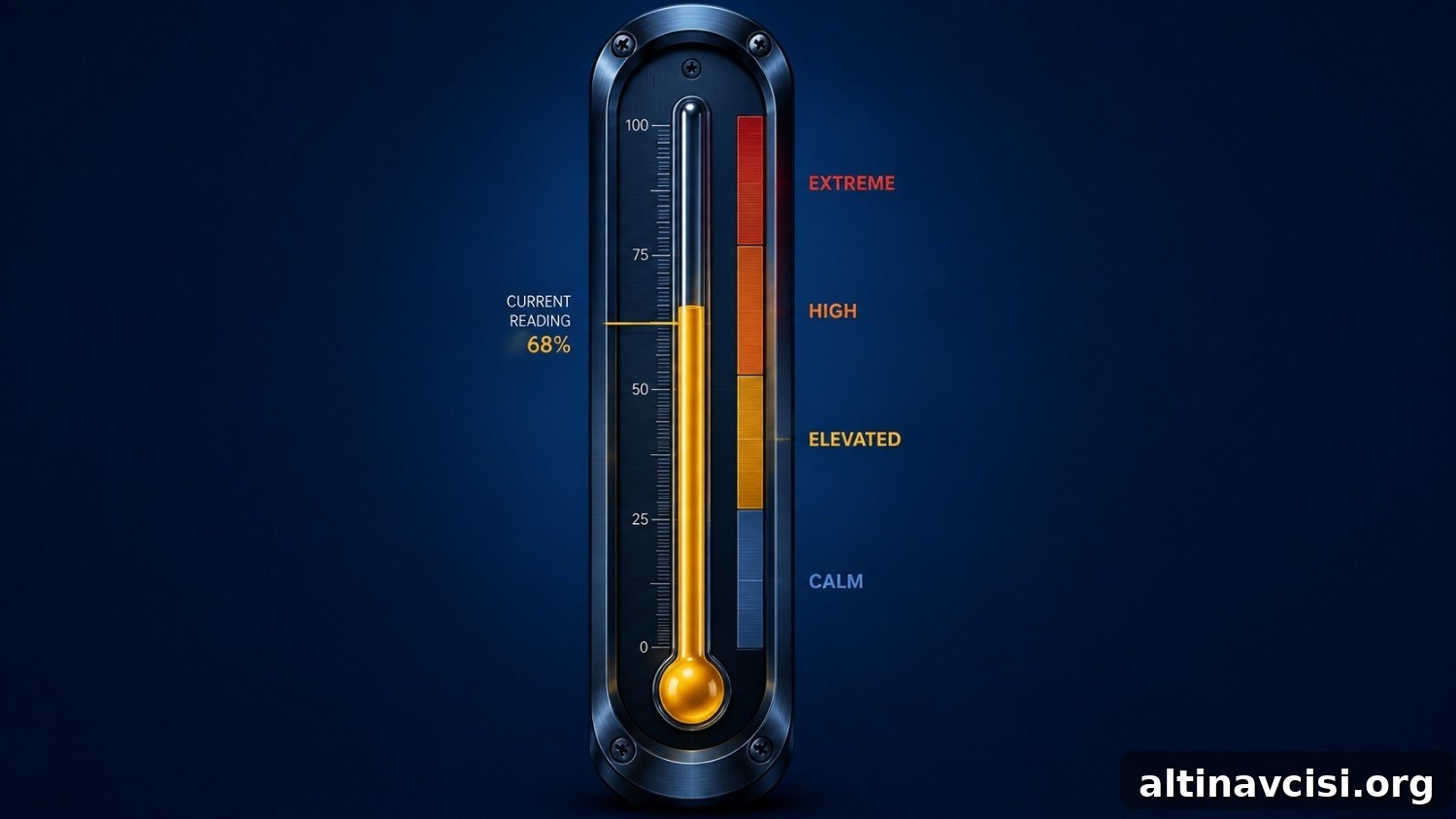
- Below 15 — exceptionally calm. These are unusually quiet periods where options traders expect little movement. Calm stretches are often followed by directional breaks.
- 15–20 — normal baseline. A fairly typical range when macro conditions are stable and no major shocks are expected.
- 20–30 — elevated. This range warns that significant movement is possible. It can reflect a gradual bull market, rising geopolitical risk, or upcoming major policy events.
- 30–50 — high. Levels here often signal a macro regime shift or rapid price action in either direction.
- Above 50 — extreme. These readings have historically aligned with systemic stress and broad market dislocation.
Why Did the GVZ Spike When Gold Hit Its All-Time High?
A high GVZ during a gold rally can seem counterintuitive. The explanation lies in option demand: during a strong upswing, institutional investors often buy call options to capture further gains or hedge shortfalls in exposure. That demand pushes option prices higher and raises GVZ, even though the underlying momentum is upward. In contrast, crisis-driven spikes often come from put buying, where investors pay to protect against declines. Both actions raise implied volatility but carry very different market meanings.
Does the GVZ Predict Where the Gold Price Is Going?
No. GVZ indicates expected magnitude of movement, not the direction. Traders use it for pricing options and managing risk. For longer-term investors, GVZ is a signal about potential volatility ahead, not a directional forecast. It’s most useful when combined with other market information and a clear investment plan.
What Does the GVZ Mean for Long-Term Physical Gold Holders?
If you own allocated physical gold stored in a secure vault, GVZ is largely noise. The index is derived from paper-market options and does not change the weight, location, or ownership of physical bars or coins. Physical holdings avoid margin calls and forced liquidations that can affect leveraged paper positions.
That said, consistently elevated GVZ can remind active buyers to use strategies such as dollar-cost averaging rather than making one large purchase during a high-volatility period. The point is risk management, not reacting to a single GVZ reading.
Where Can You Track the GVZ Today?
GVZ quotes appear on many financial platforms in real time under the ticker ^GVZ, and historical daily series are archived by data providers for longer-term context. Related indices exist for other commodities, extending the same methodology to markets like crude oil and silver.
What Does the GVZ Reveal About Gold’s Role in the Monetary System?
A sustained higher GVZ range can reflect a structural shift: institutional investors treating gold as a strategic monetary asset again. When central banks increase purchases, real yields turn negative, or fiscal conditions deteriorate, options traders react. A persistently elevated GVZ suggests the paper market is acknowledging gold’s renewed prominence in institutional allocations. For individual physical holders, that is confirmation rather than a call to action.
Stay On Top of Gold & Silver Prices
Get important market alerts sent straight to your inbox.
People Also Ask
GVZ is the ticker symbol for the Cboe Gold ETF Volatility Index. The letters indicate gold (G), volatility (V), and an exchange designation (Z).
GVZ is calculated using the same methodology as the VIX: it aggregates option mid-quote prices across strikes and near-term expirations to produce a constant 30-day variance estimate, which is then converted into an annualized volatility percentage.
No. The VIX measures expected volatility for the S&P 500. The GVZ uses the same approach but applies it to gold via GLD options, so they track different markets and respond to different drivers.
Historically, readings below 15 are unusually calm, 15–20 is a normal baseline, 20–30 is elevated, and 30+ indicates significant expected movement. Context and recent history should guide interpretation.
Not necessarily. A high GVZ signals expected volatility, not a guaranteed decline. For long-term physical holders, GVZ is mainly a paper-market indicator and does not directly affect allocated physical gold.
Sources
Cboe Global Markets — CBOE Gold ETF Volatility Index (GVZ); Federal Reserve Bank of St. Louis (FRED) — GVZ historical series; GoldSilver price charts and market commentary.
Disclaimer: This article is for informational purposes only and does not constitute financial or investment advice. Consult a qualified financial adviser before making investment decisions.
You May Also Like:
- Gold & Silver Market Correction: Is the 2026 Bull Market Over?
- JPMorgan Cut Its Gold Forecast by 25%. Here’s What Long-Term Holders Need to Know.
- Why HSBC Still Believes Gold Hits $4,750 by Year-End (And What the Mainstream Is Missing)
- State Street Predicts $5,500 Gold by Q1 2027: Is the Dip Over?
- Why China’s Gold Buying Spree Outweighs India’s Pause
- What Is Purchasing Power — and Why Every Dollar You Save Is Slowly Being Taxed Away
- Why Hong Kong? Inside GoldSilver’s Offshore Gold Storage Network