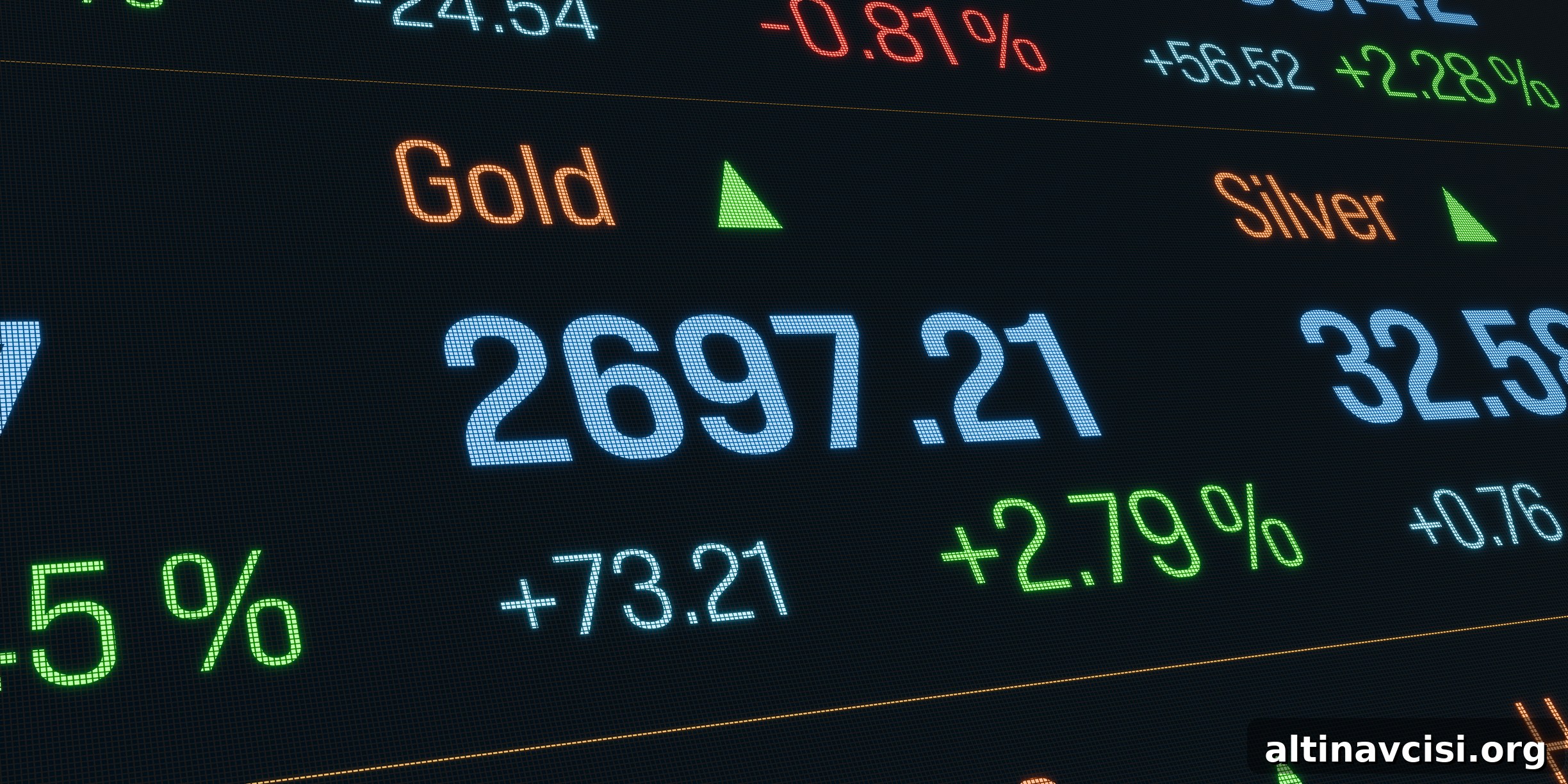
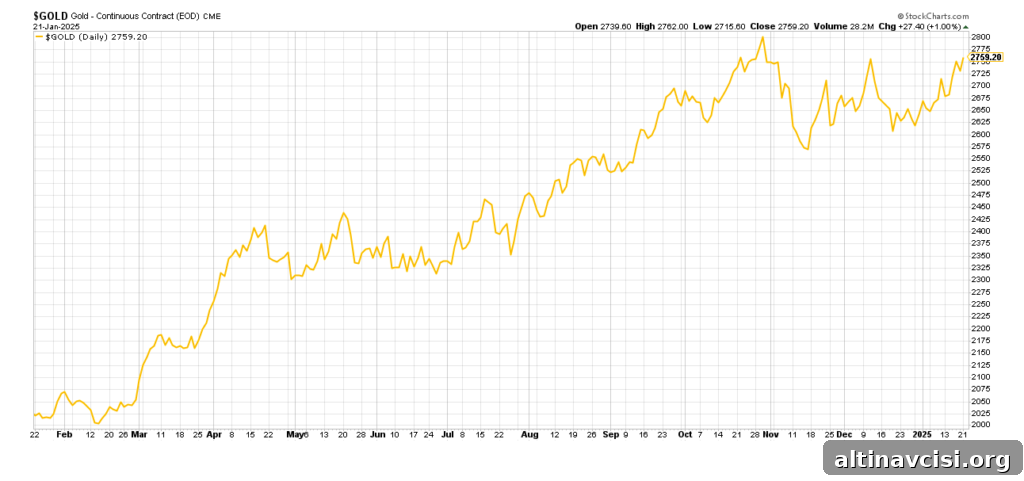
Gold prices surged sharply, rising nearly 2% on Tuesday and pushing toward $2,750 per ounce after Donald Trump returned to office.
The rally was sparked by the new administration’s flurry of executive actions — more than 200 orders signed on the first day, including measures related to tariffs. Markets interpreted those moves as likely to increase inflationary pressure, driving investors toward gold as a hedge.
Technically, gold broke above a triple-top formation, placing the metal within reach of its record high of $2,790 an ounce set last October amid heightened geopolitical tensions in the Middle East. That breakout has reinforced bullish momentum as traders and investors reassess risk and inflation outlooks.
Previously, Federal Reserve guidance forecast two interest-rate cuts in 2025. However, rising expectations for higher inflation could prompt the Fed to reconsider that path. That creates a nuanced scenario: gold traditionally benefits from higher inflation expectations, but tariff-driven policy could also support a stronger dollar in the near term. Both forces can influence bullion’s direction, with safe-haven demand and shifting monetary-policy expectations combining to support prices.
Market participants will be watching upcoming inflation data, Fed communications, and any follow-up trade measures closely. Those developments will help determine whether gold’s recent gains mark the start of a sustained rally toward and beyond its prior peak, or a shorter-term reaction to policy uncertainty and geopolitical risk.