Gold Surpasses Euro as World’s No. 2 Reserve Asset
Gold Surpasses the Euro as the World’s Second-Largest Reserve Asset
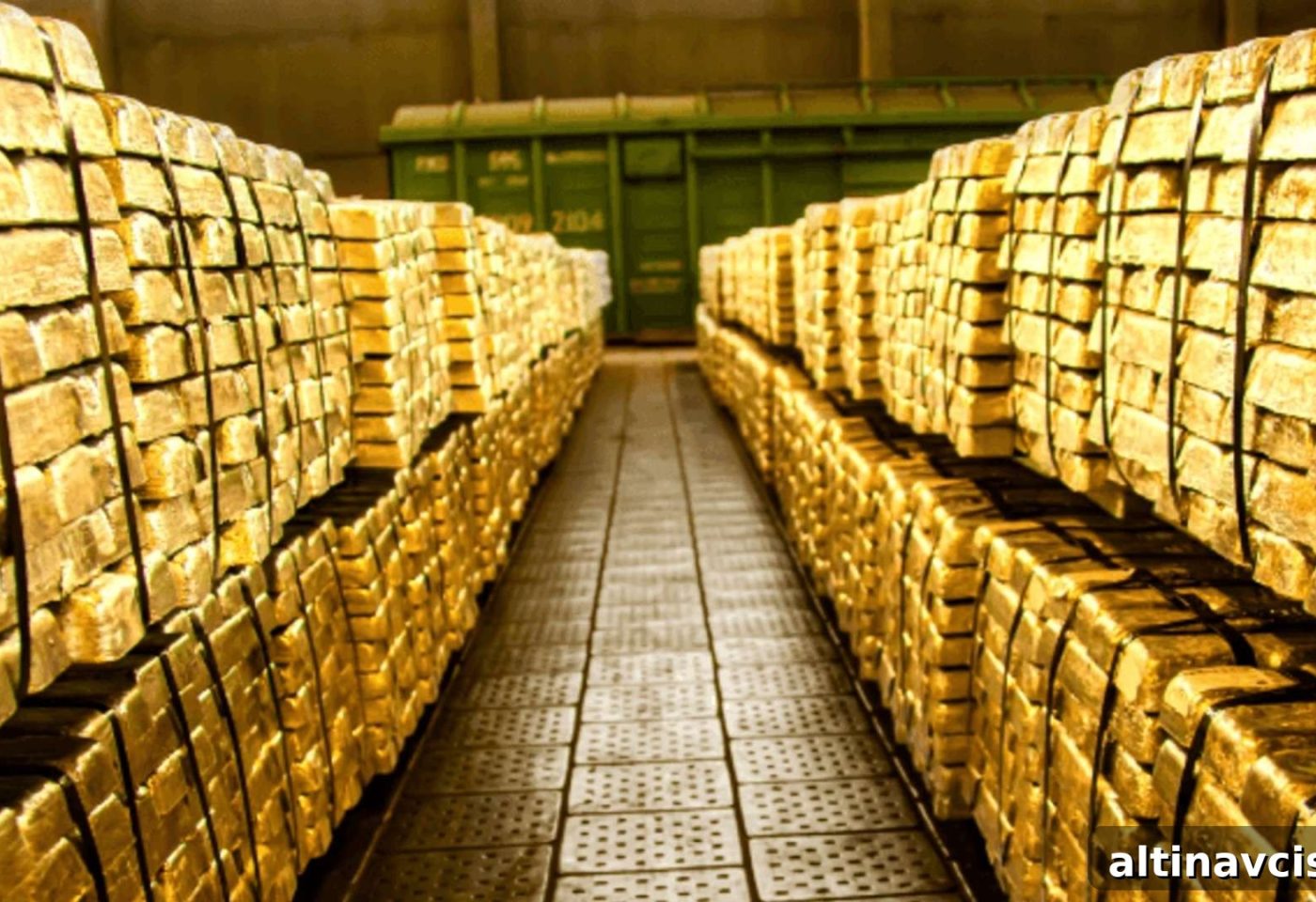
A recent report from the European Central Bank (ECB) reveals a notable shift in the composition of global foreign exchange reserves: gold has overtaken the euro to become the world’s second-largest reserve asset after the US dollar. This change reflects a combination of a strong rise in bullion prices and an unprecedented wave of central bank purchases.
Price Gains and Central Bank Buying Drive the Shift
Over the past two years, gold prices have climbed roughly 60%, boosting the value of existing holdings across central banks and national treasuries. At the same time, official sector demand accelerated dramatically. Central banks purchased more than 1,000 tonnes of gold in 2024 alone, a volume that the ECB report notes is about double the average annual purchases observed during the previous decade. Those inflows have materially increased gold’s share in the global reserve mix.
Emerging Economies Lead the Buying Spree
State buyers have not been uniform. The report highlights that China, Turkey, and India have been among the most active accumulators of gold, collectively adding over 600 tonnes since 2021. For these and other emerging-market economies, the motivation to build gold reserves extends beyond conventional hedging against inflation. National policymakers increasingly view gold as a strategic asset that can protect financial sovereignty in an uncertain geopolitical environment.
Gold’s New Role: Geopolitical Insurance and Financial Sovereignty
Traditionally, gold has been prized as a long-term hedge against inflation and currency depreciation. The ECB’s findings indicate that its role has broadened. In a world where sanctions, capital controls, and the potential weaponization of financial relationships are more prominent, gold offers a form of insurance that is hard to restrict by third parties. Physical bullion stored domestically or in trusted vaults provides a means for countries to diversify away from politically sensitive reserve assets.
Reserve Composition: 20% Gold Versus 16% Euro
Measured at current market values, gold now accounts for about 20% of global foreign exchange reserves, compared with roughly 16% for the euro. This reversal signals a meaningful change in how nations allocate their reserve portfolios. It reflects both market-driven valuation effects and deliberate policy choices by central banks seeking to rebalance risk amid volatile international relations and shifting economic alliances.
Implications for the Euro and the Global Financial System
The euro’s decline to third place in reserve prominence does not necessarily imply an imminent crisis for the currency, but it does raise questions about confidence dynamics and reserve diversification preferences. Central banks re-evaluating their exposure to any single currency often do so in response to perceived political and financial risks. As gold gains weight, the overall resilience and structure of the global reserve system may change, with more emphasis on asset classes that are less affected by cross-border political pressures.
What This Means for Policy and Markets
For policymakers, the shift underscores the need to consider non-traditional drivers of reserve allocation, such as sanctions risk and the geopolitics of payment systems. For markets, higher official demand for gold can affect liquidity, price volatility, and dealer inventories. Investors and institutions that monitor reserve trends should factor in the strategic motives behind central bank buying as well as the valuation effects that arise from price appreciation.
Conclusion
The ECB report highlights a structural recalibration in global reserve management: gold is no longer seen only as an inflation hedge but increasingly as a tool for maintaining sovereignty and mitigating geopolitical risk. With significant purchases concentrated in major emerging economies and gold’s substantial price gains, bullion now captures a larger share of global reserves than the euro. That change reflects evolving perceptions of risk, liquidity, and trust in a world where economic and political fragmentation is an important consideration for reserve managers.
Popular Topics
Picked from the archive
-
01
 Topics
China May Cut Tariffs on Key US Medical and Industrial Imports
-
02
Topics
Weaponizing Supply Chains: Rare Earths to Semiconductors
-
03
Topics
76% of Central Banks to Increase Gold Reserves, WGC Survey Finds
-
04
Topics
Trump Demands Powell’s Removal as Fed Chair Warns on Tariffs
-
05
Topics
Gold Rises to No. 2 Global Reserve amid Sanctions Concerns
-
06
Topics
Daly Urges Fed to Temper Forecasts and Balance Dual Mandate
-
07
Topics
Strong Jobs Report Drives 10-Year Treasury Yield Above 4.34%
-
08
Topics
Report: Republican Tax Bill Masks Over 1 Trillion in Future Debt