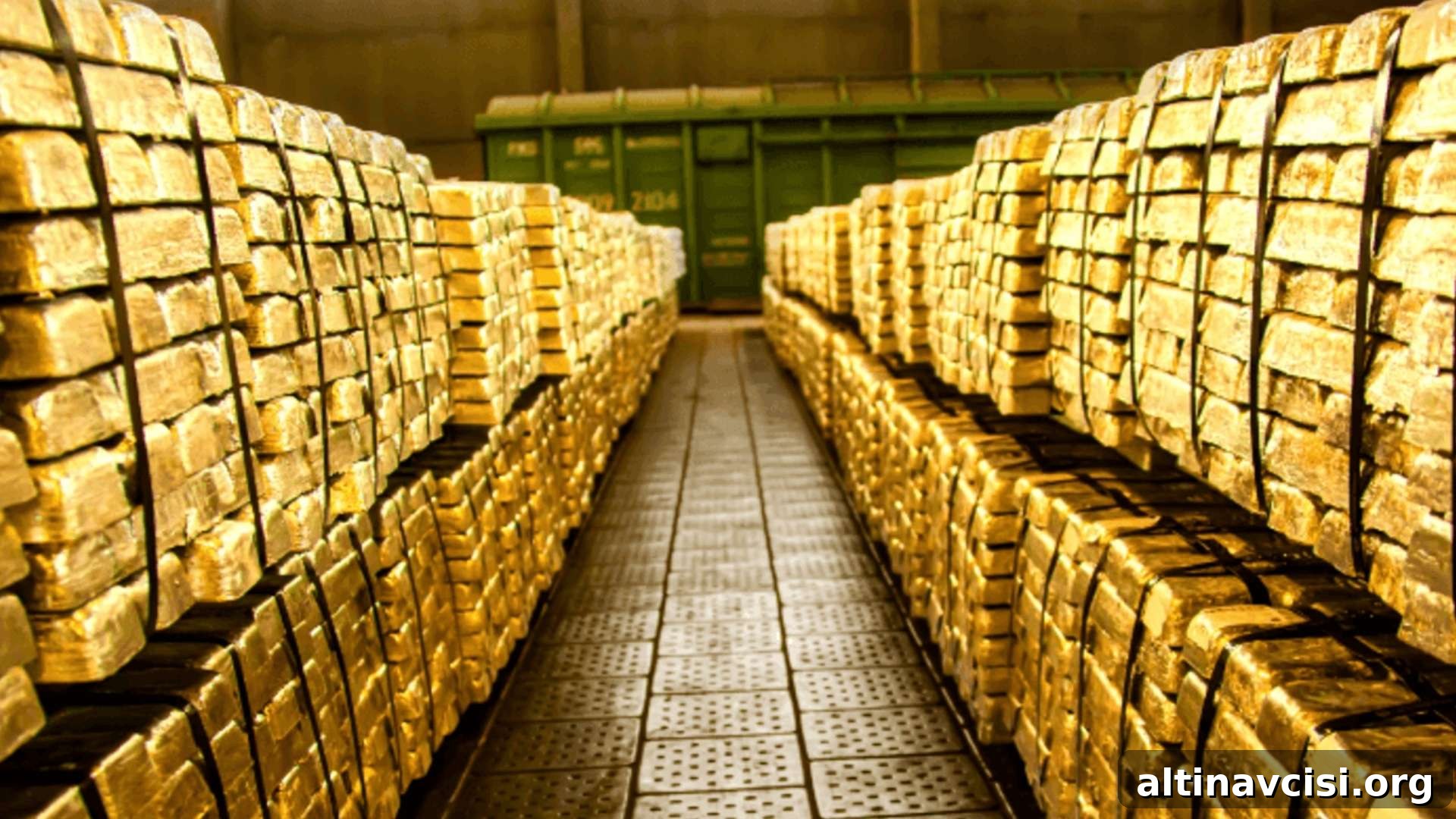
Gold has surpassed the euro to become the world’s second-largest reserve asset after the U.S. dollar, according to a recent ECB report. This change reflects a roughly 60% rise in gold prices over the past two years and a surge in central bank purchases—more than 1,000 tonnes bought in 2024 alone, about twice the average annual acquisitions seen in the previous decade.
The role of gold in official reserves has evolved beyond its traditional use as an inflation hedge. Central banks increasingly treat gold as a form of geopolitical insurance, offering protection against sanctions and the financial weaponization that can accompany geopolitical tensions. Emerging and middle-income economies have been particularly active: China, Turkey and India have driven much of the demand, adding more than 600 tonnes to their reserves since 2021.
Measured at current market values, gold now accounts for roughly 20% of global foreign exchange reserves, compared with about 16% for the euro. That shift signals a broader rethinking of monetary security among nations: gold is being viewed less as a passive store of value and more as an asset that can preserve sovereignty and provide resilience in a more fragmented international financial system.
Several factors help explain the rapid accumulation of gold. Persistently elevated geopolitical risks have encouraged reserve managers to diversify away from currency-denominated assets that could be affected by sanctions or restrictions. At the same time, tighter monetary policies and higher real yields in some major economies have not fully reduced the appeal of non-yielding safe havens like gold, especially when concerns about systemic risk and cross-border financial interoperability are high.
Policy considerations also play a role. For many central banks, raising gold holdings is a relatively straightforward way to boost reserve diversification without introducing credit or counterparty risk. Physical gold holdings are not subject to the same settlement or custody exposures as foreign-currency securities, and they remain outside the jurisdictional reach of most temporary financial controls.
Market dynamics have amplified the impact of these purchases. Strong demand from official sector buyers, combined with private-sector interest, has supported higher prices and encouraged further accumulation. In turn, higher prices increase the market value of existing gold reserves, reinforcing its share of global reserves even before accounting for fresh purchases.
The euro’s declining share is partly a mirror image of this trend but also reflects longer-term structural shifts in international currency use. While the euro remains an important reserve currency, some central banks have sought to reduce reliance on any single foreign currency, pursuing broader reserve mixes that include gold, other major currencies and sometimes alternative assets.
Looking ahead, the persistence of geopolitical tensions and renewed emphasis on financial resilience suggest that gold will likely remain a key component of many reserve portfolios. However, the future path of gold’s share will depend on price movements, the pace of official-sector buying, and broader developments in global finance and geopolitics.
In short, the recent re-ranking of reserve assets underscores a notable shift in how countries hedge economic and political risks: gold has re-emerged as a central tool for safeguarding national financial autonomy in an uncertain world.