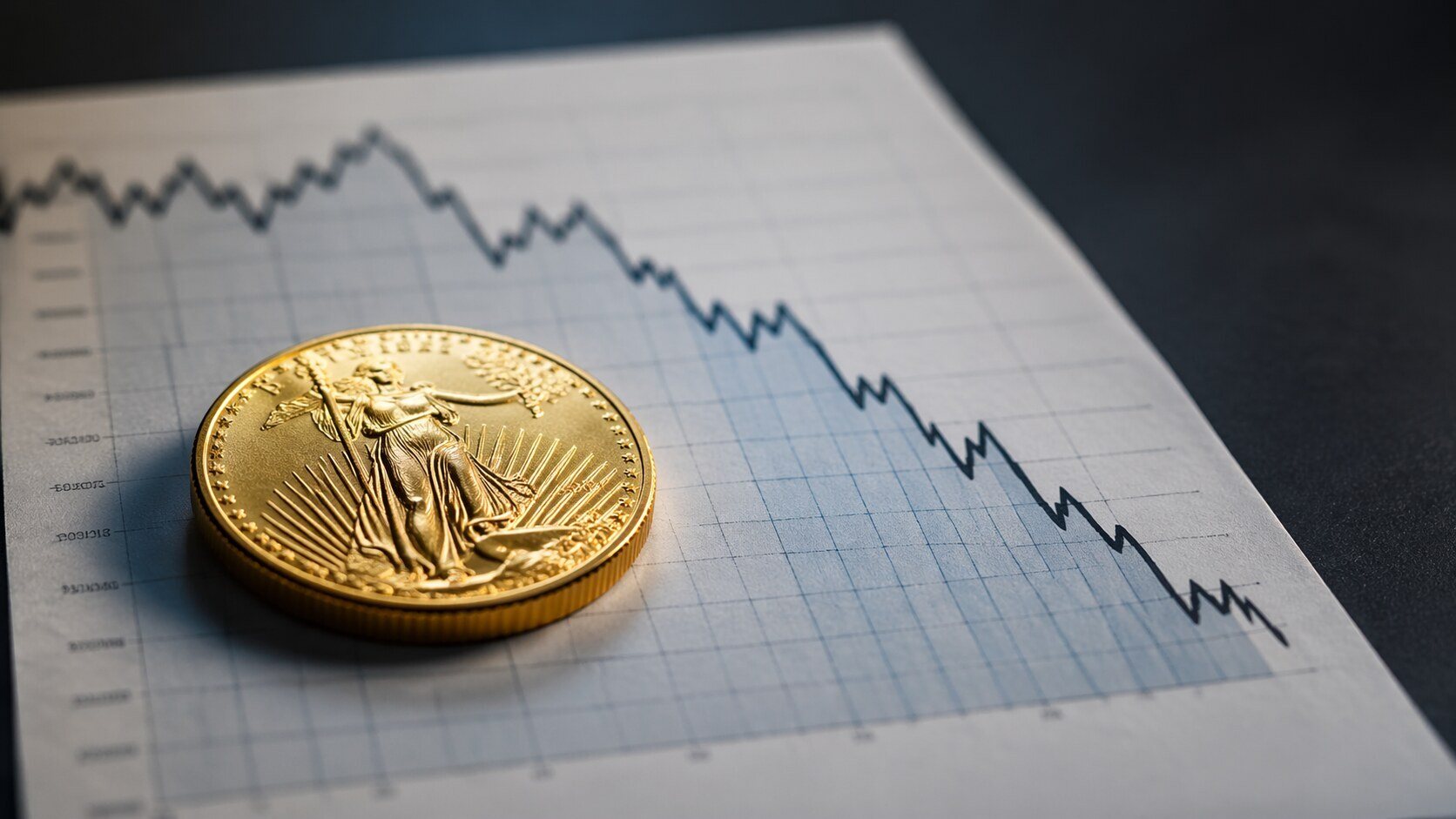
Oil Jumps 4% on Hurricane and Tanker Squeeze. Why Didn’t Gold Follow?

America’s oil supply took two separate hits this week. The price of gold barely moved. Brent crude rose as much as 4.3% on Thursday to roughly $104.50 a barrel, and WTI rose about 4.2% to near $92.00 [OilPrice.com]. Both benchmarks hit their highest levels in over a week. Gold normally rallies when energy shocks lift inflation fears; instead, it is up only 0.28% today, to $4,122.39. Silver is down 1.81%, to $58.87. Part of the reason is silver’s dual industrial and monetary identity, which makes it swing harder than gold in either direction.
Key Takeaways:
- Brent and WTI both jumped more than 4% intraday on a Gulf hurricane and a Hormuz tanker slowdown. Gold still only rose 0.28% and silver fell 1.81% today.
- Real yields explain the gap. The 30-year Treasury yield hit 5.732% intraday this week, its highest level in roughly two decades, even as one-year inflation expectations climbed to 3.9% [New York Fed].
- Tonight’s $22 billion 30-year Treasury auction at 1pm ET matters more for gold’s next move than today’s oil headline does.
Two supply shocks hit at once. Hurricane Isaias forced Shell and Chevron to curtail Gulf of Mexico output. Roughly 25% of Gulf crude production and 16% of natural gas production sat shut in as of Wednesday. Separately, tanker traffic through the Strait of Hormuz fell to just seven vessels on October 6. That is the lowest flow in over two months, cutting crude transit to about 10.1 million barrels a day [TradingKey]. A surprise 3.2 million-barrel draw in U.S. crude stocks, against an expected build, added a third leg to the rally [EIA].
The Edge Every Investor Needs Smarter precious metals investing starts here. The Nuggets Newsletter brings you essential market insights, Fed updates, global trends, educational videos, and much more.
Is Oil or the Treasury Market Driving Gold’s Price?
An oil shock usually lifts gold two ways. It raises headline inflation, and it unsettles risk markets enough to spark safe-haven buying. Neither channel is having an impact today; a third force is overriding both. The U.S. Treasury’s par curve shows the 30-year yield touching 5.732% intraday this week, a level unseen in roughly two decades [U.S. Treasury]. Meanwhile, the New York Fed’s Survey of Consumer Expectations put one-year inflation expectations at 3.9%, up from 3.6% and the highest since May 2023 [New York Fed]. Nominal yields are rising faster than inflation expectations. As a result, real yields keep climbing. Gold pays no yield at all, so it loses that comparison every time real yields move higher, no matter what oil does.
This is the mechanism every saver should learn, instead of reading too much into one day’s headline. Gold’s slide toward two-month lows this week was already being driven by these same rising yields, well before today’s oil shock arrived. A supply shock can raise the cost of living without raising the price of gold. That happens because the bond market is independently setting a higher price on holding dollars right now. Government debt service, deficit concerns, and inflation risk all feed into that price. Right now, together, they outweigh the energy story entirely.
What Does This Mean for Gold and Silver’s Longer-Term Case?
Here is the second angle most coverage is missing: markets are treating a verified, physical supply disruption as less important than a single bond auction. A hurricane is shutting in real barrels of oil, yet a Treasury sale still matters more to gold’s price today. That is not irrational. It simply shows how completely real yields currently dominate precious metals pricing over every other input. However, that dominance has a known limit. Real yields cannot climb forever without eventually breaking something in a debt market now well past $38 trillion, where interest costs already consume a growing share of federal revenue. Once that limit is tested, the same real-yield math capping gold today flips firmly into gold’s favor.
What Should Investors Watch Next?
Today’s $22 billion 30-year Treasury auction at 1pm ET, following a prior rate of 5.308%, is the next real test [Mitrade]. A weak auction pushes yields higher still and opens a path toward gold’s $4,000 support level. A strong auction pulls yields back instead, letting gold reclaim $4,160 to $4,200. Oil, meanwhile, keeps its own separate watch list: Hormuz shipping volumes and the pace of Gulf production recovery. For a saver holding physical metal, the lesson is simple. Do not trade on oil headlines. Watch what Treasury buyers actually pay today for long-term risk instead.
Stay On Top of Gold & Silver Prices
Get important market alerts sent straight to your inbox.
People Also Asked
Why Doesn’t an Oil Price Spike Always Push Gold Higher?Oil raises inflation expectations, but gold responds to real yields instead. Real yields equal nominal yields minus inflation expectations. When nominal yields rise faster than inflation expectations, as they are now, real yields climb. Gold then loses ground even while oil rallies.
What Is a Treasury Auction, and Why Does It Move Gold Prices?A Treasury auction sets the interest rate the government pays to borrow for a set term. In a weak auction, investors demand a higher yield to participate. That pushes borrowing costs and real yields higher, which makes gold a less attractive investment. A strong auction does the opposite.
How Much of the World’s Oil Actually Moves Through the Strait of Hormuz?Flow through the strait fell to about 10.1 million barrels per day this week. Tanker traffic slowed to just seven vessels on October 6, down sharply from the roughly one-fifth of global oil supply the strait typically carries [TradingKey].
SOURCES
1. OilPrice.com — Big Oil Begins Shutting In Gulf of Mexico Production
2. TradingKey (via Mitrade) — WTI and Brent Crude Prices Surge Over 4%: Why Are Oil Prices Rising?
3. U.S. Energy Information Administration — Weekly Petroleum Status Report
4. Federal Reserve Bank of New York — September 2026 Survey of Consumer Expectations
5. U.S. Department of the Treasury — Daily Treasury Par Yield Curve Rates
6. TFTC.io — 30-Year Bond Auction History
7. Mitrade Insights — Gold Falls to a Two-Month Low as Real Yields Bite — Can $4,000 Hold?
Disclaimer: This article is for informational purposes only and does not constitute investment advice. Past performance is not indicative of future results. Always consult a qualified financial advisor before making investment decisions.