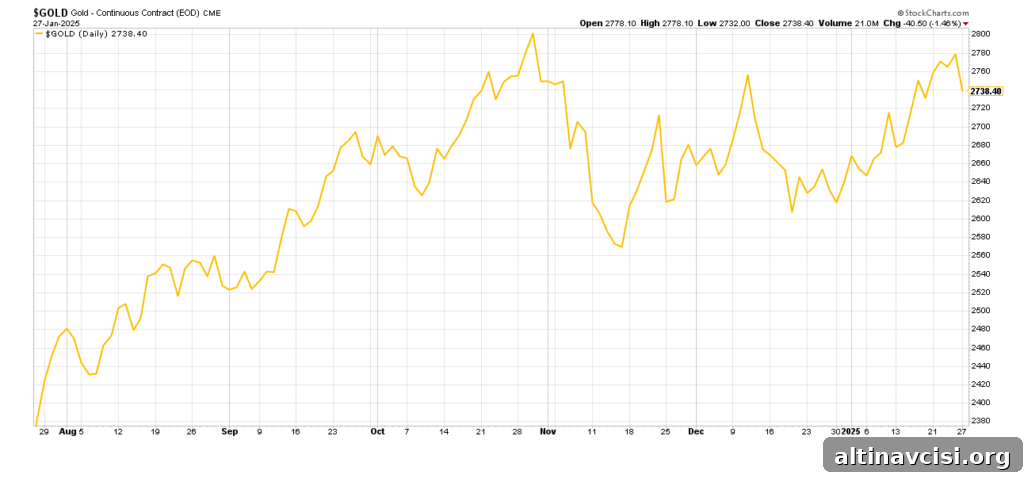
Gold regained stability on Tuesday after experiencing its largest one-day decline since December 18, a fall driven by investor selling to cover losses in technology stocks.
The recent slump followed DeepSeek’s release of a low-cost AI model, which shook confidence in leading AI firms and sparked broader market volatility. Even so, gold held firm above $2,742 per ounce, buoyed by steadier European equity markets and a general recovery in risk appetite.
Analysts remain broadly bullish on gold heading into 2025. Several factors underpin this outlook: the possibility of Federal Reserve rate cuts, fiscal policies under the Trump administration that some expect could be inflationary, and continued uncertainty across global markets. Together, these conditions tend to support demand for safe-haven assets like gold.
As the Federal Reserve begins its first meeting of the year, attention is focused on the central bank’s policy stance. Comments from former President Trump about favoring lower borrowing costs have intensified debate over the Fed’s independence, and any shift in expectations for interest rates will influence precious metals pricing. Lower interest rates typically reduce the opportunity cost of holding non-yielding assets such as gold and silver, which can lift their appeal.
Silver and gold are both holding relatively strong positions, boosted by safe-haven demand and expectations for looser monetary policy in the future. By contrast, forecasters have trimmed their outlook for platinum and palladium. These metals face continued headwinds from weak industrial demand and structural challenges in automotive and manufacturing sectors that have historically driven consumption of platinum-group metals.
Market participants will be watching incoming economic data, Fed commentary, and geopolitical developments closely. Durable inflation readings, employment reports, and consumer spending figures will shape expectations for interest-rate trajectories, which in turn will affect precious metals. Additionally, supply-side dynamics—mining output, recycling rates, and shifts in central bank purchasing—will remain important determinants of price trends over the coming months.
In summary, despite a sharp, short-term correction tied to equity-market stress and an AI sector shock, gold’s near-term technical position remains supported above key levels. The combination of potential Fed easing, policy uncertainty, and safe-haven demand gives analysts reason to maintain a constructive stance on gold for 2025, while investors monitor signals that could alter momentum for silver, platinum, and palladium.