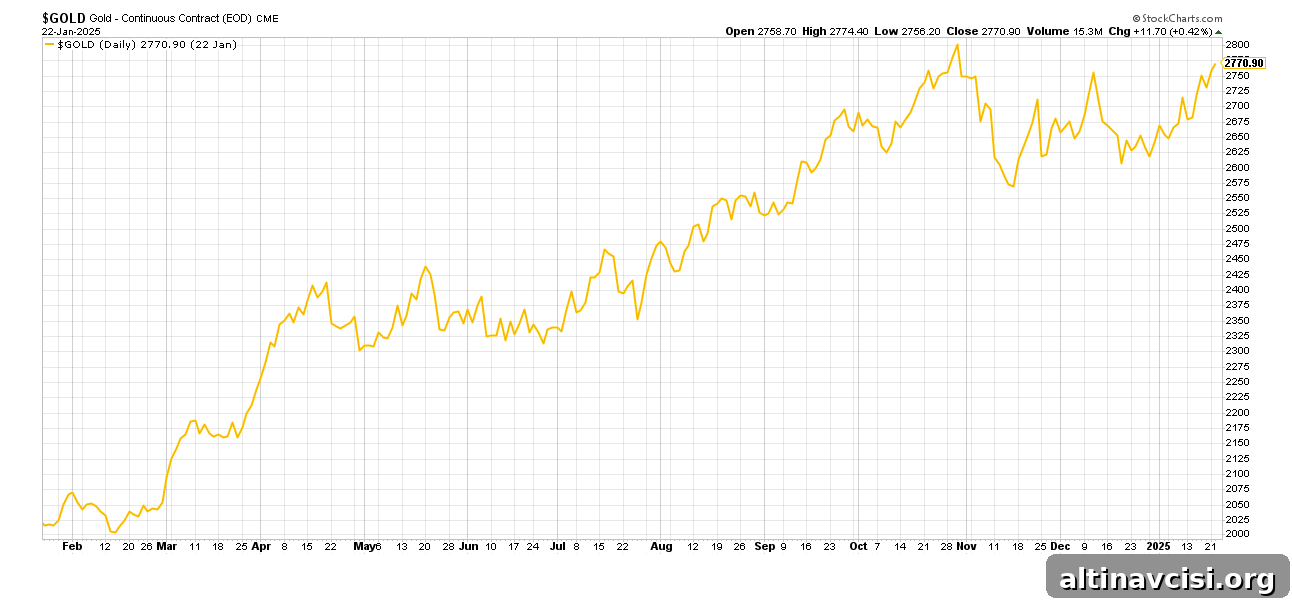
Gold prices eased slightly from recent peaks but remain firmly bid, trading near $2,750 per ounce — about $40 below all-time highs — and poised for a fourth straight weekly advance.
Markets are watching proposed trade tariffs from President Trump and scrutinizing upcoming US jobless claims for clues on the Federal Reserve’s interest-rate outlook. Traders say the timing and scope of tariff measures could influence growth expectations, supply chains and inflation — all factors that feed into gold demand.
Gold’s safe-haven status has been reinforced by ongoing geopolitical uncertainty, steady central bank purchases and a shift in expectations toward Fed rate cuts. These forces collectively reduce the opportunity cost of holding non-yielding assets like gold and increase its appeal as a portfolio hedge.
In addition to global drivers, domestic policy proposals — including tax changes and tighter immigration rules — may also affect the outlook for growth and inflation in the United States. If such policies slow economic activity or stoke inflationary pressures, they could provide an additional tailwind for bullion.
Technically, the market’s momentum remains positive. Momentum indicators point to continued investor interest, but traders are also mindful of resistance near record highs and possible short-term profit-taking. A decisive breakout above the all-time high would likely attract fresh buying, while a pullback toward key support levels could create buying opportunities for longer-term investors.
Analysts note that gold’s price trajectory will depend on a blend of macroeconomic data, central bank communication and geopolitical developments. Important near-term data releases, such as employment figures and inflation readings, will be watched closely for any signals that might shift expectations for monetary policy.
For investors, the current environment highlights the interplay between policy risk, macroeconomic trends and safe-haven demand. Many portfolio managers maintain exposure to gold as insurance against market volatility and uneven growth, while others use derivatives and ETFs to fine-tune their positioning around key macro events.
In summary, gold is trading near historic levels with strong momentum supported by geopolitical uncertainty, central bank buying and a softer Fed outlook. Proposed tariff measures and domestic policy moves could further shape the metal’s path, making upcoming economic data and policy announcements critical for traders and investors monitoring the market.