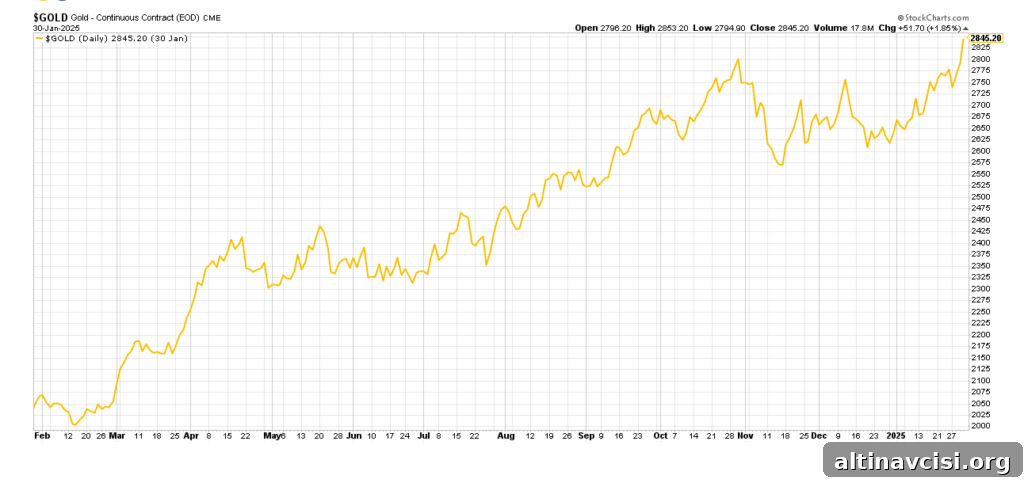
Gold’s price behavior has fundamentally shifted since 2022, severing its long-standing tie to real interest rates as the metal climbs to record levels near $2,798 per ounce.
The change accelerated after Russia’s invasion of Ukraine and the imposition of Western sanctions, which prompted many central banks to reassess their reliance on US dollar reserves. China has been central to this transformation: in 2023 it became the largest central bank buyer of gold and saw gold-backed ETF holdings surge by about 150% as policymakers contend with domestic deflationary pressures.
These developments reflect wider geopolitical tensions and a gradual fragmentation of the global financial system. US fiscal policy—characterized by large deficits and uncertain trade stances—has contributed to inflationary forces and pushed bond term premiums to levels not seen since 2011, complicating conventional links between interest rates and gold.
International institutions and policy forums have warned about the increasing use of financial tools as geopolitical levers. The prospect that nations might weaponize the global payments and reserve architecture has boosted demand for gold as a hedge against the risks of a fractured system. As a result, gold’s price now responds to a broader set of drivers—geopolitical rivalry, fiscal uncertainty, and systemic financial stress—beyond the traditional real-rate narrative.
That broader set of drivers implies a potentially more persistent upward trend in gold prices. Even if geopolitical tensions ease or real interest rates rise, the structural reallocation of reserves, increased central bank buying, and heightened investor interest in tangible safe havens could sustain strong demand for the metal. In short, gold’s recent surge reflects a new pricing paradigm in which monetary policy, fiscal dynamics, and geopolitics jointly shape market outcomes.