Daily News Nuggets | Today’s top stories for gold and silver investors
January 9th, 2026
U.S. Job Growth Slows Sharply in December
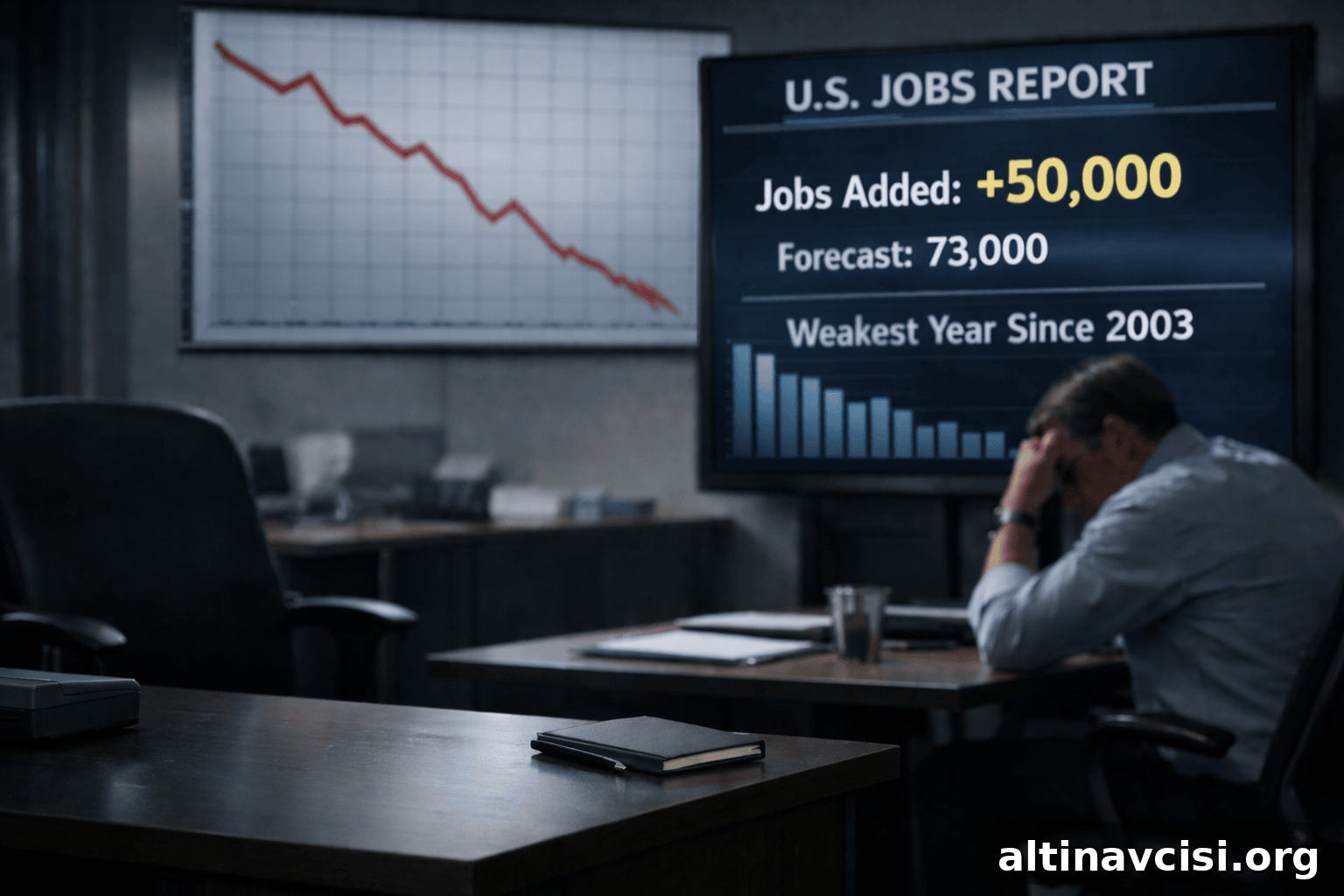
The U.S. economy added just 50,000 jobs in December, well below Wall Street’s forecast of 73,000. That weak print closes out a disappointing 2025 labor market, with only 584,000 jobs added for the year — the smallest annual increase since 2003. The unemployment rate held steady, but underlying momentum has clearly weakened.
The labor market has been the Federal Reserve’s most durable justification for maintaining tight policy. With hiring slowing, policymakers may find more room to consider rate cuts. At the same time, softer employment raises questions about whether growth is decelerating more quickly than expected.
When job growth dims and recession risk rises, investors typically rotate toward assets that are less tied to corporate profits and cyclical growth. That dynamic often brings gold back into the conversation — not as a short-term trade but as portfolio insurance against falling growth and policy uncertainty.

The Financial System Isn’t Safer — And You Know It
As risks mount, see why gold and silver are projected to keep shining in 2026 and beyond.
U.S. Housing Starts Sink to Lowest Level Since Pandemic
U.S. homebuilding activity slipped again in October, with housing starts falling to their lowest pace since May 2020. Builders are pulling back amid high mortgage rates, rising construction costs and softer demand, according to recently released government data.
Starts fell roughly 4.6% last month to about 1.25 million units, well under economists’ expectations and highlighting persistent weakness in residential construction. Multifamily projects led the decline, while single-family starts were only modestly higher and remain subdued overall.
Builder sentiment is low and permits for future construction do not point to a strong near-term rebound. If homebuilding stays weak, the housing slowdown could damp consumer spending and GDP growth, reinforcing a broader cooling trend in the economy.
Gold Notches Weekly Gain as Traders Reprice the Fed Path
Gold is finishing the week with gains, posting a solid weekly advance as investors digest weaker economic data and recalibrate expectations for interest rates. Softer job reports and signs of cooling growth have increased the likelihood that the Fed has less room to keep policy restrictive for long.
Gold’s resilience is notable. Even with bond yields elevated, the metal has held ground — indicating demand comes from broader uncertainty as much as from rate cut expectations. Traders are hedging against policy mistakes, slower growth, and persistent inflation simultaneously.
In this environment, gold does not need a single dramatic shock to perform. It benefits from rising doubt across several macro fronts, which supports demand simply as a protective asset rather than a speculative bet.
China’s December Inflation Data Underscore Weak Domestic Demand
China’s latest inflation figures offer a mixed picture: consumer prices rose modestly in December, but deeper deflationary pressures persist across the economy. Official data show the consumer price index (CPI) increased 0.8% year-over-year in December, the strongest monthly reading in nearly three years, driven mainly by food prices and seasonal spending.
Despite that uptick, the broader context remains weak. Consumer inflation averaged close to flat for 2025, well below the government’s roughly 2% target, signaling fragile demand. At the same time, the producer price index (PPI) continued to fall, extending factory-gate deflation and underscoring weak pricing power in manufacturing.
Economists point to structural challenges: excess industrial capacity, a prolonged property slump and tentative consumer confidence that stimulus has yet to fully offset. Those dynamics increase the likelihood that Beijing will rely on additional monetary and fiscal support to counter disinflationary forces into 2026.
Stay On Top of Gold & Silver Prices
Get important market alerts sent straight to your inbox.
China Signals Steady Gold Demand Despite Economic Headwinds
Chinese state media report that gold continues to play a strategic role in China’s financial system, even as the country navigates slower growth and property-sector strain. Household demand for gold remains firm and central bank accumulation has evolved into a structural policy choice rather than a short-term trade.
China’s purchases are aimed at resilience rather than speculation. A softer yuan, geopolitical tensions and concerns about dollar exposure all reinforce gold’s role as a neutral reserve asset for diversification and protection.
For global markets, persistent Chinese demand creates a stabilizing floor under gold prices. Even when Western buying weakens, steady demand from Asia can absorb supply and help keep the market orderly, signaling that gold’s price dynamics are increasingly influenced by activity outside the U.S. and Europe.

You May Also Like
- Silver Slips on Index Rebalancing as Jobs Data Looms
- Gold & Silver: Return Drivers, Not Just Crisis Hedges
- Gold and Silver Outlook: Fed Policy, Inflation, and Global Supply
- Gold, Silver Climb as Venezuela Shock Ripples Through Markets
- Silver Breaks $70 as GDP Numbers Tell Two Stories