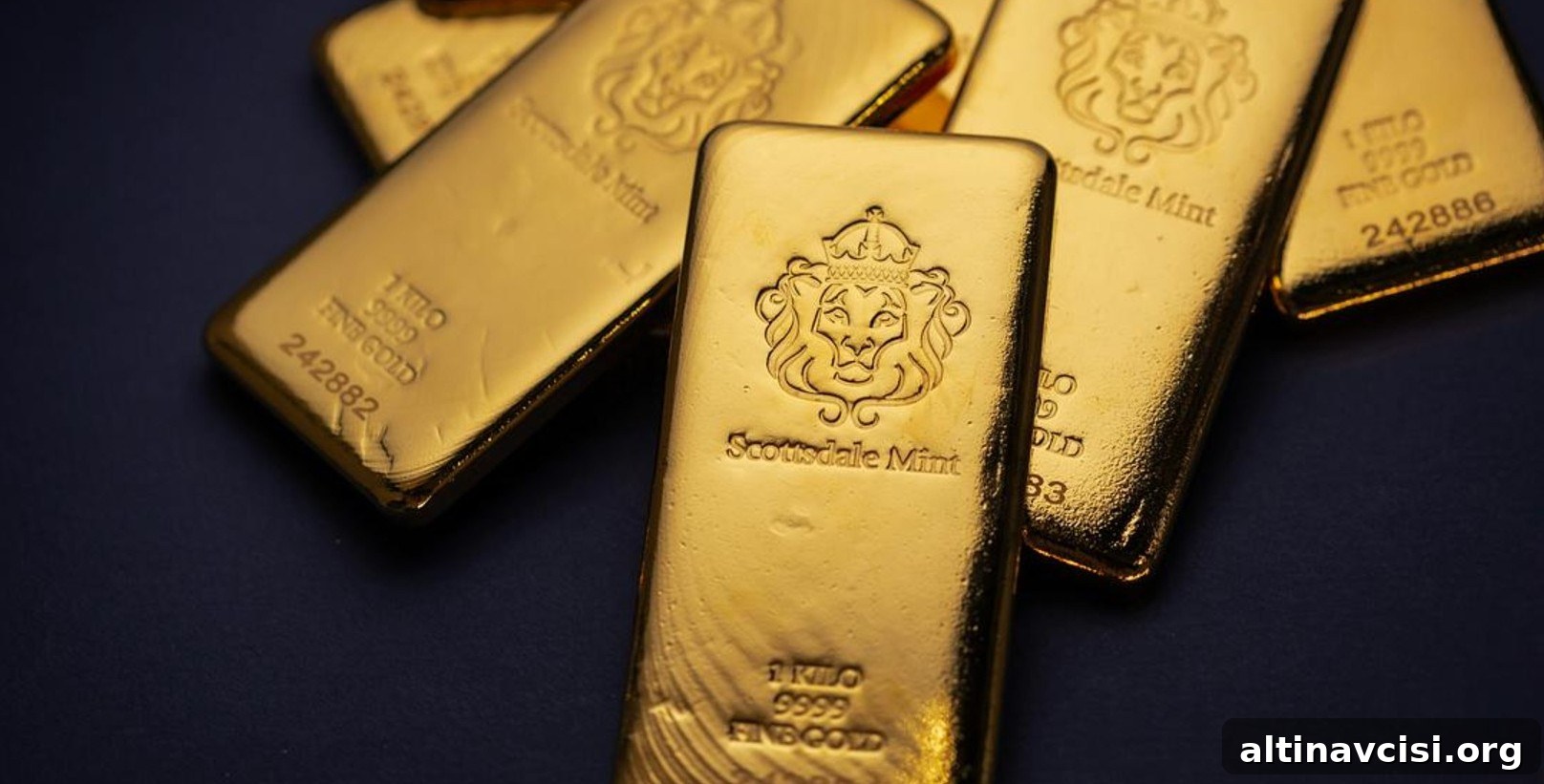
Gold fell sharply on Monday, sliding 1.4% to $3,350.94 per ounce after briefly trading above $3,400. The pullback followed the market’s initial reaction to reports that the U.S. might impose tariffs on 1 kg gold bullion imports, a story the White House said it would clarify through an executive order.
At the same time, easing geopolitical tensions tied to hopes for a possible Ukraine‑Russia peace agreement reduced some safe‑haven demand for the metal. With those near‑term drivers cooling, investor attention has turned to the U.S. consumer price index (CPI) due Tuesday. A softer‑than‑expected CPI would bolster the case for Federal Reserve rate cuts, a scenario that could revive interest in bullion and pressure gold back above the $3,400 psychological level.
Market participants are weighing three main factors: policy signals from Washington about trade measures affecting bullion flows, the geopolitical backdrop and its influence on risk sentiment, and incoming U.S. inflation data that will shape expectations for monetary easing. Tariff headlines and official clarifications can drive short‑term volatility in physical and futures markets, while a durable shift in risk appetite tied to geopolitics could alter demand patterns for longer periods.
If CPI readings show a meaningful slowdown in inflation, traders would likely price in an increased probability of Fed rate cuts, supporting gold as a non‑yielding asset that benefits from lower real interest rates. Conversely, stronger inflation data would reduce expectations for easing, likely pressuring bullion lower. Given gold’s sensitivity to both macroeconomic signals and geopolitical developments, volatility should be expected in the near term.
Analysts note that technical levels remain important: while $3,400 is a clear psychological barrier, support near recent lows will be watched closely for signs of capitulation or consolidation. Market liquidity, positioning in futures and ETF flows will also contribute to price dynamics as investors reposition ahead of the CPI and any official statements from the White House on tariffs.
In summary, gold’s recent drop reflects a combination of tariff‑related headline noise and reduced safe‑haven demand amid improving geopolitical sentiment. The key near‑term catalyst is U.S. inflation data, which will likely determine whether bullion regains the lost ground above $3,400 or faces further downside pressure.