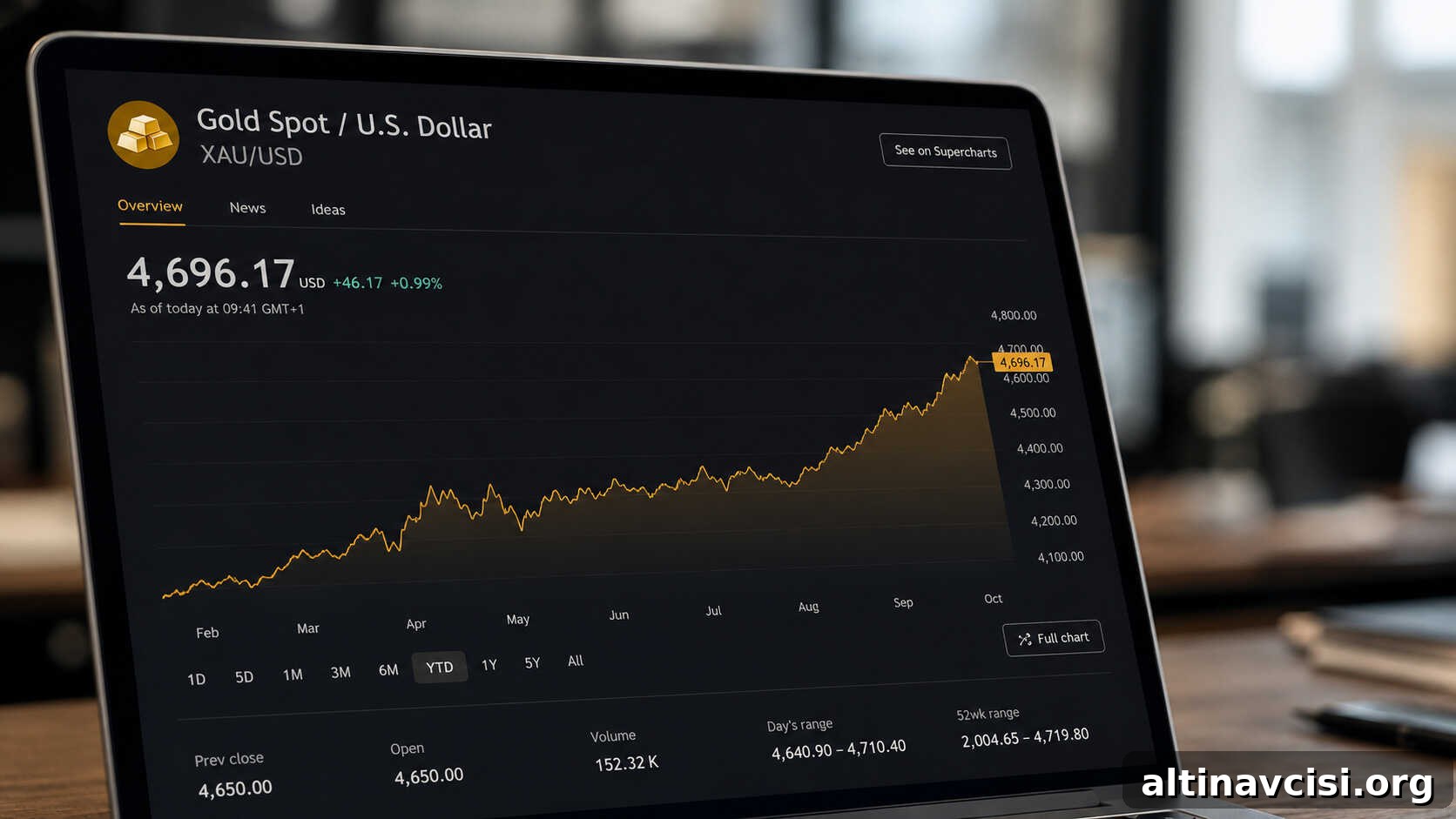
Gold and silver market update — May 7, 2026
Key Takeaways
- ADP reported 109,000 private-sector jobs added in April, above the Dow Jones/CNBC consensus of 84,000 but below some broader forecasts. Despite the mixed signal, gold held near $4,700 and continued to climb — the muted market reaction is itself meaningful.
- The Fed faces a bind: services inflation is at multi-year highs while the U.S. pays roughly $1 trillion annually in interest on its national debt. That combination limits policy options.
- On Friday, focus on average hourly earnings rather than the headline payrolls number — rising wages alongside slowing hiring is the stagflation signal that strengthens the case for gold.
ADP’s National Employment Report showed private payrolls up 109,000 in April, with annual pay for job stayers rising 4.4%. Depending on the benchmark, the result can be read as a beat or a miss. Regardless, gold barely moved in response to the data ahead of Friday’s nonfarm payrolls report.
That lack of reaction is the important detail.
What Did the April 2026 ADP Report Actually Show?
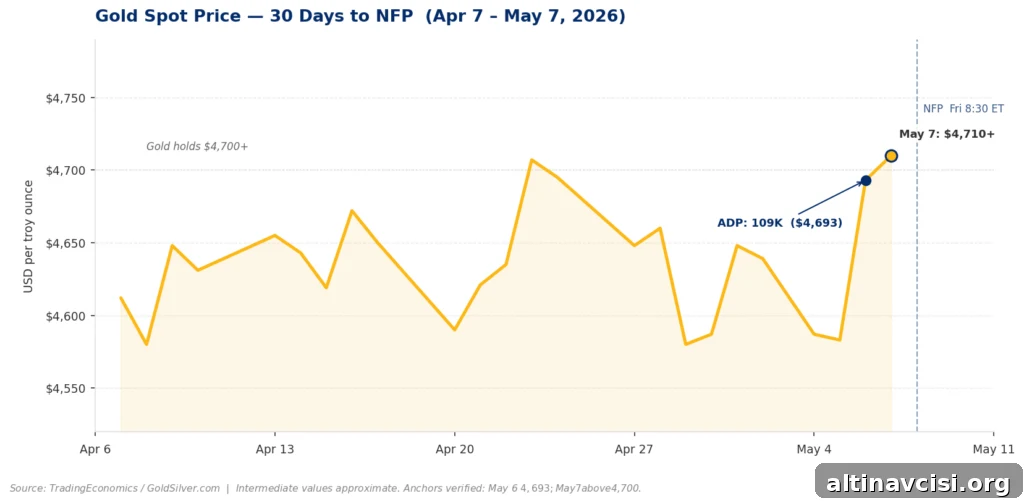
The ADP report recorded a 109,000 gain in private-sector payrolls for April and showed pay for job stayers up 4.4% year-over-year. Versus the Dow Jones/CNBC consensus of 84,000, this looks like a clear beat; against broader forecasts that ranged higher, it can appear weaker. Normally, stronger hiring would pressure gold by reinforcing a higher-for-longer rate outlook. This time, gold held around $4,693 on May 6 and pushed above $4,700 by May 7, while silver rose to about $77.47 and moved higher overnight. Neither metal flinched at the labor data.
That steadiness says the market is focused on a bigger story than any single jobs print.
Why Isn’t a Strong Jobs Report Bearish for Gold Right Now?
Because the Federal Reserve is effectively boxed in — and that constraint stems more from inflation and debt dynamics than from employment alone.
Markets assign a high probability that the Fed will hold the policy rate at 3.50%–3.75% at the June meeting. The pressure point is services inflation: the ISM Services Prices Paid index held at 70.7 in April, matching March’s reading and marking a four-year high. All 18 industries tracked reported higher input costs, and ISM commentary indicates elevated prices will persist as energy and supply-chain effects continue to unwind.
That creates a painful policy choice: cutting rates risks rekindling inflation, while maintaining or raising rates increases the fiscal burden. The Congressional Budget Office’s 2026 outlook puts annual interest costs on the national debt at around $1 trillion — a heavy constraint on monetary maneuvering. In that environment, a single strong or weak jobs report is unlikely to change the broad policy picture.
What Does Friday’s Nonfarm Payrolls Report Mean for the Gold Price?
The U.S. nonfarm payrolls report is due at 8:30 AM ET on Friday. Consensus estimates range from roughly 55,000 to 75,000, well below March’s 178,000 print. There are three practical scenarios:
- Below ~55,000 (stagflation confirmed): If jobs slow substantially while prices remain elevated, the Fed is trapped between persistent inflation and economic weakness. That structural paralysis is bullish for gold; silver could also benefit given its industrial and monetary roles.
- Between ~55,000–75,000 (in line): A consensus outcome would likely produce little immediate change. The longer-term structural case for precious metals would remain intact.
- Above ~100,000 (bear case for gold): A strong upside surprise could revive hawkish expectations, push out rate-cut timelines, and prompt a short-term pullback in gold of 1–2% on the print.
Why Did Gold Ignore a Stronger-Than-Expected ADP Report?
Because the market’s structural drivers have become larger than any one economic release. Central bank buying and long-term demand dynamics are supporting prices. In Q1 2026, central banks purchased a net 244 tonnes of gold, according to the World Gold Council. That steady, structural bid does not evaporate on a single payroll print. When gold no longer reacts strongly to data that once moved it, it signals a shift from short-term data sensitivity to a longer-duration narrative.
What Should Gold and Silver Investors Actually Watch on Friday?
Focus on average hourly earnings rather than the headline payrolls figure. If wages remain elevated while hiring weakens, that combination deepens the stagflation case and strengthens safe-haven demand for gold. Also monitor continuing jobless claims: rising continuing claims alongside stable or low initial claims can indicate that workers are finding it harder to secure new roles, a subtler but important signal for economic slack.
The NFP release will move markets in the short term, but it is unlikely to overturn the prevailing structural thesis driving precious metals.
Stay On Top of Gold & Silver Prices
Get important market alerts sent straight to your inbox.
SOURCES
1. ADP Research Institute — ADP National Employment Report: Private Sector Employment Increased by 109,000 Jobs in April; Annual Pay was Up 4.4%
2. CNBC — Private payrolls rose by 109,000 in April, topping expectations, ADP says
3. CME Group — FedWatch Tool: Federal Funds Rate Probabilities
4. Institute for Supply Management — ISM Services PMI Report, April 2026
5. TradingEconomics — Gold Spot Price, May 6, 2026
6. TradingEconomics — Silver Spot Price, May 6, 2026
7. World Gold Council — Gold Demand Trends Q1 2026
8. Bureau of Labor Statistics — The Employment Situation, March 2026
9. Congressional Budget Office — The Budget and Economic Outlook: 2026 to 2036
10. Federal Reserve Bank of St. Louis (FRED) — Initial Claims, week ending April 25, 2026
Disclaimer: This article is for informational purposes only and does not constitute financial or investment advice. Always consult a qualified financial adviser before making investment decisions.
You May Also Like:
- Gold Is Decoupling From Geopolitics. Here’s the Proof
- The Fed Is Frozen. The Debt Is Growing. Gold Is Watching.
- Gold Jumps on Iran Deal Hopes. The Real Driver Is the Fed
- What the IMF’s Inflation Forecast Shift Means for Gold
- What’s Really Driving Gold Prices Today — 5 Key Signals
- Gold Price and the Jobs Report: A Pre-Market Guide
- The Gold-Silver Ratio Is Expanding — and Being Misread
- Gold, Silver, and Stagflation: 5 Signals That Matter Now