Interested in the gold market but unsure how to begin or what the main terms mean? This concise guide explains the gold market and provides practical information to help you begin investing in gold.
If you have a specific question, use these quick links to jump to the topic you need.
- Introduction to the Gold Market
- History of the Gold Market
- Gold and Currency
- Global Gold Market
- Types of Gold Bullion
- Gold Price
- Buying Gold
- What Affects the Gold Market?
- Investing in Gold
- Benefits of Owning Gold
- Selling Gold – When To Sell
What Is the Gold Market?
The gold market refers to the global system for buying and selling gold. Unlike many commodities, gold tends to trade at similar prices worldwide because the market is highly integrated. The market encompasses every stage from mining and refining to minting and final users such as sovereign and private mints, institutional reserves, and individual investors.
History of the Gold Market
Gold has been used as money and a store of value for thousands of years. The earliest recorded uses of gold as currency date back to ancient civilizations around 600 B.C. Over centuries, gold has maintained a role as a reliable store of value and a hedge against economic uncertainty.
When political instability, currency weakness, or economic crises emerge, investors often turn to gold. Events such as geopolitical tensions, periods of a weak U.S. dollar, and global health crises have periodically driven demand for gold. Since private ownership of gold became broadly legal again in the United States in the 1970s, gold has shown long-term appreciation independent of any single company or nation.
Gold and Currency
For centuries many national currencies were backed by gold. That ended in the 20th century when most countries, including the United States, transitioned to fiat money. Fiat systems allow central banks to expand the currency supply, while gold is a finite asset that cannot be printed. This scarcity gives gold one of its core advantages: it preserves purchasing power over time in a way fiat currency cannot.
Global Gold Market
The global gold market is among the largest financial markets. Daily trading volumes average in the tens of billions of dollars, placing gold near the top of global asset trading activity. The total above-ground stock of physical gold is estimated in the hundreds of thousands of tonnes and grows slowly each year through mining and recycling.
Gold’s primary role remains monetary: central banks hold significant gold reserves, institutions allocate portions of their portfolios to gold, and private investors buy physical bullion. Jewelry demand is the second-largest source of consumption, while industrial and technological uses account for a meaningful share of annual demand.
Types of Gold Bullion
Investors typically choose between two main forms of physical gold: bars and coins. Each has distinct advantages depending on your goals, budget, and storage plans.
Gold Bars
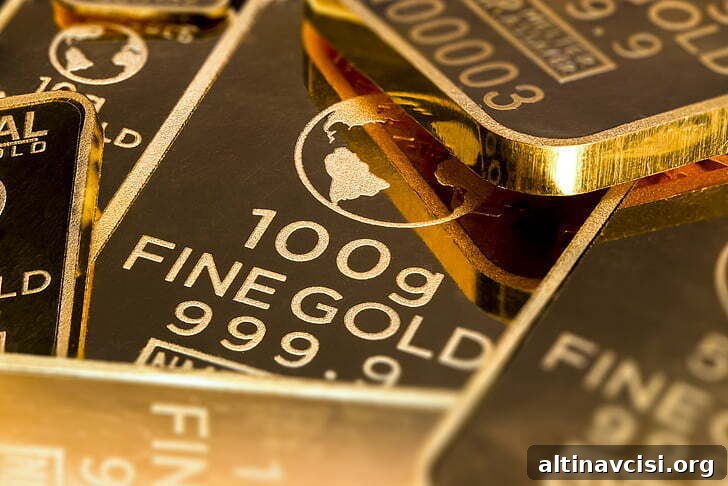
Gold bars are produced in sizes ranging from one ounce to large 400-ounce bars used by institutional buyers. Bars usually carry lower premiums above the spot price because they require less minting and packaging. For investors focused on accumulating ounces at a lower cost per ounce, bars are often the most efficient option.
Gold Coins
Gold coins are available in various weights, with one-ounce sovereign coins among the most popular for private investors. Coins carry higher premiums due to minting costs and collector demand, but they are easier to buy and sell in small increments and often more attractive as gifts. Collectible or numismatic coins derive value from rarity and condition rather than solely from metal content, so they require specialized knowledge before purchase.
Gold jewelry made from higher-purity gold can also serve as both adornment and a form of bullion, though it often includes craftsmanship premiums and varying purity levels.
What Type of Gold Should I Invest In?
Your choice depends on priorities: bars are cost-efficient for long-term storage, while coins are more liquid and visually appealing. For beginners, government-minted sovereign coins are a solid choice because they carry guaranteed weight and purity and are broadly recognizable in secondary markets. If you prefer bars, consider professional vault storage for security and convenience.
Gold Price
The spot price of gold changes daily based on many factors: stock market movements, central bank policies, inflation trends, the strength of the U.S. dollar, geopolitical events, and supply-and-demand dynamics. Investors often increase gold holdings when uncertainty rises or to protect purchasing power.
How Do Real Interest Rates Impact Gold?
Real interest rates—nominal interest rates adjusted for inflation—strongly influence the gold price. When real rates are negative (inflation outpacing nominal yields), holding non-yielding assets like gold becomes more attractive, which historically supports higher gold prices. The trend and direction of real rates matter as much as their level.
Buying Gold
Buying physical gold is straightforward if you follow a few basic guidelines.
How to Buy Gold
Try to buy at favorable prices and choose reputable dealers. Compare premiums and confirm authenticity, especially for coins and smaller purchases. Bars typically trade close to spot with small markups, while numismatic coins can carry significant additional value unrelated to metal content—research is essential before purchasing collectible items.
Why Buy Gold
Physical gold offers long-term wealth preservation and diversification. It is a tangible asset that cannot be erased, hacked, or diluted by monetary expansion, and it can act as a safeguard against extreme scenarios that affect traditional financial assets.
What Affects the Gold Market?
Several factors influence gold prices:
● Central Bank Reserves: Large purchases or sales by central banks can move the market by changing demand significantly.
● Value of the U.S. Dollar: Gold typically moves inversely to the dollar—when the dollar weakens, gold often rises in local-currency terms.
● Industrial Demand: Growth in electronics, dentistry, and other industries increases demand for gold for technical uses.
● Gold Production: Mining output, geopolitical disruptions to supply, or changes in production costs affect the available supply and therefore prices.
How to Invest in Gold
Investing in gold can take many forms. Physical bullion offers direct ownership, while financial products provide exposure without holding metal physically. Keep these points in mind:
● Time your purchases thoughtfully to take advantage of favorable price periods.
● Beware of scams and offerings that do not provide verifiable physical ownership.
● Plan for secure storage—home safes, bank safe-deposit boxes, or professional vaulting services each have pros and cons.
● Selling gold can trigger taxable events, so consider tax implications before making transactions.
Gold IRA
Gold can be included in certain retirement accounts, allowing tax-deferred or tax-advantaged treatment depending on the account type. Because retirement investing tends to be long-term, gold can help preserve purchasing power across decades.
Types of Gold Investments
Besides physical bars and coins, investors can access gold through ETFs, trusts, or mining stocks. ETFs and similar products offer price exposure without requiring custody of metal; owning shares in a fund is different from holding physical bullion.
Benefits of Owning Gold
Gold has preserved value across civilizations and economic regimes. Key benefits include:
● Gold holds value across different currencies and economic systems.
● Gold has never become worthless—unlike individual company shares that can become worthless, physical gold retains intrinsic value.
● For many investors, owning gold reduces stress and adds a sense of security and diversification to a broader portfolio.
Selling Gold – How to Sell
When you decide to sell, common options include online dealers and local coin shops. Each has advantages: coin shops may provide immediate cash while online dealers often offer competitive pricing and larger market access. Avoid pawn shops for substantial holdings, and be cautious with auction platforms unless you understand their fees and buyer demand.
Start Your Investment Today
Gold can play a useful role in a diversified portfolio. With careful research, secure storage, and attention to reputable dealers, you can begin investing in gold to help protect long-term wealth and hedge uncertainty.