I vividly remember the first gold coin I ever bought.
It was a one-ounce American Gold Eagle. When I opened the package I was struck by its beauty, its shine and the refined detail. I loved the weight of it in my hand and must have examined it a hundred times over the next few days.
What I did next, though, was revealing: I put it in a safe. There it sat—in the dark, out of sight.
It felt anticlimactic. I appreciated the coin, but it couldn’t be enjoyed. I couldn’t show it off, handle it, or leave it out without inviting theft or unwanted attention.
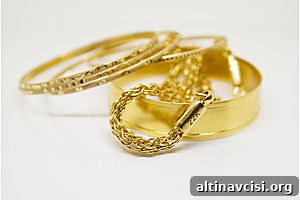
But investments don’t have to remain dormant. That’s one reason I favor investment-grade gold jewelry—wealth you can wear. It’s attractive, portable and usable. You don’t need to hide it away.
Gold jewelry has several advantages, starting with a long history as wearable wealth.
One of the First Forms of Money
We often hear that gold has served as money for thousands of years, but less commonly discussed are the forms it took. Gold was not always minted as coins.
Before coins and bars became widespread, gold jewelry functioned as currency and a medium of barter. People traded or paid with ornaments and wearable pieces long before standardized coinage appeared.
That tradition is so embedded in some cultures that modern currency names reflect it. For example, the Thai baht traces its name back to a unit of gold jewelry; in some cases detachable links were used to pay for goods.
Today in countries like India, jewelry remains the dominant form of gold ownership. Pure gold necklaces and bracelets are preferred over coins or bars. For every ounce of gold purchased in coin or bar form, roughly three ounces are bought as jewelry.
Across history, wealth was often denominated and stored in jewelry. Storing gold at home—whether coins, bars or ornaments—was risky. Leaving savings in a hut wasn’t secure, so people often wore their wealth.
Wearing jewelry served as a mobile wallet: necklaces, bracelets and other pieces functioned as a practical and visible means of carrying value.
There’s another practical advantage to investment-quality gold jewelry…
Sir, What Is This in Your Carry-On Bag?
True story: I once carried a tube of silver bullion coins in my carry-on. I’d forgotten they were at the bottom of my bag, and the scanner picked them up. What followed was a wake-up call.
A border agent asked what was in my bag. I pulled out the tube and said, “Just a bunch of silver coins.” The agent reported to a supervisor and loudly announced, “IT’S JUST A TUBE OF SILVER COINS! THIS GUY HAS A BUNCH OF SILVER COINS ON HIM!”
The announcement drew everyone’s attention in the security area. Dozens of passengers now knew I was carrying silver. While I was allowed to proceed, the agent’s behavior exposed me to unnecessary risk and made me watch my back for the rest of the trip.
This incident illustrates the broader risk of transporting precious metals across borders. A single interaction with an overzealous or uninformed official can lead to delays, searches, or worse. Until recently, U.S. guidance on reporting gold at the border was vague; that has changed.
Got Gold? Report It
U.S. Customs and Border Protection clarified reporting rules: negotiable monetary instruments that must be reported include coins or currency from the U.S. and other countries, explicitly listing gold coins. Travelers should declare these items, and monetary instruments over $10,000 require a FinCEN form at entry.
Importantly, the reporting requirement is based on a coin’s market value, not its face value. A one-ounce gold coin stamped with a low face value is still subject to reporting based on its actual worth. At higher gold prices the number of coins you can carry without reporting is limited.
If you’re unsure whether to declare gold bullion, CBP advises declaring it. Failure to report properly can lead to detention, penalties and possible confiscation. You are allowed to cross into the U.S. with gold bullion, but the risk and loss of privacy have increased—and declared holdings could be recorded in government systems that have experienced data breaches.
The Transportation Solution: Wearable Wealth
Owning gold bullion remains valuable, but there are more discreet and portable ways to carry wealth. Investment-grade gold jewelry looks like ordinary jewelry to border agents and fellow travelers, yet it serves as a compact store of value for the owner.
Consider the practical benefits of investment-grade gold jewelry:
- Simplifies travel and transport of value while keeping wealth accessible
- Makes passing wealth to heirs or gifting straightforward, even for recipients unfamiliar with bullion
- Tends to carry lower premiums than fashion jewelry or many collectible coins
- Often involves less tax and reporting complexity
- May offer greater discretion and could reduce the risk of confiscation in certain scenarios
Most mall jewelry doesn’t qualify as investment grade. Retail fashion pieces—often 14-karat—can carry markups several times the gold content. Designer brands generally won’t repurchase your piece at close to what you paid.
Investment-grade jewelry, in contrast, is designed to combine wearability with a reasonable markup. It’s meant to be an elegant, long-lasting store of value.
For example, investment-grade pieces can match the purity of sovereign coins: 22 karat (91.6%) and 24 karat (99.9%) items provide familiar standards of fineness and portability.
Each piece is crafted to be wearable daily and to function as an heirloom your family would treasure. This type of gold ownership offers generational durability and easier transportability than coins and bars.
If you hold gold coins and bars, consider their portability and the travel restrictions they may bring. A modest shift toward portable, investment-grade jewelry can add a layer of wealth protection and discretion.
As many precious metals experts suggest, serious investors should consider holding some gold jewelry. In difficult circumstances it can serve as practical insurance—and meanwhile you can enjoy wearing it.
No form of money is more discreet, portable and enduring in everyday use than investment-grade gold jewelry. Consider adding some to your holdings, especially with travel and gifting in mind.