🌅 Morning News Nuggets | Today’s top stories for gold and silver investors
March 31st, 2026 | Brandon Sauerwein, Editor
Gold prices and inflation in 2026 are being driven by one main pressure point: the Middle East conflict and its implications for energy, commodities, and Federal Reserve policy. Here’s what moved markets in March.
Why Are Gas Prices Surging — and How High Could They Go?
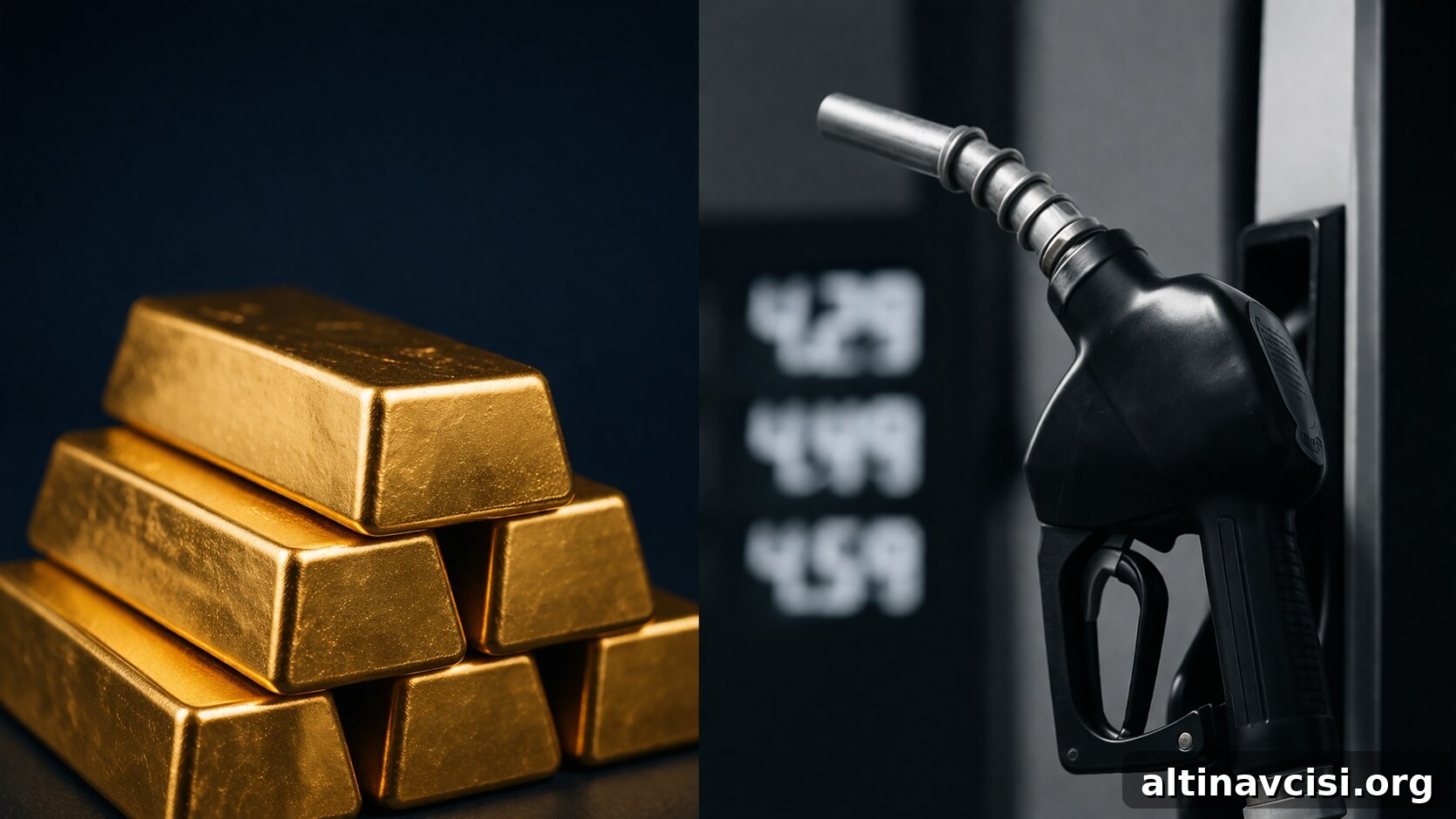
American drivers are feeling a sudden shock at the pump. The national average jumped roughly 27 cents in one week, from about $3.00 to $3.48 per gallon, as oil shipments were disrupted in the Persian Gulf. This is not a slow rise — it’s a spike tied to a supply shock.
Regional differences are stark. California stands out at about $5.34 per gallon, more than $1.75 above the national average, while Kansas sits near $3.01. That roughly $2.33 gap shows how unevenly these disruptions hit across states.
The pressure originates upstream. Brent crude traded around $111 per barrel as of March 30 — nearly $38 higher than a year earlier — and crude remains the biggest single cost component of gasoline. Analysts describe the current environment as “uncharted territory.”
Relief is uncertain. When oil spikes, gasoline prices climb quickly; when oil falls, pump prices often adjust downward more slowly — a phenomenon traders call “rockets and feathers.” With the Strait of Hormuz effectively constrained, the upward pressure on prices remains in place.

Why Is Gold Down 14% in March — and Is the Selloff Overdone?
Gold is headed for its worst monthly performance since October 2008, falling about 14% in March. The decline isn’t driven by weak demand for the metal; it’s linked to shifting expectations about interest rates.
Before tensions in the Middle East escalated, markets were pricing in two Federal Reserve cuts this year. Those expectations largely evaporated as oil prices surged and the Fed signaled it would hold rates at 3.50–3.75% in March. When rate cuts are delayed, the opportunity cost of holding non-yielding assets like gold rises, prompting liquidation.
The selloff was broad: silver, platinum, and palladium each fell about 20% in March. That shows the move affected the whole precious-metals complex, not just gold.
Short-term dynamics remain fluid. Gold ticked up after reports that the U.S. might scale back military action against Iran, but that’s a near-term reaction. On a longer horizon, some firms still expect substantial upside; for example, one major bank maintains a year-end target well above current prices, citing central bank diversification and the prospect of eventual Fed easing. The gap between current levels and those forecasts is significant.
Why Is Aluminum Up 10% This Month — and What Does It Mean for Prices?
While gold and oil dominate headlines, aluminum quietly posted its best month in nearly two years. Three-month futures on the London Metal Exchange gained about 10% in March, the largest monthly rise since April 2024.
The driver is geographic disruption: roughly 9% of global aluminum production sits in the Persian Gulf region, and the closure of the Strait of Hormuz has effectively removed that supply from markets. Iranian strikes have damaged facilities tied to regional producers, and analysts warn that lasting damage could swing the market from a modest surplus into a sizable shortage.
Aluminum is an industrial metal with broad downstream uses — construction, automotive manufacturing, and packaging — so price increases feed through to real economic costs: higher building expenses, more expensive cars, and pricier consumer goods. In a month when many industrial metals fell, aluminum’s strength stands out and deserves attention.
What Happened in 1971?
The guide that explains the moment our financial system changed.
Did You Know Gold Trades $361 Billion Per Day?
Many investors view gold as a safe haven, but it’s also among the most actively traded markets globally. In 2025, gold averaged roughly $361 billion in daily trading volume across markets, comparable to the daily turnover in 10-year U.S. Treasuries — a common benchmark for liquidity.
Gold’s liquidity profile goes beyond volume. Its daily volatility is on par with, or lower than, long-duration government debt, and bid-ask spreads have remained narrow even during market stress — the very moments when liquidity typically evaporates.
Structurally, gold is unique: it has no issuer, so it carries no counterparty credit risk or issuer default risk. It is also not subject to an issuer’s policy actions that might impair value. Those attributes support arguments for treating gold more like high-quality liquid assets such as government bonds.
The World Gold Council has advocated that gold be classified as a High Quality Liquid Asset (HQLA). Given the volume, volatility characteristics, and stress-test performance, the case for reclassification has grown stronger.
The Fed Says 2.7%. The OECD Says 4.2%. Someone Is Wrong.
A notable credibility gap opened in March between the Federal Reserve’s outlook and independent forecasters. The OECD raised its projection for U.S. inflation to 4.2% for 2026, up from 2.8%, while the Fed’s projection remained near 2.7%. That divergence matters for markets tracking inflation and precious-metals prospects.
The OECD’s baseline assumes the Fed holds policy rates through 2027 in response to higher headline and core inflation and continued GDP growth. While the organization did not call for immediate rate hikes, it warned that policy adjustments could be necessary if inflation broadens or labor-market conditions weaken.
For investors banking on rate cuts to drive the next leg of a gold rally, the OECD forecast shifts the likely timeline and raises the stakes on how quickly, and by how much, inflation trends evolve.
Stay On Top of Gold & Silver Prices
Get important market alerts sent straight to your inbox.
Sources: The Mirror · Bloomberg · CNBC · HQLA Gold · OECD projections mentioned by industry reporting.
You May Also Like
- Gold Bounces as Iran, the Fed, and the Dollar Collide
- Iran Rejects Talks as Gold and Silver Extend Slide
- Is Gold Still a Safe Haven During War?
- Gold Safe Haven Bid Returns After Nine-Day Selloff
- Gold Price Correction Settles as Saudi Arabia Eyes Iran War
- What’s Driving Gold’s Sharpest Pullback of the Year