
Daily News Nuggets | Today’s top stories for gold and silver investors
March 4th, 2026 | Brandon Sauerwein, Editor
How the Iran Conflict Is Moving Gold and Silver Prices
Rising oil prices reflect growing concern that the conflict with Iran could be prolonged and disrupt global energy supplies. Markets have reacted quickly as traders price in the possibility of sustained interruptions to shipping and oil infrastructure in the region.
At the center of these concerns is the Strait of Hormuz, a narrow passage that handles roughly 20% of the world’s oil shipments. Any sustained disruption there could tighten global oil supply and push energy costs higher, creating inflationary pressure and boosting demand for safe-haven assets like gold and silver.
Higher fuel costs add to inflation risks and financial-market uncertainty. The longer the geopolitical tensions persist, the greater the chance that energy-driven inflation and market volatility will support continued interest in precious metals.
U.S. Moves to Protect Oil Flow Through Hormuz
In response to threats against commercial shipping in the Strait of Hormuz, U.S. officials announced measures to keep oil flowing. The administration indicated that the U.S. Navy could escort commercial tankers and that agencies will explore political-risk insurance to protect vessels operating in the area.
The strategic importance of the Strait cannot be overstated: it carries about one-fifth of global oil shipments and plays a crucial role in international trade. Any escalation that interferes with transit through Hormuz would quickly ripple across energy markets and broader financial conditions.
Markets have already priced in heightened risk. Geopolitical flare-ups often translate into higher fuel costs and renewed inflationary pressure, outcomes that typically increase investor interest in defensive assets such as gold and silver.
Investors are watching developments closely as the situation evolves and as policy responses aim to limit supply shocks.
Stay On Top of Gold & Silver Prices
Get important market alerts sent straight to your inbox.
Gold and Silver Rebound as Buyers Step In
After an earlier dip driven by geopolitical fears, precious metals saw renewed buying. The conflict-related spike in crude oil sparked safe-haven demand, prompting investors to return to gold and silver as hedges against volatility and inflation.
Following the rebound, gold traded higher while silver outpaced gold on the percentage gains, reflecting strong interest in defensive assets. Analysts note that such rebounds point to persistent underlying demand for metals even after short-term pullbacks.
Rising energy prices and geopolitical risk tend to sharpen inflation expectations, a backdrop that historically supports precious metals. The recent buying activity suggests market participants remain constructive on gold and silver as part of diversified portfolios.
The Silver Story Most Headlines Are Missing
Silver has delivered substantial gains over the past year, and the structural story behind that rally merits attention. Even after some pullbacks, the metal’s multi-faceted demand profile and tightening supply backdrop support a bullish case.
Silver Prices vs SPY 12 Months
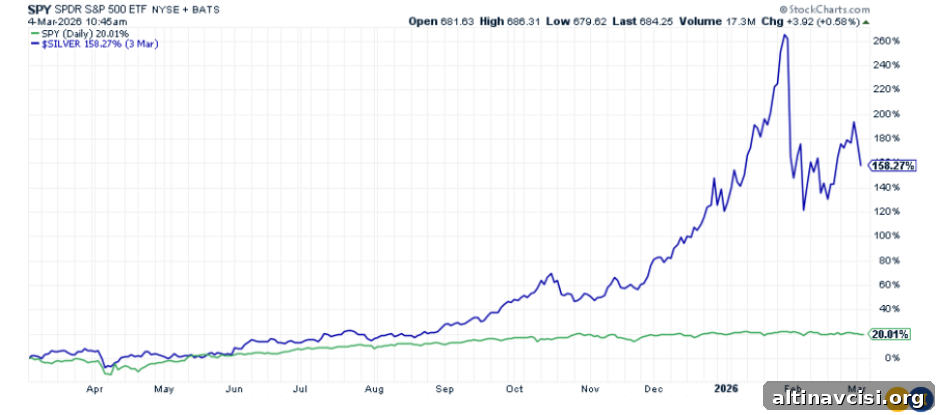
Industry estimates point to a persistent supply deficit for silver, with forecasts suggesting another year of shortage. That supply shortfall is driven by a mix of constrained mine output and robust industrial demand.
Demand pressures come from silver’s dual role as a monetary and industrial metal. Applications in solar panels, electric vehicles, and electronics create a steady base of industrial consumption that is unlikely to fade quickly.
Investor accumulation also matters: global exchange-traded product (ETP) holdings remain elevated, indicating steady investment demand rather than a speculative spike. Together, these factors underline a structural story for silver that mainstream headlines often understate.
Smaller Tax Refunds Could Cool Consumer Spending
Early IRS data indicate that many households are receiving smaller tax refunds this season than in previous years. Changes in withholding and tax credits have left some taxpayers with reduced lump-sum refunds.
While individual refunds may seem like a microeconomic detail, they collectively inject billions into household budgets each spring—funds that often support discretionary spending on travel, appliances, home improvements, and debt repayment.
If refunds are smaller this year, the usual spring boost to consumer spending could be weaker, which matters because consumer expenditures account for a large share of U.S. economic activity. A softer spending season would be relevant to investors monitoring growth, corporate earnings, and interest-rate dynamics.
Smaller refunds are not necessarily a sign of imminent economic trouble, but they do suggest tighter finances for some households and a potentially muted consumption environment in the months ahead.
You May Also Like
- Hormuz, the Fed, and the Battle for Safe-Haven Status
- Gold Prices Surge on Middle East Tensions
- Gold Above $5,200, Silver Above $90 — as Inflation Refuses to Fade
- Gold Price Rally Nears Record Streak as Tariffs Return
- Metals Rise, Confidence Cracks, and the Affordability Gap Widens