Daily News Nuggets | Today’s top stories for gold and silver investors
March 5th, 2026 | Brandon Sauerwein, Editor
Wall Street Just Made a $1.3 Billion Bet on Silver
One of Wall Street’s largest trading firms has dramatically increased its exposure to silver. Regulatory filings reveal that Jane Street established roughly a $1.3 billion position in the iShares Silver Trust (SLV), expanding its holdings by an unusually large multiple in a single quarter. Trades at this scale stand out in the silver market, which remains relatively small and thinly traded compared with major financial markets.
A position this large does not automatically signal a simple, long-term bullish view. Rather, it suggests the firm expects significant price movement or elevated volatility in the near term. Large institutional stakes can be both a reaction to anticipated market shifts and a factor that helps create those shifts in markets with limited liquidity.
The backdrop supports the idea that silver could experience notable price action. Industrial demand continues to climb as silver is heavily used in solar panels, electronics, and other growth sectors. At the same time, geopolitical uncertainty is adding a potential safe-haven bid. Those forces together are increasing attention on silver from multiple directions.
Because the silver market is comparatively thin, big trades matter. They can amplify moves, tighten liquidity, and change market dynamics quickly. Whether Jane Street’s stake is a directional bet, a volatility play, or part of broader market making, it underscores how concentrated flows and institutional positioning can influence smaller commodity markets.

The Iran Conflict Is Choking a Critical Gold Supply Route
The recent escalation tied to Iran is already affecting the physical gold market. Security concerns have led airlines across the region to cancel flights, disrupting air cargo routes that transport bullion between major trading hubs. The most significant bottleneck is centered on Dubai, a key transit point for global precious metals.
Dubai’s role in the gold supply chain is substantial: it connects mined and refined output from Africa and Europe with the largest consumer markets in Asia, especially India and China. Industry estimates put a significant share of global bullion flows through Dubai each year. When air routes are curtailed, the physical movement of high-value cargo such as gold becomes much harder and more costly.
Since gold is typically moved by air for speed and security, flight cancellations and rerouting create immediate logistical challenges. Analysts warn that if the disruption persists, regional premiums could rise, physical availability could tighten, and price volatility could increase. Those effects would be felt beyond the Gulf region because Dubai sits at a crossroads of global demand and supply.
Iran Tensions Send Oil Higher — and Inflation Fears With It
Oil prices rose amid concerns that the Iran-related conflict could disrupt supplies across the Middle East. Traders are particularly focused on the Strait of Hormuz, a critical chokepoint for global oil shipments that lies near the center of the tensions. Any threat to shipping there immediately raises worries about supply tightness and higher crude prices.
The increase in oil prices is already showing up at the pump. U.S. gasoline prices reversed a long downward trend with a sharp recent uptick, illustrating how quickly energy-driven inflation pressures can return. Rising energy costs ripple through the economy and feed into inflation expectations, which complicates central bank policy decisions on interest rates.
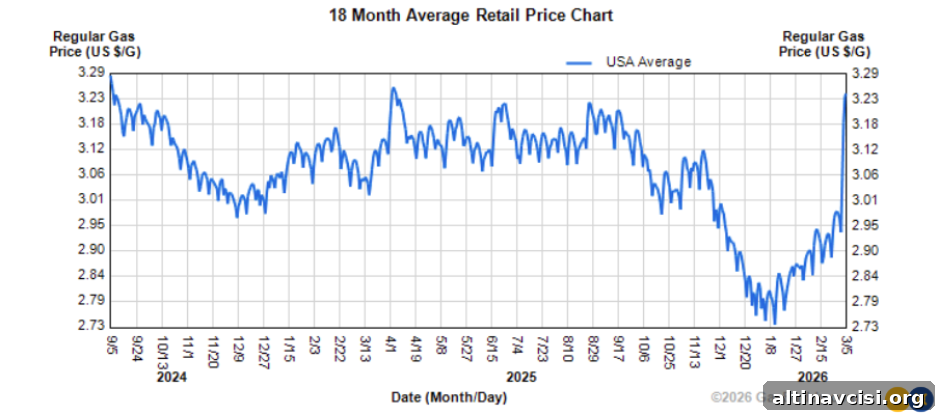
Historically, episodes of rising oil prices and heightened inflation expectations have supported demand for gold as an inflation hedge and safe haven. That dynamic is especially relevant now, as markets weigh the economic impact of higher energy prices alongside geopolitical risks.
Gold and Silver Dip — But the Pullback Doesn’t Change the Story
Despite the geopolitical developments and rising energy prices, both gold and silver experienced modest declines in early trading. Around mid-morning, gold traded lower and silver pulled back slightly. Short-term price moves like this are common after sharp, news-driven rallies.
Profit-taking and temporary dollar strength often produce brief pullbacks even when the fundamental drivers remain intact. The current mix of Middle East tensions, rising oil prices, and elevated inflation concerns continues to underlie demand for precious metals. In volatile environments, choppy price action can mask longer-term trends, with short-term weakness appearing amid broader, persistent support.
Put simply: a single day’s dip does not negate the larger forces in play. Traders and investors should treat such pullbacks as part of normal market behavior rather than signs that the macro story has shifted.
Layoffs Are Slowing — But the Labor Market Isn’t Out of the Woods
Recent data show a decline in announced layoffs, providing some relief after an extended period of workforce reductions. Reports from outplacement firms indicate fewer planned job cuts compared with earlier in the year, suggesting some employers may be pausing after an intense round of cost-cutting moves.
However, the improvement should be viewed in context. Much of the earlier trimming occurred in the technology sector, where firms hired aggressively during boom years and have since scaled back. Even with the recent slowdown in layoff announcements, planned job cuts remain elevated relative to a year ago.
Overall, the labor market appears to be cooling rather than rapidly improving. Higher interest rates and slower growth continue to dampen hiring plans. A gradual softening in labor conditions could alleviate wage pressure over time, which would influence inflation trends and, by extension, central bank decisions on monetary policy.
You May Also Like
- Gold and Silver Are Climbing While the World Watches Hormuz
- Hormuz, the Fed, and the Battle for Safe-Haven Status
- Gold Prices Surge on Middle East Tensions
- Gold Above $5,200, Silver Above $90 — as Inflation Refuses to Fade
- Gold Price Rally Nears Record Streak as Tariffs Return