Every day, gold and silver prices move — sometimes just a little, sometimes enough to grab headlines. A stronger-than-expected jobs report can send gold lower. A geopolitical flare-up can push it higher. Silver might jump 4% in a day and then give back half of that gain.
If you follow prices daily, it can feel like financial whiplash. The natural reaction is to act: sell before a drop, wait for a better entry, or question the thesis you held last month.
That impulse is understandable. It’s also the reason many investors miss the biggest gains.
The investors who benefit most from precious metals aren’t reacting to every headline — they distinguish short-term noise from long-term signals.
What Is “Noise” vs. “Signal” in Gold and Silver Prices?
In investing, noise describes short-term price movements driven by emotion, speculation or temporary events. These swings often feel meaningful in the moment but rarely determine long-term outcomes.
Signal refers to deeper structural forces — inflation cycles, real interest rate trends, currency debasement, central bank behavior and systemic financial stress — that unfold slowly and shape multi-year outcomes.
Gold and silver produce a lot of noise:
- A Federal Reserve press conference.
- A CPI report.
- A currency swing.
- A sudden geopolitical event.
These events can move prices in hours. But for long-term investors — those thinking in 5-, 10- or 20-year horizons — the structural backdrop, which changes far more slowly than daily charts, is what matters.
The Financial System Isn’t Safer — And You Know It
As risks mount, see why gold and silver are projected to keep shining in 2026 and beyond.
What Drives Short-Term Price Fluctuations?
Most daily moves come from a handful of recurring forces.
Macroeconomic data — jobs reports, CPI, GDP — prompt rapid repositioning among traders. Strong data often pushes gold lower as investors rotate into risk assets, even if the long-term inflation outlook hasn’t changed. Federal Reserve policy works similarly: rising rate expectations pressure gold in the short run, though that relationship can change over full cycles.
Currency movements add another layer. Because gold is priced globally in U.S. dollars, a stronger dollar can push dollar-denominated gold prices down even when demand is steady. Futures markets and large leveraged positions on exchanges can amplify moves that may have little to do with physical supply and demand. Geopolitical shocks often spike prices quickly and then partially retrace as tensions ease.
Silver reacts to all of the above and more. Its significant industrial use in electronics, solar and medical applications makes it more economically sensitive than gold, which is why silver typically swings harder in both directions.
These forces are real and they move prices fast. They do not, however, define long-term outcomes.
The Long-term Signals that Matter
While traders focus on monthly CPI prints, structural forces shaping precious metals across full economic cycles move slowly and carry greater weight.
Real interest rates are among the most reliable long-term drivers. When inflation-adjusted returns on cash and bonds turn negative, savers lose purchasing power holding conventional assets. Gold becomes attractive as a store of value, not as speculation. Currency debasement is another multi-decade trend: fiat currencies have historically lost purchasing power over time while gold has preserved it.
Central bank behavior reinforces this signal. Many central banks have been net buyers of gold for years, reflecting reduced confidence in fiat currencies — a trend that doesn’t reverse with a single data point. For silver, the energy transition provides a long-term tailwind: electrification and solar infrastructure require substantial silver, and that industrial demand is still expanding.
Underlying these trends is confidence in the financial system. Growing doubts about debt sustainability, banking stability or monetary policy credibility tend to favor gold. These shifts are slow and easy to dismiss in the short run, but they determine cycle-long outcomes.
The 1970s: A Masterclass in Volatility — and Conviction
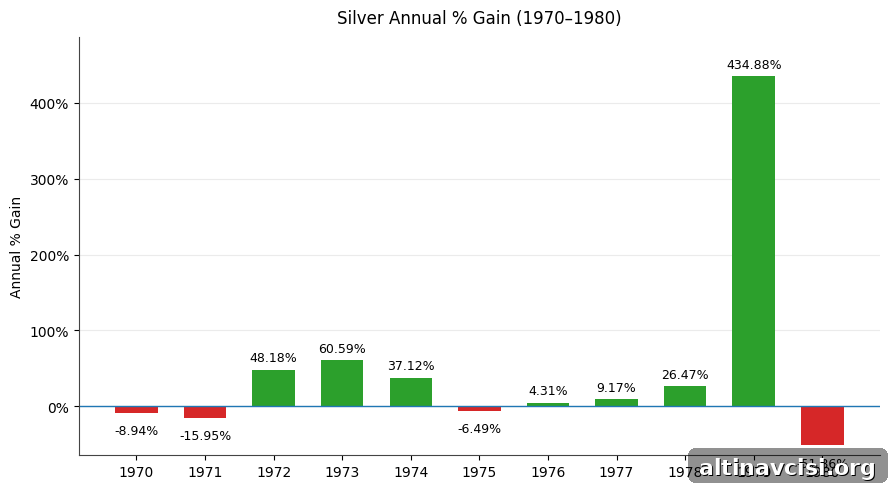
The 1970s show that volatility doesn’t negate a long-term bull market. From 1971, when the U.S. ended dollar convertibility to gold, through 1980, gold rose from $35 an ounce to over $800. Silver climbed from roughly $1.50 to nearly $50.
But the decade was far from a steady ascent. Some years saw sharp declines that likely shook out investors who bought near peaks. For example, gold experienced painful drops in 1975 and 1976 after earlier gains, and silver had multiple down years before delivering enormous single-year returns later in the decade.
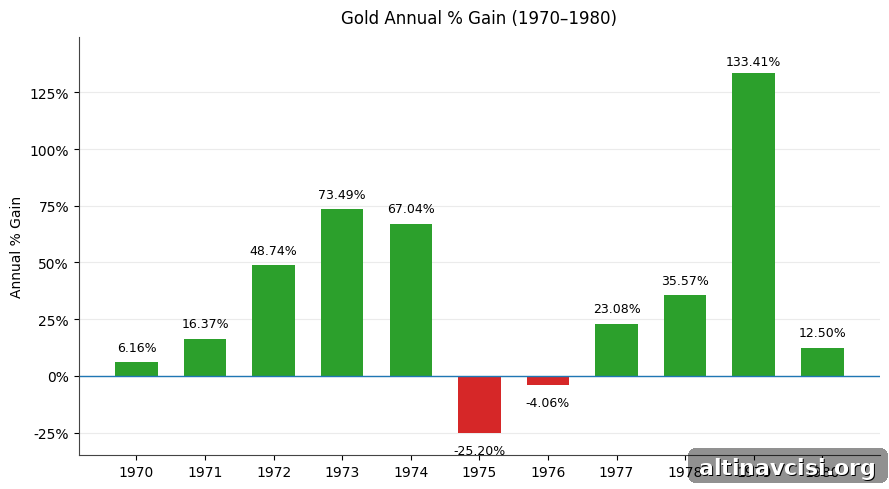
Those who held through the rough patches were rewarded when prices surged. Silver’s dramatic moves in 1979 and the subsequent retracements illustrate how missing the right period can mean missing the payoff entirely.
The decade’s structural story — inflation, currency debasement and declining confidence in monetary policy — was clear even as year-to-year volatility raged. Investors who kept their focus on fundamentals were rewarded; those who reacted to noise missed the biggest gains.
How Long-Term Investors Can Tune Out the Noise
If your goals are wealth preservation, portfolio diversification or inflation protection, your behavior should match your time horizon.
- Stop Obsessing Over Daily Prices: Checking gold every morning is like checking the weather every five minutes — it doesn’t change the climate.
- Align Strategy With Purpose: Are you trading short-term moves or hedging long-term monetary risk? Your approach should match the objective.
- Use Dollar-Cost Averaging: Regular accumulation smooths volatility and reduces emotional decisions.
- Set Allocation Intentionally: Conservative investors often hold 5–10% in gold; those seeking higher upside may tilt toward silver, accepting greater swings.
- Focus on Structural Data: Real rates, inflation trends, central bank buying and debt dynamics matter far more than the next headline.
The Bottom Line: Volatility Is the Price of Conviction
Gold and silver are inherently volatile. That volatility is not a flaw but a characteristic of assets that sit partly outside the financial system and respond to long-term forces many investors overlook.
Daily noise — Fed statements, jobs reports, geopolitical headlines — will always be present. They rarely alter the structural backdrop. Real rates, currency debasement, central bank behavior and confidence in the financial system unfold over years, not news cycles. That multi-year timeline is what matters.
The central question is whether your decisions are driven by this morning’s chart or by the forces shaping the next decade. For investors focused on preserving purchasing power across cycles, volatility is not something to fear; it’s the cost of admission.
Stay On Top of Gold & Silver Prices
Get important market alerts sent straight to your inbox.
People Also Ask
What is the difference between short-term noise and long-term signals in gold and silver prices?
Short-term noise is driven by temporary events like Fed statements or economic releases and often reverses quickly. Long-term signal reflects structural forces such as inflation cycles, real interest rates, currency debasement and central bank behavior that develop over years. Reacting to noise can lead investors to miss the payoff of the signal.
What factors cause short-term volatility in gold and silver prices?
Short-term volatility stems from Fed policy signals, macroeconomic data (CPI, jobs, GDP), dollar moves, geopolitical events and speculative futures trading. Silver’s additional industrial demand makes it more sensitive than gold to economic shifts.
Why are gold and silver considered long-term investments?
Gold and silver have historically preserved purchasing power through inflation, currency debasement and financial crises. Their low correlation with stocks and bonds makes them effective diversifiers, and their value tends to play out over full economic cycles rather than single years.
How do macroeconomic conditions impact gold and silver prices over time?
Real interest rates are the primary macro driver: negative inflation-adjusted returns increase demand for gold. Persistent inflation erodes fiat purchasing power and supports both metals. Over longer horizons, central bank buying and rising industrial demand for silver add structural pressure.
How can investors identify meaningful trends in gold and silver markets?
Prioritize structural indicators: real rates, central bank reserve accumulation, inflation trajectory and long-term currency trends. For silver, watch the gold-to-silver ratio as a potential signal. Dollar-cost averaging and a multi-year horizon help investors stay anchored to signals rather than reacting to noise.
Disclaimer: This article is for informational purposes only and does not constitute investment advice. Consult a qualified financial advisor before making investment decisions. Past performance is not indicative of future results.
You May Also Like:
- Silver Canadian Maple Leaf: Why It’s One of the World’s Top Bullion Coins
- Gold Portfolio Allocation 2026: What J.P. Morgan’s Forecast Means for Investors
- How Government Debt Affects Gold and Silver
- Gold vs Silver: The Liquidity Difference That Matters
- Silver Price Components: Premium, Spot, and Dealer Markup Explained