Key Takeaways
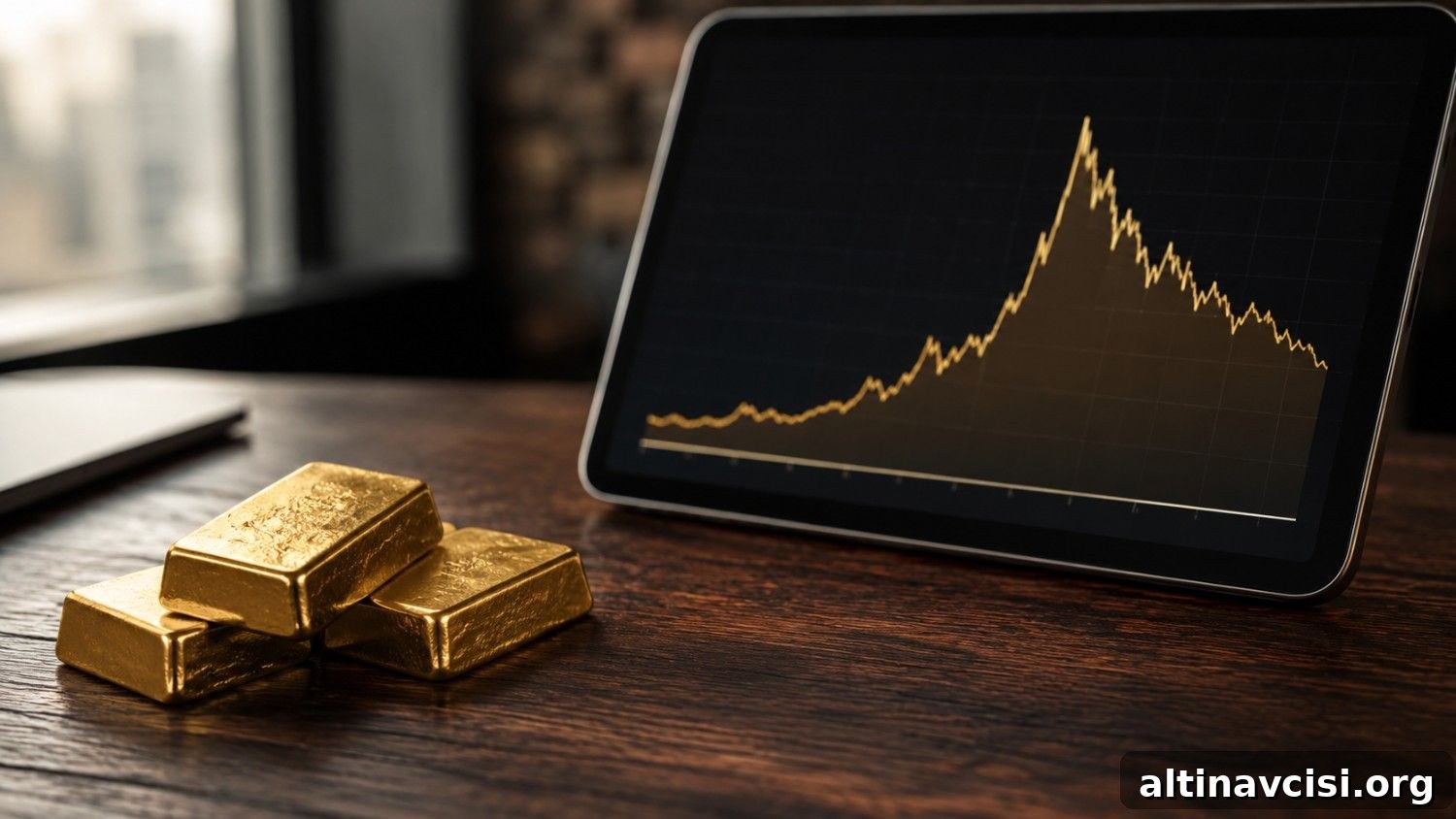
- Gold reached an all-time high of $5,589.38 in January 2026 and then retraced about 26% over the following months. This size of drawdown is well within the historical range for mid-cycle corrections during bull markets.
- An unrealized loss remains unrealized until you sell; paper losses can feel real but are not final.
- You generally have three strategic options: hold your position, dollar-cost average by buying more at lower prices, or sell to harvest a tax loss and immediately repurchase (physical metals are exempt from wash sale rules).
- The Gold-to-Silver Ratio is near 69:1, which lies within its long-term average range of about 60–70:1, indicating neither metal is dramatically mispriced relative to the other right now.
- Every notable gold bull market in modern times has included corrections of roughly 15–47%. Over full cycles, the structural drivers that pushed gold higher have held true.
Gold peaked at $5,589.38 per ounce in January 2026 and then pulled back by about 26% in the months that followed. If you bought near that peak, you may be facing a sizable paper loss today. While that feels important, it is not final unless you sell.
This guide helps investors who bought gold or silver near a cyclical high and now need a clear plan. It explains how to assess your true position, lays out three practical strategies, discusses the role of the Gold-to-Silver Ratio, and explains why the fundamental case for holding physical metal remains intact. The January 2026 correction is used as an example, but the principles apply to other cycles as well.
Where Do You Actually Stand? The Diagnostic Every Top-Buyer Needs
After seeing an investment fall more than 20%, it’s tempting to check the price constantly. That focus can be counterproductive. Before deciding what to do, calculate three concrete numbers:
Your true average cost basis. If you made multiple purchases, your blended cost is likely lower than the all-time high. Add up the total amount you spent and divide by the total ounces you hold to find your real break-even price.
Your concentration. Financial professionals generally advise keeping precious metals to roughly 5–15% of a portfolio. If your allocation is within that range, a 26% drawdown is painful but unlikely to threaten your overall financial plan. If your allocation is far larger, the situation needs a different, more careful approach.
Your liquidity position. Physical gold and silver are intentionally illiquid. If you will need cash within the next 12–18 months for bills, business needs, or major expenses, that strongly influences the decision. Forced sales typically result in poor prices. Ask yourself honestly: could you leave this position untouched for three years?
The Knowledge That Changes Everything
Two essential guides — yours free. Learn why gold matters and why fiat currency can lose purchasing power over time.
What Are Your Three Strategic Paths After Buying Gold at the Top?
Should You Just Hold and Wait?
Holding is the simplest option but it requires discipline. You store the metal, stop obsessing over day-to-day price swings, and let the original investment thesis play out over time.
This is an active decision, not passive resignation: you reaffirm the reasons you bought the metal and accept short-term volatility in pursuit of long-term preservation of purchasing power.
Historically, meaningful gold rallies have included substantial mid-cycle corrections. For example, the 1970s bull market had several declines exceeding 15%, including a roughly 47% drop in the mid-1970s, yet gold still produced very large gains through 1980. More recently, the 2001–2011 cycle featured periodic 15–20% pullbacks and a 34% fall during the 2008 crisis before the rally resumed. Those who sold during sharp pullbacks often missed strong recoveries. The January 2026 decline fits the pattern of a mid-cycle consolidation rather than a structural breakdown.
Holding makes sense when your gold allocation is reasonable, you have other liquid assets to meet near-term needs, and the original reasons for owning gold remain intact.
Does Dollar-Cost Averaging Lower Your Break-Even Price?
Yes. Buying more metal at lower prices reduces your average cost per ounce. This is a straightforward and mathematically effective strategy if you have spare capital and a multi-year horizon.
For example, one ounce bought at the January peak of $5,589 plus one ounce bought later at $4,102 yields a blended cost near $4,845 per ounce. Similarly, equal-dollar purchases at those prices produce an average cost significantly below the first purchase price. Dollar-cost averaging removes the need to time a bottom and spreads risk across price levels.
The downside is committing more capital to a losing position; if the correction deepens, your new purchases will also suffer paper losses before a recovery. This approach works best when you can afford to leave the additional capital invested for at least 18–24 months and you remain confident in the long-term thesis.
What Is Tax-Loss Harvesting, and Does It Apply to Physical Gold?
Tax-loss harvesting means selling an asset at a loss to realize a taxable loss that offsets capital gains from other holdings. For many investors who bought gold near the January peak, the current market price provides an opportunity to realize losses for tax purposes.
Under U.S. tax rules, physical gold and silver are treated as collectibles. Long-term gains on collectibles are taxed at a higher maximum federal rate than typical stock capital gains, and short-term gains are taxed as ordinary income. Crucially for loss harvesting: the wash sale rule that disallows losses when you repurchase the same or a substantially identical security within 30 days applies to stocks and securities, not to physical precious metals. That means you can sell physical gold at a loss and repurchase the same metal immediately while still claiming the tax loss. Transaction costs, dealer spreads, shipping, and storage fees reduce the net benefit, so this strategy is most effective for larger positions or when you have significant gains to offset.
Tax-loss harvesting suits investors who are in higher tax brackets, who have realized capital gains they wish to offset, and who can efficiently execute the sale and repurchase with attention to costs.
Is Silver a Better Bet Right Now? Reading the Gold-to-Silver Ratio
The Gold-to-Silver Ratio shows how many ounces of silver buy one ounce of gold. As of mid-2026 the ratio is near 69:1, meaning one ounce of gold buys about 69 ounces of silver. Historically the long-term modern average sits around 60–70:1.
When the ratio spikes high—well above 80:1 or 100:1—silver tends to look undervalued versus gold. When it compresses below about 50:1, silver has historically outperformed. At roughly 69:1, silver is within its typical range and does not send a loud buy or sell signal versus gold. Both metals largely moved together during the recent correction.
Silver has distinct structural demand drivers: ongoing industrial uses in solar panels, electric vehicles, and electronics, combined with persistent supply deficits in some recent years. But silver is more volatile than gold; it can amplify both gains and losses. A ratio-focused rebalance—trading some gold for silver when the ratio is high and reversing when it compresses—requires patience and tolerance for greater short-term swings.
Has the Fundamental Case for Gold Changed?
For long-term holders, the central question is whether the structural reasons for owning gold have shifted. Most investors buy gold because they expect persistent fiscal deficits, supportive monetary policy in stress periods, and the erosion of fiat purchasing power over decades.
By mid-2026 those structural drivers remain in place. Central banks continued to buy gold as part of reserve diversification, and gold’s role as a monetary hedge has not disappeared. The January spike included a reactive safe-haven component tied to geopolitical tensions that later eased, which explains part of the pullback. Analysts described the correction as cyclical rather than a collapse of the structural case.
Major institutions maintain medium-term targets that suggest higher prices are possible if the structural dynamics persist, though short-term direction depends on uncertain variables such as central bank policy decisions and geopolitical developments.
The Long Game: Sound Money Is Measured in Decades
Gold is intended as a long-term store of value, not a short-term trading instrument. The proper unit of measurement is ounces, not the dollar price. You own a fixed number of ounces of a finite asset; the dollar price will fluctuate, but the ounces remain.
A 26.6% decline in fiat terms is real and uncomfortable, but it doesn’t change the physical quantity you hold or the broader supply-versus-money dynamics that underpin gold’s long-term value. Investors who understand the monetary case and size positions prudently tend to fare best during these cycles because they avoid forced selling at the worst moments.
Stay On Top of Gold & Silver Prices
Get important market alerts sent to your inbox.
Live price widget removed. Subscribe below for alerts.
People Also Ask
What should I do if I bought gold at the all-time high?
Begin with the diagnostic: compute your blended cost basis, confirm whether your gold allocation is within a prudent range (commonly 5–15% of the portfolio), and verify you have liquidity to avoid forced sales. From there choose: hold if the structural reasons still hold, dollar-cost average to lower your break-even if you have spare funds, or sell and harvest a tax loss then repurchase if that aligns with your tax situation and transaction costs.
How long does it typically take for gold to recover after a major correction?
Recovery times vary. In past bull markets, corrections often resolved within 12–36 months, while larger mid-cycle drops have sometimes taken three to four years to fully recover. The precise duration depends on whether the structural drivers of the bull market remain intact.
Does dollar-cost averaging work for gold?
Yes, provided you have the capital and patience. Dollar-cost averaging lowers average cost without needing to pick a bottom. It is most effective in an ongoing bull market or when you expect higher prices over a multi-year horizon.
Can I claim a tax loss on physical gold without triggering the wash sale rule?
Yes. The wash sale rule for securities does not apply to physical precious metals, so selling physical gold at a loss and immediately repurchasing it generally still allows you to claim the loss. Confirm details with a qualified tax advisor and factor in transaction costs.
Is the Gold-to-Silver Ratio a good signal right now?
At around 69:1 in mid-2026, the ratio sits near the upper end of its long-term range. That is not an extreme signal either way. Investors can justify shifting some allocation to silver at this level, but it is not a clear, urgent arbitrage opportunity.
What is the most important thing to check before deciding what to do with a losing gold position?
Ask whether the fundamental reasons you bought gold have changed, not whether the price moved. If fiscal and monetary trends that motivated your purchase remain, you may be best served by patience or measured dollar-cost averaging rather than panic selling.
SOURCES
1. World Gold Council — Gold Mid-Year Outlook 2026; Gold Demand Trends Q1 2026
2. LBMA — Precious Metal Prices & Historical Benchmark Records
3. IRS — Topic No. 409, Capital Gains and Losses; Internal Revenue Code Sections on collectibles and wash sales
4. J.P. Morgan Global Research — Gold price analysis for 2026–2027
5. Silver Institute — World Silver Survey 2026 (supply and demand data)
6. European Central Bank — analysis on reserve holdings and international role of currencies
7. ING — commentary on gold’s mid-2026 correction
8. GoldSilver — educational material on gold cycles and the gold-to-silver ratio
9. Public price charts and industry reporting for mid-2026 spot prices and ratio levels
10. Tax and accounting commentary on IRS treatment of precious metals
Disclaimer: This article is informational only and does not constitute financial or tax advice. Consult a qualified adviser before making investment decisions.
You May Also Like:
- How Do Gold Price Cycles Work? A Framework Across Four Time Horizons
- The $300 Billion Lesson: What Frozen Reserves Taught Central Banks About Gold
- How To Perform Silver Technical Analysis (in 5 Steps)
- Who Controls the Gold Market? Meet the Five Banks That Settle Every Ounce
- How the Jobs Report Moves Gold and Silver: The Five-Step Chain Behind Every Move
- What Is Profit Booking in Gold and Silver? The Mechanism Explained
- Gold Technical Analysis: A Complete Investor’s Guide