At midnight Eastern Time on April 18, the Federal Reserve enters its FOMC blackout period. For 12 days—through April 30—Fed officials and staff are barred from making public statements about monetary policy. No speeches, no interviews, no policy commentary. In a market that has spent seven weeks trading almost entirely on rate expectations, that enforced silence matters.
What Is the FOMC Blackout Period?
Eight times a year the Fed imposes a communications blackout ahead of each scheduled FOMC meeting. The restriction begins the second Saturday before the meeting and lasts until the day after the committee issues its decision. For this cycle the blackout runs April 18 through April 30, with the policy decision scheduled for April 29.
The rule aims to prevent a stray comment from a regional president or staffer from moving markets in the run-up to a major decision. In normal times, that restraint helps the committee manage messaging and keeps markets focused on the data. Right now, however, conditions are far from normal.
Why Does the April 2026 Blackout Matter More Than Usual?
Three concurrent forces make this blackout unusually important for gold markets. First, expectations for Fed rate cuts have collapsed to near zero. Second, recent data show a worrying mix of weak growth and persistent inflation—stagflation is no longer just a forecast. Third, the Iran ceasefire remains fragile. With Fed officials silent for 12 days, markets must process developments without any official guidance to reframe expectations.

The Edge Every Investor Needs
Smarter precious metals investing starts here. The Nuggets Newsletter brings essential market insights, Fed updates, global trends, educational videos, and more.
Have Rate-Cut Expectations Already Collapsed?
Yes. Before the Iran conflict, futures were pricing roughly 58 basis points of Fed cuts in 2026—more than two full reductions. Today that expected path is essentially priced out. Market-implied probabilities favor a hold at the April 29 meeting, and the chance of any cut this year has fallen substantially in recent weeks.
When markets expect rate cuts, gold’s opportunity cost declines and bullion typically appreciates. The reverse has happened recently: as cut expectations disappeared, gold retreated. A temporary drop in expectations tied to a geopolitical shock has weighed on the metal’s price.
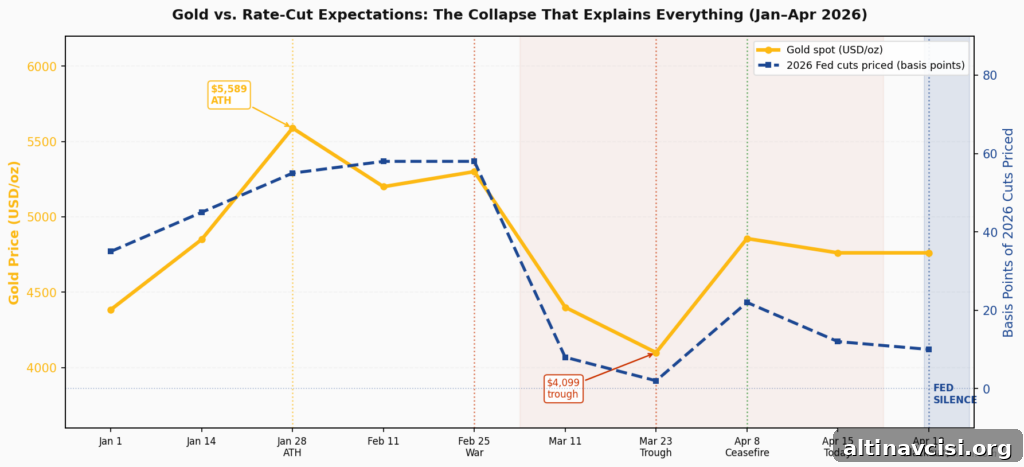
Gold price vs Fed rate-cut expectations, January–April 2026 — illustrating how gold fell as cut expectations dropped after the Iran conflict began.
Is Stagflation Now Confirmed?
Recent data point to a difficult policy trade-off: inflation remains elevated while growth has softened. March CPI printed at an annual rate that surprised on the upside, and fourth-quarter GDP was revised lower. That mix—too much inflation to justify cuts, but too little growth to justify hikes—matches the classic definition of stagflation.
When surprising data arrive during a blackout, markets must interpret them without Fed commentary. That leaves price action to react unfiltered, which can amplify volatility until the committee reconvenes and issues its statement.
Is the Iran Ceasefire Still in Place?
Formally the two-week truce brokered in early April remains on the books, but diplomatic progress has been fragile. Recent talks faltered, and naval actions near Iranian ports have added tension. The durability of the ceasefire is the critical variable for oil markets and, by extension, inflation and Fed expectations.
A lasting ceasefire would relieve oil-price pressure, ease inflation concerns, and help restore rate-cut expectations—supportive for gold. A renewed escalation would likely push oil back above key thresholds, revive concerns about persistent inflation, and keep gold under pressure. During the blackout, none of those developments will receive immediate Fed interpretation.
What Should Investors Watch During the 12-Day Blackout?
First, monitor oil. Brent around $100 is roughly the current equilibrium. If oil moves above about $105, markets may price a renewed threat to inflation and raise the odds of additional tightening. If oil falls toward $90, that would relieve inflation pressure and could revive rate-cut expectations—beneficial for gold.
Second, follow the ceasefire developments. Any resumption of strikes, disruptions in the Strait of Hormuz, or a collapse of talks will likely push oil higher and weigh on gold. Conversely, credible diplomatic progress can reverse those moves quickly.
Third, watch incoming macro releases. Key data—import price indexes, international industrial figures, and other inflation indicators—will help the market form a view on inflation’s path. With Fed communications muted, those data will be processed without official context, which can magnify market swings.
Does the Blackout Change the Structural Case for Gold?
No. Structural drivers supporting gold—sustained central bank purchases, rising sovereign debt service costs, and a gradual decline in the dollar’s share of global reserves—are multi-year trends that don’t pause for a 12-day communications window. Those forces underpin demand for bullion over the long run.
The recent pullback from January’s all-time highs reflects a temporary mechanism: an oil-driven inflation shock that pushed rate-cut prospects lower and weighed on gold. Once that mechanism stabilizes—a durable ceasefire, peak oil, or a Fed policy pivot—the structural bid is likely to reassert itself.
In short, the blackout is a calendar constraint that removes a short-term stabilizer at a sensitive moment. It heightens the potential for unmediated market moves, but it does not erase the longer-term case for owning gold.
Stay On Top of Gold & Silver Prices
Get important market alerts sent straight to your inbox.
SOURCES
1. Philadelphia Fed — FOMC Blackout Period Calendar
2. CME Group — FedWatch Tool
3. CNBC — Coverage of market reactions following failed talks and naval actions
4. State Street Global Advisors — Monthly Gold Monitor, April 2026
5. Fox Business — Coverage of Fed projections for 2026
6. TradingEconomics — Gold price charts and data
7. GoldSilver.com — Market commentary and analysis
8. FinancialContent — Inflation and oil market reporting
9. World Gold Council — Gold demand trends
10. IMF — Currency composition of official foreign exchange reserves (COFER)
By the GoldSilver Editorial Team — helping investors understand sound money since 2005. This article is for informational purposes only and does not constitute financial, investment, or tax advice. Consult a qualified financial advisor before making investment decisions.
You May Also Like
- Gold Is Down 10% From Its War-Peak — and Still Up 46% in a Year
- Gold Outranks the Dollar at Central Banks — What It Means for Your Savings
- Hormuz Blockade Sent Gold Down 2%. Here’s Why That’s Bullish
- Gold Jumps 2% as a Planned Address Spurs Market Moves
- $88 Billion a Month: Why U.S. Debt Is Driving Gold Prices
- CPI Hits 3.3%, GDP Stalls — Is Stagflation 2026 Here?
- War Risk, Stagflation Signals, and a $6,300 Gold Target