Fed Hikes While Bank of England Holds — Same Interest Rate
Last verified: September 2026
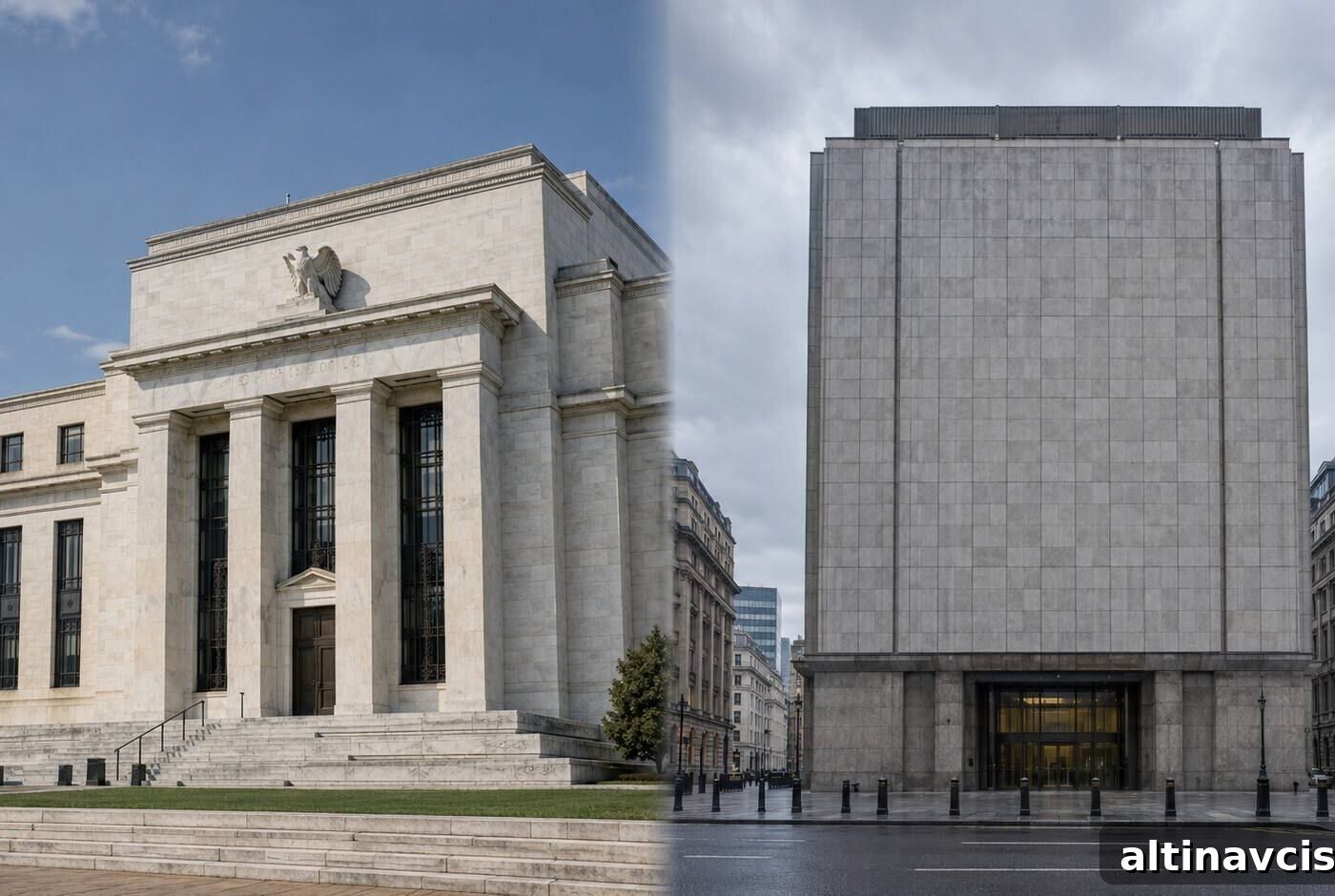
On Wednesday the Federal Reserve raised its benchmark interest rate for the first time since 2023. On Thursday the Bank of England chose to hold rates steady. By the time both decisions were recorded, the two central banks had converged on the same numeric level: 3.75 percent as the lower bound of the Fed’s new range and the Bank of England’s Bank Rate.
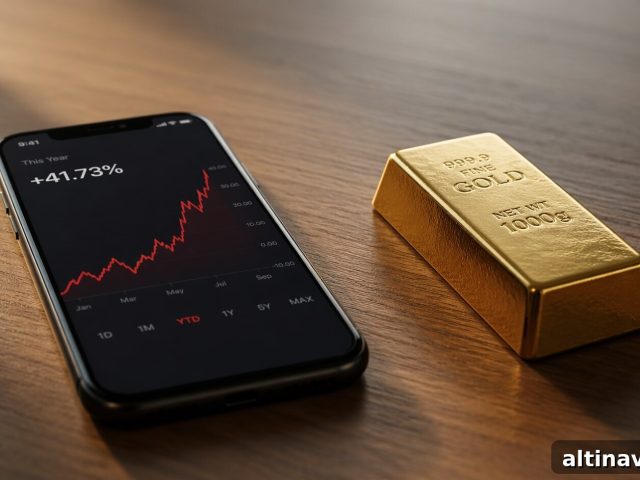
Gold is trading near $4,363 an ounce today, up 2.34% on the session. Silver sits near $65.63, up 4.23%. Both metals extended this week’s rebound as the Fed and the BoE reacted differently to the same global energy shock.
Key takeaways:
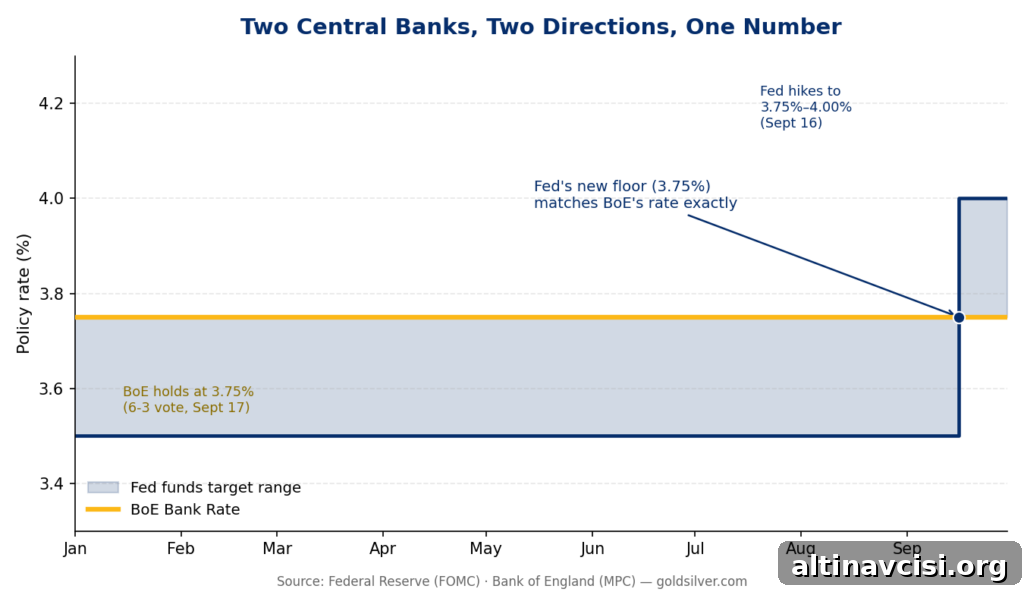
- The Fed hiked 25 basis points to a 3.75%–4.00% target range on Sept. 16, a unanimous 12-0 vote and its first increase since 2023. The Bank of England held Bank Rate at 3.75% on Sept. 17, in a 6-3 vote. The floor of the Fed’s new target range now matches the BoE’s rate exactly.
- Both central banks point to the same driver of recent inflation: an energy-price shock tied to the Middle East conflict—an external force their conventional interest-rate tools cannot directly resolve.
- Gold is sensitive to real yields (nominal rates minus inflation expectations). Historically, a 25-basis-point move in real yields has translated into roughly a $40–$60 per ounce shift in gold’s price.
Two Decisions, One Day Apart
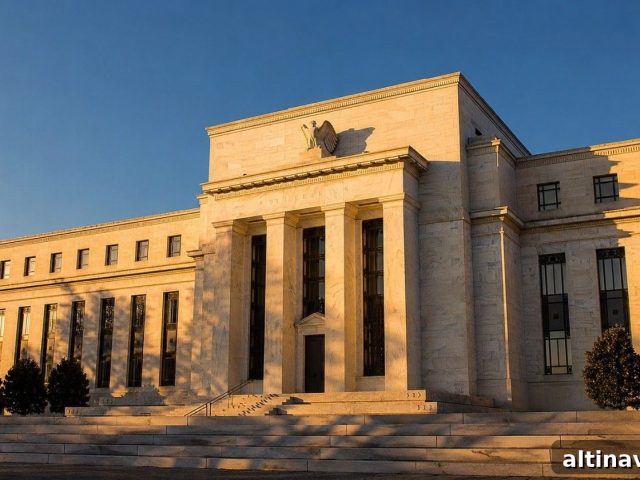
The Federal Open Market Committee voted 12-0 to lift the federal funds target range by a quarter point to 3.75%–4.00% on Sept. 16. This was the Fed’s first increase since 2023 and reverses earlier cuts that had reduced the rate to 3.50%–3.75% by late 2025. Fed leadership described inflation as “too high” in several categories, and the updated projections raised the median year-end forecast to 4.1% from 3.8% in June, signaling that officials expect at least one more increase later in the year.
A day later, the Bank of England’s Monetary Policy Committee voted 6-3 to keep Bank Rate unchanged at 3.75%. The BoE has now held rates for six consecutive meetings even as UK inflation rose to 3.1% in August. Three members—Megan Greene, Catherine Mann, and Huw Pill—dissented and would have preferred an immediate 25-basis-point hike to 4.00%.
Stay On Top of Gold & Silver Prices
Get important market alerts sent straight to your inbox.
Why are both central banks blaming the same thing?
Both institutions are responding to an external energy shock tied to conflict in the Middle East, not to domestic overheating alone. The Fed judged that US underlying inflation was already running too hot before the shock and chose to tighten. The Bank of England opted to wait, betting that a softer labor market would help cool inflation without an immediate rate increase.
The BoE also acknowledged that its quantitative tightening—the runoff from its gilt portfolio—has already contributed to higher market rates. To ease that upward pressure going forward, the Bank slowed the planned pace of future gilt sales and paused active sales for six months. That combination means the BoE’s hold is both tighter looking backward (because of past runoff) and looser looking forward (because gilt sales have been slowed).
For gold, the key variable is the real yield: nominal interest rates less expected inflation. A nominal rate increase is usually a headwind for gold, but when inflation expectations rise at the same time, real yields may stay flat or decline. This week both metals held gains through the Fed’s hike, indicating markets are pricing in higher inflation expectations alongside higher nominal rates.
What does this mean for savers?
The situation resembles financial repression: policy rates that remain below the level energy-driven inflation would require, because tightening enough to immediately offset the shock would risk economic growth neither central bank can readily accept. Savers holding cash in either currency may find returns that do not keep pace with the inflation both institutions expect to persist. Precious metals are outside that policy-cycle calculation because their supply isn’t controlled by a committee vote.
What’s the real story here?
It’s not merely that the Fed hiked while the BoE held—central banks routinely disagree on timing. The noteworthy point is that they agree on the diagnosis (an energy shock driving inflation) but disagree on how to respond. Both acknowledged their policy rate cannot directly change the external force pushing prices up. One bank chose to tighten to buy insurance against persistent inflation; the other judged the growth cost too high and held. Neither claimed its decision would fully solve the underlying problem.
Looking ahead, two dates matter. The Fed’s projections point to another quarter-point move, likely in December. The Bank of England’s next vote is scheduled for Nov. 5 and will be accompanied by an updated Monetary Policy Report—an important test of whether persistent inflation pushes additional BoE members toward rate increases. Watch current gold and silver prices to see how markets balance inflation expectations and nominal yields in the run-up to those meetings.
People Also Asked
Why did the Fed raise rates while the Bank of England held?
Both central banks are reacting to the same energy-price shock tied to the Middle East conflict, but they reached different policy conclusions. The Fed concluded US underlying inflation was too strong and raised rates 25 basis points to 3.75%–4.00% on Sept. 16. The Bank of England voted 6-3 to hold at 3.75% on Sept. 17, betting that a loosening labor market would help bring inflation down without immediate tightening.
What is the Fed’s interest rate after the September 2026 decision?
Following the Sept. 16 decision, the Federal Reserve’s target range for the federal funds rate is 3.75%–4.00%. The Fed’s updated projections indicate officials expect the rate to reach about 4.1% by year-end, implying the potential for one more quarter-point increase before December.
What is the Bank of England’s rate after the September 2026 decision?
The Bank of England held Bank Rate at 3.75% on Sept. 17, 2026. The vote was 6-3, with three members preferring an immediate rise to 4.00%. The meeting also set a slower plan for gilt sales going forward, reducing the pace and pausing active sales for six months.
Why are gold and silver prices rising this week?
Gold and silver have extended a rebound that began after an earlier selloff. They gained both on the day the Fed hiked and the day after the BoE held. At the time of writing, gold trades near $4,363 an ounce (up 2.34%) and silver near $65.63 (up 4.23%). The metals’ resilience through a Fed hike suggests markets are pricing higher inflation expectations alongside higher nominal rates, a combination that can leave real yields unchanged or lower.
What is a “real yield,” and why does it matter for gold?
A real yield equals a bond’s nominal yield minus expected inflation. Because gold pays no income, it competes with assets that offer real returns. When real yields fall, the opportunity cost of holding gold declines and its price typically rises. Historically, a 25-basis-point move in real yields has tended to shift gold’s price by roughly $40–$60 an ounce.
What should investors watch next?
Two dates to monitor: the likely final Fed decision before year-end, possibly in December, and the Bank of England’s Nov. 5 meeting with a fresh Monetary Policy Report. Those events will reveal whether central banks shift policy as inflation dynamics evolve and will influence how markets price gold and silver going forward.
SOURCES
1. Federal Reserve – FOMC statement, Sept. 16, 2026 (Federal Reserve press release).
2. Bank of England – Monetary Policy Summary and Minutes, Sept. 17, 2026 (Monetary Policy Committee minutes).
3. Bank of England – Asset Purchase Facility and gilt sales notices, Sept. 17, 2026 (market notice).
4. Coverage and reporting from major financial news outlets and market data referenced for price levels and commentary (Sept. 16–17, 2026).
Disclaimer: This article is for informational purposes only and does not constitute investment advice. Past performance is not indicative of future results. Always consult a qualified financial advisor before making investment decisions.
You May Also Like:
- Jobless Claims Just Beat Estimates. Gold Rallied Anyway. Here Are 4 More Signals Behind It.
- Gold and Silver Rip Higher as the Fed-Hike Selloff Reverses.
- The Fed Just Hiked. 16 of 18 Officials Say It’s Not Done.
- $603 Million Left the World’s Biggest Gold ETF. It Didn’t Leave Gold.
- Texas Just Made Gold Legal Money. Four More Non-Fed Stories Followed.
- Silver Is Outperforming Gold by a Third This Morning. The Fed Hasn’t Even Voted Yet.
Popular Topics
Picked from the archive
-
01
 Topics
Five Gold Signals This Week Unrelated to Today’s Gold Price
-
02
Topics
How Silver Powers AI Models and Infrastructure
-
03
Topics
Gold Remonetization: 6 Forces Reviving Gold as Money
-
04
Topics
Why Gold Rallyed Despite Lower Jobless Claims: 4 Key Signals
-
05
Topics
What Really Happens When You Sell Gold Without Taking Delivery
-
06
Topics
Key Indicator to Watch for Gold Ahead of Fed Decision
-
07
Topics
Federal Reserve Confirms 9-3 Vote Split, Signals Major Shift
-
08
Topics
Peak Gold: Why Gold Mine Output Can’t Meet Demand