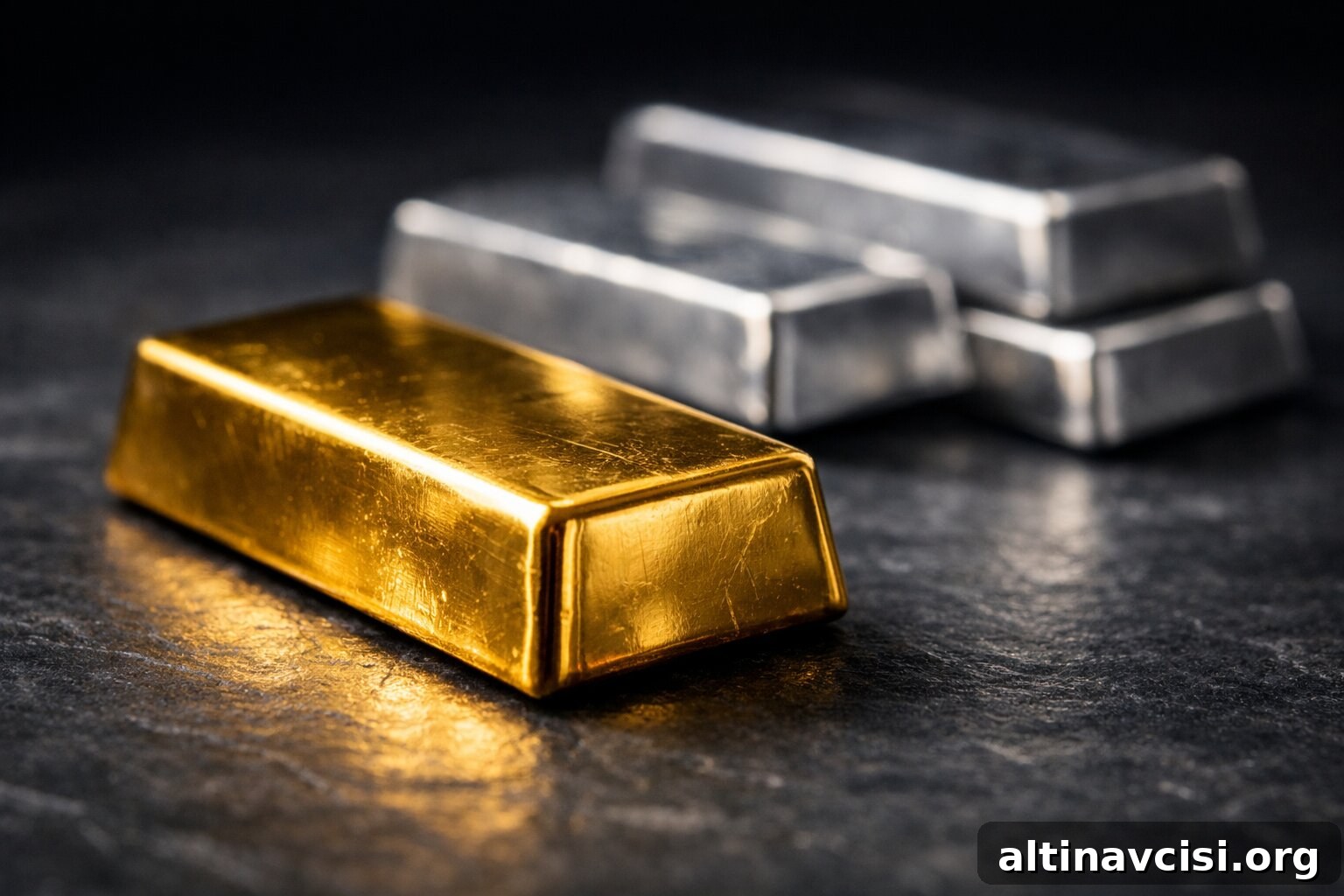
Silver spent most of 2025 trailing gold, then in a single month more than doubled. If you’ve ever wondered when silver outperforms gold, the answer is usually the same: after gold has already done the heavy lifting. That pattern is not a fluke — it has repeated in every major precious metals bull market of the past 50 years.
Gold moves first. Silver waits. Then silver outperforms.
The question isn’t whether this cycle plays out but why it does and what it tells investors about the mechanics of precious metals bull markets.
When Does Silver Outperform Gold? The Data Has a Clear Answer
Gold’s head start in most bull markets is not accidental. It reflects the different roles the two metals play in the financial system.
Gold is the monetary metal. Central banks hold it, institutions buy it when inflation rises or currencies weaken, and investors turn to it when geopolitical risk spikes. As a safe-haven asset, gold tends to be the first to react.
Silver is both a monetary metal and an industrial commodity. A large share of silver demand comes from solar panels, electronics, and electric vehicles, making it more sensitive to economic growth expectations. That industrial exposure can weigh on silver’s price early in a crisis, when fear dominates investor behavior.
There is also an attention gap: gold attracts institutional capital and headlines early in a cycle; silver often only draws significant investment after gold has moved. The historical pattern across many bull markets is consistent: gold leads, silver catches up, and then silver overshoots.
What Did Gold and Silver Do in the 1970s Bull Market?
Gold
Silver
indexed from Jan 1971 (= 0%)
Gold peak (Jan 1980): +1,690% · Silver peak (Jan 1980): +2,134% · Source: MacroTrends (monthly spot prices)
The 1970s bull market had a clear trigger. In 1971, President Nixon ended the dollar’s convertibility to gold, dismantling the Bretton Woods system. Gold was free to find its market price and moved quickly.
By 1974, gold had climbed more than 240% from its 1971 base, while silver had gained roughly 154% — strong, but clearly behind gold.
As inflation accelerated and real interest rates turned deeply negative, silver’s move intensified. The Hunt Brothers’ attempt to corner the silver market magnified volatility. By the January 1980 peak, gold had risen roughly 2,229% from 1971 and silver about 3,133%, with most of silver’s outperformance occurring in the final year.
Gold led for nearly a decade; silver exploded at the end.
The Financial System Isn’t Safer — And You Know It
As risks mount, see why gold and silver are projected to keep shining in 2026 and beyond.
Did Silver Outperform Gold in 2025?
You don’t need to go back decades to observe the pattern; the last 15 months provide a recent example.
Gold opened 2025 around $2,798 per ounce, while silver traded near $31. Both were well above their 2020 lows, yet their paths diverged in a way that illustrates the lag dynamic.
Through the first eight months of 2025, gold led while silver barely moved. By April, gold was up more than 17% while silver had gained roughly 4%. Observers focused only on silver might have concluded the bull market had passed it by — but that wasn’t the case.
Gold
Silver
indexed from Jan 2025 (= 0%)
Gold peak (Feb 2026): +88.6% ($5,278) · Silver peak (Jan 2026): +263.9% ($113.95) · Source: MacroTrends (monthly spot prices)
In September 2025, silver began closing the gap and then broke higher. By November, silver was up more than 80% from its January base while gold had gained roughly 51%. By December, silver had surged more than 128% as gold sat near 54%. In January 2026, silver reached $113.95 per ounce — nearly a 264% gain over twelve months. Gold peaked the following month at $5,278, up 88.6% over the same period.
Silver finished nearly three times stronger than gold in just 15 months.
By March 2026, silver had pulled back to around $88 and gold traded near $5,000. Still, the sequence is clear: gold led, silver lagged, and then silver surged.
The Gold-Silver Ratio: A Signal Worth Watching
The gold-silver ratio measures how many ounces of silver it takes to buy one ounce of gold. The ratio is a reliable indicator of when silver may outperform gold, and after a historic compression it now sits near its long-term average.
Over the very long run the ratio has averaged roughly 60:1 — about 60 ounces of silver to buy one ounce of gold. During precious metals bull markets the ratio typically compresses as silver outperforms; at the 1980 peak it briefly touched around 17:1, and in April 2011 it fell to about 32:1 before silver’s correction.
With gold near $5,000 and silver around $80, the ratio currently hovers near 62:1, close to historical averages. That marks a significant shift from early 2020, when the ratio spiked to 120:1 and silver looked especially cheap relative to gold.
In short, silver has already undergone substantial rerating in this cycle. The gap has narrowed, which aligns with the historical pattern.
So What Does the Silver Lag Pattern Mean for Investors?
History rarely repeats exactly, but the structural logic behind this pattern remains consistent. Gold tends to anchor the bull market; silver amplifies it later and usually by more.
That dynamic unfolded again recently: silver lagged gold for years and then rallied sharply, posting almost 264% in a year. Industrial demand for silver from solar and EV markets continues to grow, supply deficits persist, and renewed central bank interest in gold has introduced many investors to precious metals.
Precious metals are volatile and pullbacks are part of the cycle. For investors looking to understand how these markets move, the pattern is supported by decades of data and recent evidence: silver typically does not lead the cycle, but it often finishes strongest.
Stay On Top of Gold & Silver Prices
Get important market alerts sent straight to your inbox.
People Also Ask
Why is silver not going up as fast as gold right now?
Silver often lags early in a bull market because institutions and central banks tend to buy gold first. As the cycle matures and momentum builds, silver usually catches up and can outperform.
Does silver usually outperform gold in a bull market?
Historically, yes. Silver has tended to outperform gold in the later stages of precious metals bull markets. Its smaller market and greater volatility allow gains to accelerate once capital shifts.
What is the gold-silver ratio and why does it matter?
The gold-silver ratio shows how many ounces of silver are needed to buy one ounce of gold. A high ratio suggests silver is relatively cheap; a falling ratio indicates silver is outperforming. Monitoring it helps gauge where the cycle stands.
Is silver undervalued compared to gold right now?
With the gold-silver ratio near its long-term average, silver has already closed much of the historical gap. However, late-cycle moves can compress the ratio further, so there may still be room for silver to outperform if the trend continues.
When does silver usually start outperforming gold?
Silver typically begins to outperform after gold has established a clear uptrend, often in the mid-to-late stages of a bull market when investor confidence increases and capital moves toward higher-risk, higher-reward assets.
You May Also Like:
- Why Gold Could Hit $6,000: Recession & Middle East Tensions
- How Gold Performs in Recessions: What History Tells Us
- Gold vs Inflation: What 100 Years of Data Shows
- Why Silver Is More Volatile Than Gold (And Why It Matters for Investors)
- Silver Bars vs. Silver Coins: Which Is the Better Investment?