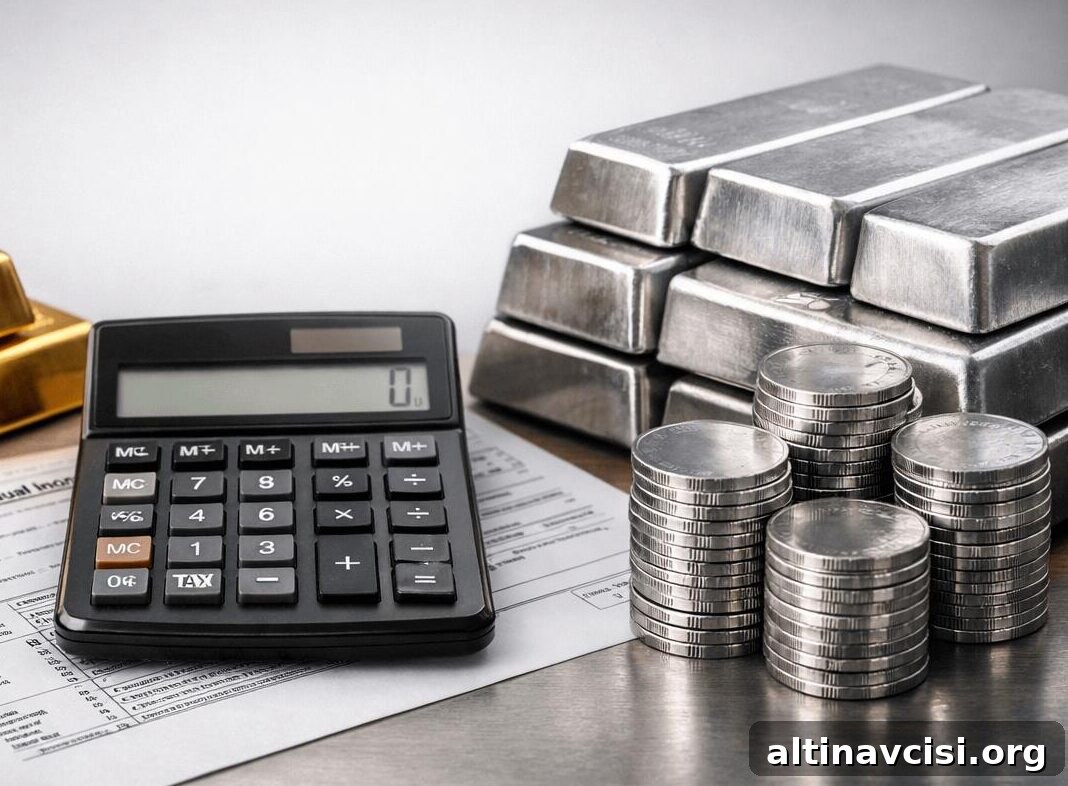
Important note: GoldSilver is not a tax or legal advisor. This article is for educational purposes only and should not be considered tax advice. Always consult a qualified tax professional regarding your individual situation.
Many investors assume gold and silver face different tax treatment.
Gold is commonly thought of as “real money” — a long-standing store of value held by central banks and governments. Silver, by comparison, is often viewed as an industrial metal tied to electronics, solar panels, and manufacturing. Because the two metals play different roles in the economy, it’s easy to assume the IRS treats them differently.
That assumption makes sense — but it’s incorrect.
At the federal level, physical gold and physical silver are taxed the same. Most of the confusion comes from how the metals are used, how they’re held, and state-level rules — not from different federal tax classifications.
In this article, we explain:
- Why investors expect different tax treatment
- How the IRS actually classifies gold and silver
- What capital gains taxes look like for these metals
- Where state sales taxes create differences
- How IRAs change the tax picture
No hype. No loopholes. Clear facts and practical context for experienced investors.
Why Investors Assume Gold and Silver Are Taxed Differently
Gold’s monetary image vs. silver’s industrial role
Gold and silver occupy different roles in the public mind. Gold has been used as money for millennia, sits in central bank vaults, and is cited in discussions about currency stability. Many buy gold as financial insurance — a hedge against inflation, currency debasement, or systemic risk.
Silver is more mixed in perception. It has monetary history and is held for preservation of wealth, but it is also a vital industrial input for electronics, medical devices, batteries, and solar tech. That industrial demand creates more price volatility and makes silver feel less strictly “monetary.”
Because gold feels like money and silver like a commodity, investors often presume different tax treatment. In practice, they’re treated the same federally.

The Financial System Isn’t Safer — And You Know It
As risks mount, see why gold and silver are projected to keep shining in 2026 and beyond.
Confusion from ETFs, collectibles, and state rules
Another big source of confusion is the variety of ways to own metals:
- Physical coins and bars
- Paper exposures (ETFs, trusts, futures)
- Mining stocks
- Numismatic or collectible coins
- Different federal, state, and local rules
Many online articles mix these categories, causing unclear or misleading conclusions. Some focus on capital gains, others on sales tax or ETFs, without clarifying which rules apply to which ownership form. The result: investors sometimes believe gold receives special federal privileges or silver is penalized — neither is generally true at the federal level.
How the IRS Classifies Gold and Silver
The “collectibles” classification
Under U.S. tax law, physical gold and silver bullions are classified as collectibles. That classification may seem odd because bullion is purchased for investment, not display, but the IRS definition of collectibles is broader than many expect.
Collectibles include items such as art, antiques, certain stamps and coins, gems, and precious metals bullion. Because gold and silver bullion fall into this category, they follow a special capital gains framework distinct from stocks, bonds, and real estate.
This classification applies to both gold and silver equally.
Which gold and silver qualify
The collectibles rules apply to investment-grade precious metals. That typically includes:
- Recognized sovereign coins (e.g., American Eagles, Canadian Maple Leafs, Austrian Philharmonics, Australian Kangaroos)
- Bars and rounds from approved refiners, private mints, or sovereign mints
Purity standards commonly apply: gold often must be at least .995 fine and silver .999 fine to qualify as investment bullion. Numismatic or collectible coins, valued for rarity or condition, are treated differently and can add complexity. But for standard bullion products, the IRS treats gold and silver the same.
Capital Gains Taxes on Gold vs. Silver (Federal Level)
Long-term capital gains (held over one year)
If you hold physical gold or silver for more than one year, profit from a sale is a long-term capital gain. Because these metals are classified as collectibles, they do not receive the favorable long-term rates that typically apply to stocks or bonds. Instead, long-term gains on collectibles are taxed at a maximum rate of 28%.
“Up to 28%” is a ceiling — your actual rate depends on income and tax filing status. This long-term collectibles rule applies equally to gold and silver.
Short-term capital gains (held one year or less)
If you sell after holding one year or less, gains are taxed as ordinary income at your marginal tax rate, just like wages or business income. Behavior matters: silver’s greater volatility can lead to more frequent trading and more taxable events, while gold is often held longer as a hedge, reducing taxable transactions. The IRS does not tax silver more heavily; investors may simply trigger more taxes through trading patterns.
Key takeaway — same federal tax treatment
Short answer: gold and silver are taxed the same at the federal level. They share the same classification and capital gains rules, and the same maximum long-term rate. Differences in tax outcomes usually result from investor behavior or state law, not IRS policy.
Sales Tax Also Depends on Where You Live
While federal rules are uniform, state sales tax treatment varies widely. Many states offer full or partial exemptions for qualifying precious metals purchases, but “exemption” varies by state.
A qualifying purchase typically means investment-grade bullion (not jewelry or numismatics) that meets minimum purity standards and is bought primarily for investment or wealth preservation.
Common state approaches include:
- Full exemptions in some states (e.g., Texas, Florida, Nevada, Arizona). Some states like Oregon and Delaware have no sales tax at all.
- Threshold-based exemptions in others (for example, exemptions that apply only above set purchase amounts).
- States that still tax bullion purchases.
Sales tax can materially affect cash outlay — a 6–8% sales tax on a large purchase represents thousands of dollars that never reach the metal — so state rules matter for planning.
Recent Changes to Watch
State sales tax laws for precious metals continue to change. Examples of recent developments illustrate the point: some states have implemented new taxes, others have repealed exemptions, and a few have added exemptions. Because these rules evolve, keep current on your state’s laws before buying.
Why This Matters Before You Buy
Sales tax and holding decisions affect net returns. Long-term investors should factor sales tax into purchase timing and amounts, consider using tax-advantaged accounts if appropriate, and avoid unnecessary trading that generates short-term taxable events.
Holding Gold and Silver Inside an IRA
Self-directed precious metals IRAs
Holding approved metals inside a properly structured self-directed IRA is a legal way to defer or avoid current capital gains taxes. With a Traditional IRA, taxes are deferred until withdrawal; with a Roth IRA, qualified withdrawals can be tax-free. In both account types, gains are sheltered from immediate capital gains taxation.
Common IRA pitfalls
Investors can trigger taxes or penalties by attempting home storage, buying non-approved coins or bars, or taking personal possession of IRA metals. Proper custodial arrangements, approved metals, and compliant storage are essential to preserve tax advantages.
So… Are Gold and Silver Taxed Differently? Final Answer
The IRS answer, in plain English
No. Gold and silver are taxed the same at the federal level. Both are classified as collectibles, follow the same capital gains rules, and share the same federal long-term maximum rate. Any differences investors notice typically stem from how they invest and their state of residence — not from the metal itself.
Talk to a tax professional before making decisions
Tax laws change and individual circumstances vary. This article is educational and not tax or legal advice. Before making decisions about precious metals, IRAs, or major portfolio changes, consult a qualified tax professional who understands your situation.
Clear knowledge, careful planning, and appropriate professional guidance help investors preserve wealth over the long term.
Stay On Top of Gold & Silver Prices
Get important market alerts sent straight to your inbox.
People Also Ask
Are gold and silver taxed differently by the IRS?
No. At the federal level, the IRS taxes physical gold and physical silver the same way. Both are classified as collectibles and follow the same capital gains rules when sold outside a tax-advantaged account.
Why does the IRS classify gold and silver as collectibles?
The IRS treats gold and silver as collectibles because they are tangible assets whose value is driven by scarcity and market demand rather than income generation. Under tax law, assets held primarily for appreciation — including investment-grade precious metals — fall into the collectibles category, which affects capital gains taxation.
What is the capital gains tax rate on gold and silver?
If held longer than one year, gold and silver are subject to a maximum federal long-term capital gains rate of 28%. If sold within one year, gains are taxed as ordinary income. The rate you pay depends on your overall taxable income and filing status.
Are gold and silver taxed differently inside an IRA?
No. When held inside a properly structured self-directed IRA, gold and silver receive the same tax treatment. The crucial factors are approved metals, an IRS-approved custodian, and compliant storage arrangements.
How can investors reduce taxes on gold and silver legally?
Longer holding periods, proper account structure, and disciplined strategy reduce tax impacts more than metal choice. Many investors consult qualified advisors to understand compliant IRA options, storage rules, and long-term allocation before buying.
You May Also Like:
- Silver Price Components: Premium, Spot, and Dealer Markup Explained
- Silver Price Forecasts Revisited: Why Wall Street Got It Wrong
- Gold’s Purchasing Power: What One Ounce Buys Over Time
- Why Metals Dominated Every Asset Class in 2025 [and What It Means for 2026]
- Best Investment Of 2026: Silver’s Setup Is Hard To Ignore