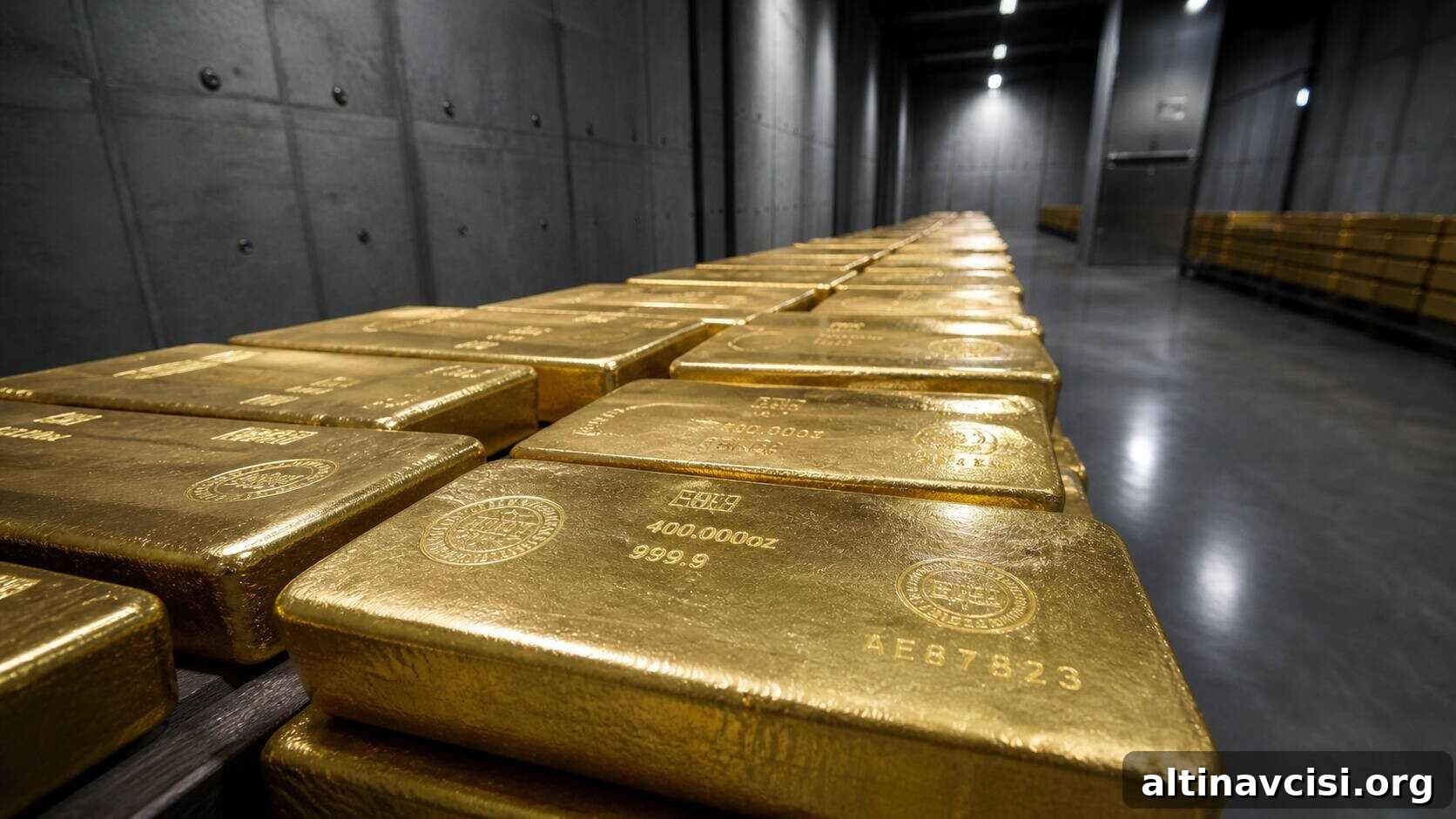
Gold is trading near $4,560 per ounce — about 18% below the record high of $5,589.38 reached on January 28, 2026. Nitesh Shah, head of commodities and macro research at WisdomTree, expects gold could climb to $5,500 by Q1 2027, driven largely by the risk of central bank policy errors. With stagflation pressures rising and policymakers balancing inflation and slowing growth, the structural case for gold remains solid.
After a roughly 65% advance in 2025 — its best calendar year performance in more than 40 years — gold closed 2025 near $4,310 per ounce. The rally extended into January 2026, culminating in the all-time high on January 28.
Geopolitical tensions in the Middle East and other market dynamics have since pushed the price back toward $4,560 as of early May 2026. Investors now face the question: is this a temporary pause in a larger bull market, or the start of a more sustained reversal?
One prominent analyst believes the pause is temporary and has set a $5,500 target for Q1 2027. The main catalyst he cites is central bank behavior — large, steady purchases and the real risk that monetary policy mistakes could amplify demand for a non‑counterparty store of value.
What Is Central Bank Policy Risk — and Why Does It Matter for Gold?
Central bank policy risk refers to the chance that monetary authorities make a significant error — either tightening too aggressively and inducing a recession, or loosening too soon and reigniting inflation. Historically, both outcomes have been bullish for gold.
Right now, policymakers are trying to bring down sticky inflation without triggering a downturn. The margin for error is small and the instruments they use are blunt. Push rates too high and growth may stall; ease policy too quickly and inflation could return. Gold has tended to rise in both scenarios as investors seek protection against policy‑induced economic stress.
Nitesh Shah summarizes the dilemma: central banks recognize that interest rate moves can inflict pain. When stagflation, a hard landing, or a currency credibility crisis become real possibilities, capital historically moves toward assets that preserve value without relying on promises — and gold fits that role.
Shah’s $5,500 estimate for Q1 2027 sits at the conservative end of his range. Even under more bearish assumptions — inflation returning to 2%, a stronger dollar, and higher bond yields — his model still indicates gold near $4,630 per ounce. In his view, downside looks limited while upside remains meaningful.
Your Gold Buying Guide Most investors overpay when they buy gold and then again when they sell. This guide explains what to own and why.
Why Are Central Banks Still Buying Gold in 2026?
Central banks bought 863 tonnes of gold in 2025 — one of the largest annual totals on record and more than 80% above the 2010–2021 average of 473 tonnes per year. While that represented a decline from 2024, the purchases came from more than 22 institutions, led by Poland with 102 tonnes and including returning buyers such as Brazil. The breadth of buying indicates a structural shift in how sovereign institutions manage reserves.
A major driver is de‑dollarization. Several economies are reducing exposure to U.S. Treasuries, and gold surpassed U.S. Treasuries in late 2025 to become the world’s largest reserve asset by value. Official figures from some central banks, notably China’s, likely understate actual buying, suggesting the true volume of sovereign accumulation may be higher than reported.
Sovereign buyers often treat gold as a policy tool rather than a short‑term trade; they tend not to sell into price weakness. That steady, price‑insensitive demand creates a structural floor that was less evident a decade ago and underpins much of the bullish outlook for gold through 2027.
Is $5,500 Gold by Q1 2027 Actually Realistic?
Yes — it is within the range of credible institutional forecasts, though the road there may be uneven.
Shah’s $5,500 target is toward the conservative side of major bank projections. For example, some large institutions forecast gold averaging above $5,000 by late 2026 and rising further into 2027, assuming a mix of investor demand and continued central bank purchases. Separate analysis has also shown that modest shifts from large fixed‑income allocations into gold could send substantial capital into a relatively small market, which would be highly price‑supportive.
The U.S. dollar matters as well. A softer dollar lowers the price of gold for buyers using other currencies, broadening demand and reinforcing upward pressure. Conversely, a credible soft landing that pushes inflation back to target without a recession would raise real yields and strengthen the dollar, which could temper gold’s advance. Geopolitical détente would also reduce near‑term safe‑haven flows.
Still, even conservative downside scenarios in some models place a floor well above pre‑2025 levels, suggesting the risk/reward favors owning at least some gold for many investors.
How Should Investors Position Now?
In a structural bull market, corrections are often the best entry points.
Current prices near $4,560 — roughly 18% below January’s high — reflect a normal pullback in a commodity rally. That doesn’t signal a broken trend; it’s how bullish cycles refresh themselves.
Start with physical holdings. Physical bars and coins carry no counterparty risk and form a durable foundation for any allocation to precious metals.
Use ETFs for flexibility. U.S.-listed gold ETFs added significant tonnes in 2025 and provide efficient exposure without the logistics of vaulting and security, making them a practical option for many investors.
Keep volatility in perspective. Gold has experienced multiple double‑digit pullbacks in the course of recent rallies. Those corrections were temporary and often presented buying opportunities for longer‑term investors.
Policy uncertainty, monetary debasement concerns, and sovereign reserve diversification remain intact, while temporary factors like regional geopolitical tensions and short‑term margin selling do not negate the multi‑year thesis for many market participants.
Stay On Top of Gold & Silver Prices
Get important market alerts sent straight to your inbox.
People Also Ask
What factors are driving the gold price forecast toward $5,500 by Q1 2027?
Key drivers include the risk of central bank policy errors, sustained sovereign gold buying, a softer U.S. dollar, and persistent inflationary pressures. Analysts point to stagflation risk and reserve diversification as significant bullish catalysts heading into 2027.
How do central bank policies impact gold prices?
Central banks influence gold through direct purchases that increase demand and through interest‑rate decisions that affect real yields and the dollar. When policy choices raise the prospect of recession or stagflation, gold typically benefits.
Is $5,500 gold by Q1 2027 a realistic price target?
It falls within the range of credible institutional forecasts. Several major firms have projected gold rising well into the $5,000s by 2027, provided central bank demand and policy uncertainty persist.
What role does inflation play in gold price increases?
Inflation reduces the real value of cash and fixed‑income returns, making non‑yielding gold relatively more attractive. Gold tends to perform best when real interest rates are low or negative, reducing the opportunity cost of holding the metal.
How does U.S. dollar weakness affect gold?
Because gold is priced in dollars, a weaker dollar lowers the local‑currency price for international buyers, expanding demand. Dollar weakness can also reflect broader concerns about fiscal and monetary policy, which further supports gold as a hedge.
So, Where Does That Leave You Right Now?
Gold sits roughly 18% below its all‑time high while central banks continue to buy at elevated levels. Analysts who accurately anticipated the rally point to $5,500 by early 2027 as a plausible outcome.
The retracement since January can feel uncomfortable, but volatility is a normal part of long bull markets. Policy uncertainty and sovereign reserve diversification remain key structural drivers, and price‑insensitive sovereign demand provides a durable underpinning for the market.
Whether $5,500 arrives in Q1 2027 or later, the broader trend appears supportive for those considering an allocation. The relevant question for investors is not simply whether to own gold, but how much to hold within a balanced portfolio.
SOURCES
1. Invezz — Central bank policy errors may drive gold to $5,500/oz by Q1 2027: expert
2. WisdomTree — Gold Outlook to Q2 2026
3. World Gold Council — Gold Demand Trends: Full Year 2025
4. World Gold Council — Central Banks: Full Year 2025
5. J.P. Morgan Global Research — Gold Price Predictions 2026
6. Trading Economics — Gold Price Chart & Historical Data
7. Advisor Perspectives / WisdomTree — Gold’s Safe‑Haven Status
8. World Gold Council — Gold Market and Demand Trends Q1 2026
Disclaimer: This article is for informational and educational purposes only and does not constitute investment advice. Consult a qualified financial adviser before making investment decisions.
You may also like:
- Why Gold Stabilizes — and Silver Amplifies
- COMEX Silver Coverage Ratio: Is Your Paper Silver Real?
- What the Gold Price Per Ounce Really Tells You
- The Gold Inflation Paradox Most Investors Miss
- Insurance vs. Upside: Balancing Your Portfolio with Gold and Silver
- Gold Bullion vs. Jewelry: Why Serious Investors Choose the Bar
- Gold & Silver IRA: Why Starting Early Costs You Less
- Silver Fair Value: What the Data and History Show