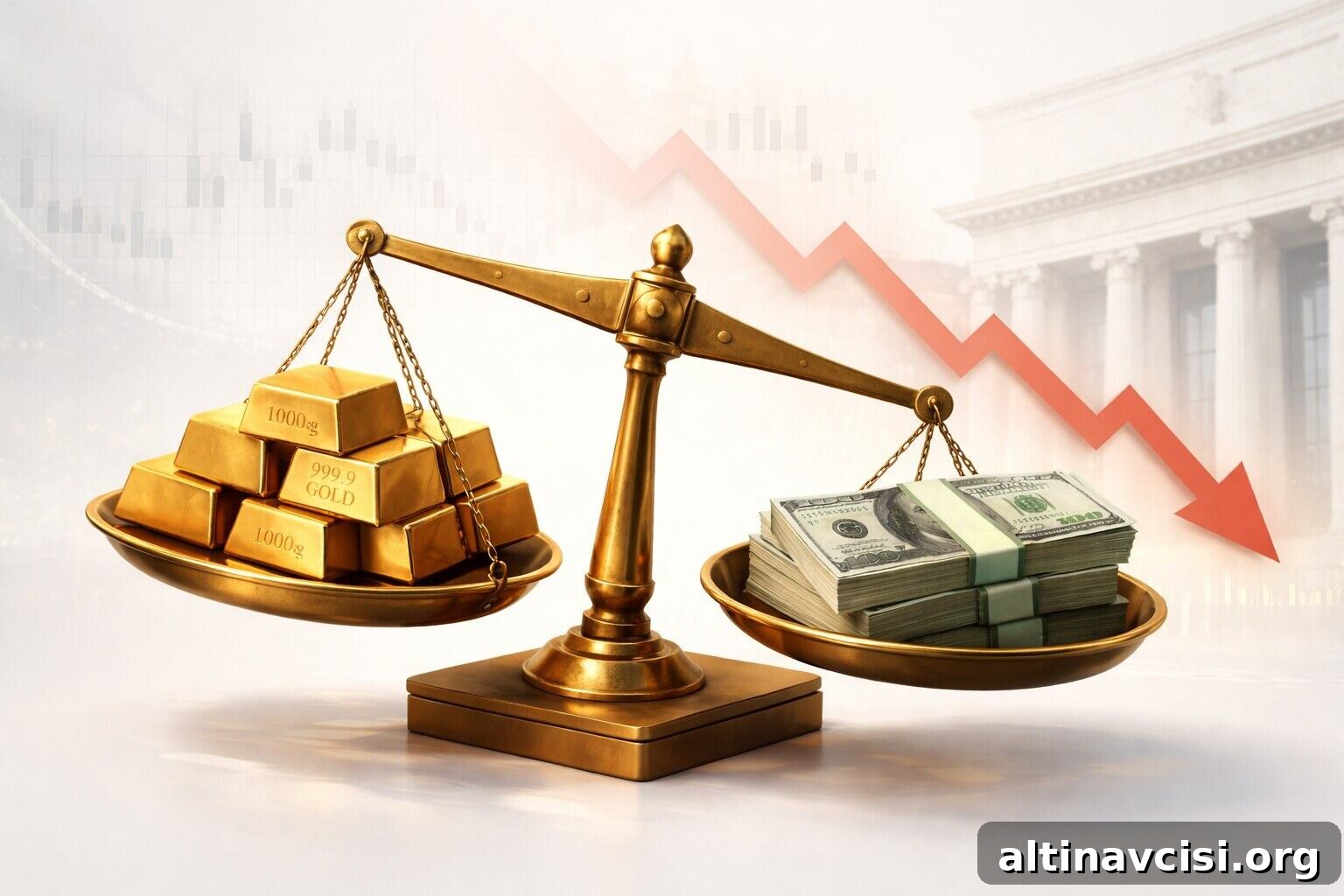
Bretton Woods ended in 1971. Since that time, central banks have consistently held more U.S. dollar reserve assets than gold—until recently.
This is not conjecture: official gold reserves now total approximately $3.87 trillion, exceeding U.S. dollar reserve assets at about $3.73 trillion. That milestone arrived the same week the Strait of Hormuz blockade began, when U.S.-Iran talks collapsed and gold held near $4,712 per ounce on April 14, 2025. Sovereign wealth managers and central bank balance sheets are sending a clear signal. The question is whether individual savers are paying attention.
What does it mean that central banks hold more gold than dollars? It indicates that the most experienced public-sector money managers are increasingly hedging against fiat currency risk. This is being done as policy, not merely as a short-term trade. For private savers, the institutional precedent supporting physical gold and silver has rarely been stronger.
Why Are Central Banks Buying Gold Instead of Dollars?
Gold opened a recent trading session around $4,712 per ounce and stayed in the $4,700–$4,750 range as markets absorbed both geopolitical shocks and a significant monetary data point.
The key figure comes from a compilation cited by market analysts: official central bank gold reserves reached a record $3.87 trillion, surpassing global U.S. dollar reserve assets at $3.73 trillion. This is the first time since the collapse of Bretton Woods in 1971 that gold outweighs the dollar on aggregate central bank balance sheets. Since 2022, central bank gold holdings have roughly tripled, driven by both persistent buying and rising prices.
Three transactions that illustrate the trend:
- China continued a long-running accumulation of gold, pushing reserves to a record roughly $343 billion while reducing U.S. Treasury holdings by about $623 billion—leaving Treasuries at their lowest level since 2009.
- France quietly repatriated roughly 180 tons of gold from the Federal Reserve Bank of New York to Paris, a move confirmed by the Banque de France that realized substantial gains from elevated prices. France now reports its total reserves fully stored domestically at about 2,437 tons.
- Turkey carried out a gold swap, converting roughly 58–60 metric tons to cash between late February and mid-March to support the lira, and later re-established positions. While headlines treated the action as a sale, most of the operation was temporary and intended as currency defense rather than an exit from gold—leaving net holdings near 320 tons.
The Turkish swap briefly pushed gold down about 11% in March—the largest monthly drop since 2013—before sovereign buyers resumed purchases. The consistent theme is clear: many governments are rebalancing away from dollar-denominated assets and toward physical gold. Major banks now carry elevated price targets—Goldman Sachs near $5,400 per ounce, ANZ around $5,800, and UBS projecting $6,000—each pointing to central bank demand as a structural driver rather than a temporary cycle.
How Does the Strait of Hormuz Blockade Affect Gold Prices?
This structural shift in central bank reserves coincided with acute geopolitical tensions. U.S.-Iran negotiations broke down in Islamabad, and a U.S. naval blockade of the Strait of Hormuz was announced. The Strait is a critical oil chokepoint, accounting for roughly one-fifth of global seaborne oil flows. Some U.S. allies publicly declined to participate in the blockade, adding diplomatic friction.
What the blockade means for oil and energy prices
Military deployments into the region pushed Brent crude above $102 per barrel and WTI past $104. The energy shock has immediate effects: diesel prices in the U.S. climbed noticeably, and broader inflationary pressure risks intensifying if disruptions persist.
Why the Fed is creating headwinds for gold
Gold faces a tug-of-war between safe-haven demand and a hawkish Federal Reserve. Recent FOMC minutes indicated officials didn’t rule out further rate hikes, which delayed expectations for rate cuts. The U.S. Dollar Index strengthened to roughly 98.70—up several percent over recent months—and 10-year Treasury yields rose about 40 basis points in the prior month. Stronger dollar and higher yields typically weigh on gold in the short term.
What sets the current cycle apart is that sovereign buying has absorbed volatility that, in earlier periods, would have led to deeper corrections. Institutional demand is acting as a stabilizing force.
What to watch this week
Upcoming data and events include the March Producer Price Index and commentary from Fed officials. The IMF and World Bank Spring Meetings will convene in Washington with Middle East economic stability high on the agenda. ASEAN finance ministers and central bank governors have also issued warnings about growing regional risks.
What Individual Savers Should Consider
Silver recently traded near $74 per ounce, down modestly amid a firmer dollar and short-term profit-taking. Historically, silver tends to lag gold in monetary stress and then can outperform on the upside. Several major banks forecast higher silver prices over the coming year, with estimates often in the $81–$90 range for 2026 and upside scenarios above $100 if industrial demand from solar and electric vehicles creates supply deficits. For investors who accept the structural sound-money argument, silver can act as a complementary, higher-volatility exposure alongside gold.
The mechanism every saver should understand
The investment rationale is straightforward. Sovereign institutions managing trillions are allocating into assets outside the financial system. When governments run persistent deficits and central banks expand the money supply, fiat purchasing power erodes over time. Gold and silver cannot be printed and their supply grows slowly, making them long-standing hedges against currency debasement. This is not a prediction of imminent collapse but a recognition of a long-running structural dynamic.
Is this shift already priced in?
Partly. Gold has already climbed materially, but central bank accumulation appears to be accelerating rather than peaking. Retail savers still represent only a fraction of the institutional flows driving this market. The era in which gold reserves exceed dollar reserves is no longer speculative—it’s a current reality, reflected in the actions of many of the world’s largest balance sheets.
SOURCES
This article synthesizes publicly reported central bank reserve data, market commentary, and recent institutional announcements. All figures cited reflect aggregated reporting from official and industry sources available at the time of writing.
This article is for informational purposes only and does not constitute financial or investment advice. Consult a qualified financial advisor before making investment decisions.
You May Also Like
- Hormuz Blockade Sent Gold Down 2%. Here’s Why That’s Bullish
- Gold Jumps 2% as Trump Plans Iran War Address
- $88 Billion a Month: Why U.S. Debt Is Driving Gold Prices
- CPI Hits 3.3%, GDP Stalls — Is Stagflation 2026 Here?
- War Risk, Stagflation Signals, and a $6,300 Gold Target
- Gold and Oil Brace for the Strait of Hormuz Deadline
- Iran War Deadline Puts Gold and Silver Prices on Edge