Central Bank Gold Buying: Why 39 Tonnes Matters
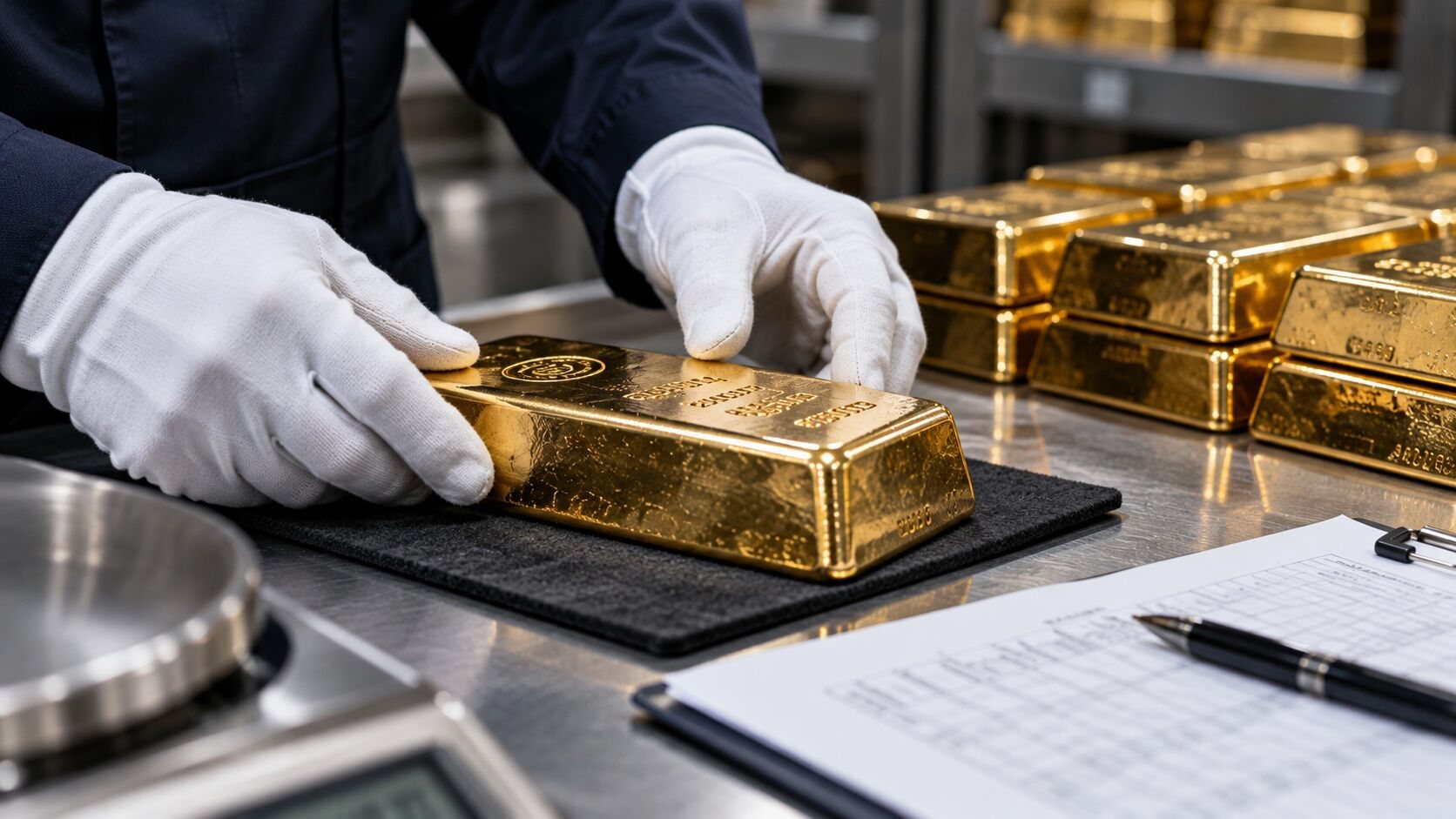
Central banks reported 39 tonnes of net gold buying in August 2026. The World Gold Council published the figures on October 6, 2026. Yet the bigger story is not the monthly total. It is how long-term reserve plans shape buying decisions.
Key Takeaways:
- Central banks reported 39 tonnes of net buying in August and 170 tonnes through August 2026 (World Gold Council, October 6, 2026).
- China added 20 tonnes, while Poland and Uzbekistan each added eight tonnes (World Gold Council, October 6, 2026).
- Long-term physical gold ownership depends on a clear purpose, appropriate custody, and realistic liquidity needs.
How Much Gold Did Central Banks Buy through August 2026?
The World Gold Council reported 39 tonnes of net central-bank purchases for August. That brought reported buying to 170 tonnes through August 2026. The figures reflect available official disclosures, not an estimate of all unreported purchases (World Gold Council, October 6, 2026).
China led with 20 tonnes, its 22nd consecutive month of reported buying. Poland and Uzbekistan each added eight tonnes. However, the activity was not uniform. Russia sold six tonnes, and Jordan sold three tonnes (World Gold Council, October 6, 2026).
So, the story is not that every central bank buys regardless of price. Rather, different institutions are following different reserve objectives.
The historical context is striking. Annual central-bank net demand exceeded 1,000 tonnes from 2022 through 2024. It then reached 863 tonnes in 2025, still above the 2010–2021 average of 473 tonnes (World Gold Council, January 29, 2026).
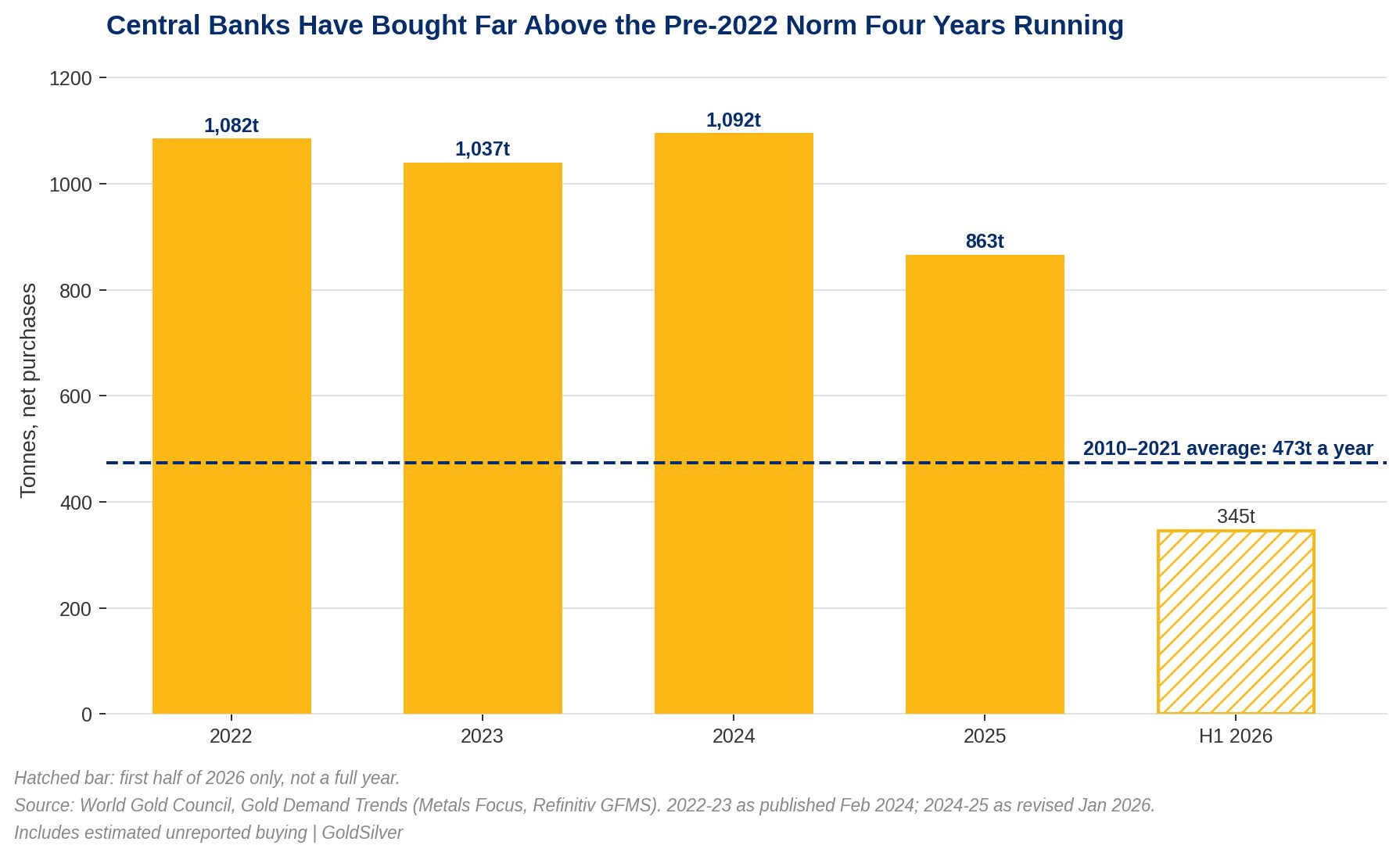
Importantly, the chart uses estimated total annual demand. The August figures use reported monthly transactions. These measures are not directly comparable.

The Edge Every Investor Needs Smarter precious metals investing starts here. The Nuggets Newsletter brings you essential market insights, Fed updates, global trends, educational videos, and much more.
Why Do Central Banks Hold Gold for Years?
Reserve managers balance liquidity, diversification, and financial resilience. Gold can contribute because it is not another government’s debt obligation. Unlike a bond, physical gold does not depend on an issuer repaying principal.
However, gold earns no interest. Its market price changes, and secure custody has costs. Central banks therefore adjust their holdings when reserves need to be realigned.
The World Gold Council noted that August buying was led by institutions pursuing multiyear accumulation programs (October 6, 2026). In other words, monthly purchases can reflect an existing plan rather than a new market prediction.
For deeper background, see Altinavcisi’s guide to central bank gold reserves.
What Does This Mean for Long-Term Physical Gold Owners?
Central banks and households have different responsibilities. Still, one principle translates: decide why an asset belongs in your plan before reacting to its price.
For individuals, physical gold may help diversify a portfolio. However, it cannot guarantee protection against inflation or losses over every period.
Next, consider where and how the metal is held. Home storage offers direct access but creates security responsibilities. Professional vaulting can simplify custody, although fees, allocation terms, insurance, and withdrawal rules matter.
Our comparison of vault storage and gold ETFs explains why owning metal differs from holding financial exposure to its price.
Does Long-Term Gold Ownership Mean Never Selling?
No. Central banks sell when circumstances change, and households may need cash or portfolio rebalancing.
Therefore, a long-term approach should include liquidity planning. It should also include periodic reviews of storage arrangements and ownership records.
August’s buying figures offer a useful reminder. The value of an ownership plan comes from understanding its purpose, not predicting the next gold-price move.
Stay On Top of Gold & Silver Prices
Get important market alerts sent straight to your inbox.
SOURCES
1. World Gold Council – Central Bank Gold Statistics: Central Banks Continue Summer Spree in August – October 6, 2026
2. Gold Demand Trends: Full Year 2025, Central Banks – World Gold Council – January 29, 2026
3. World Gold Council Research – Gold Demand Trends: Full Year 2023, Central Banks – January 31, 2024
4. Q2 2026 Central Bank Gold Demand – World Gold Council, Gold Demand Trends – July 30, 2026
Disclaimer: This article is for informational purposes only and does not constitute investment advice. Past performance is not indicative of future results. Always consult a qualified financial advisor before making investment decisions.