Key Takeaways
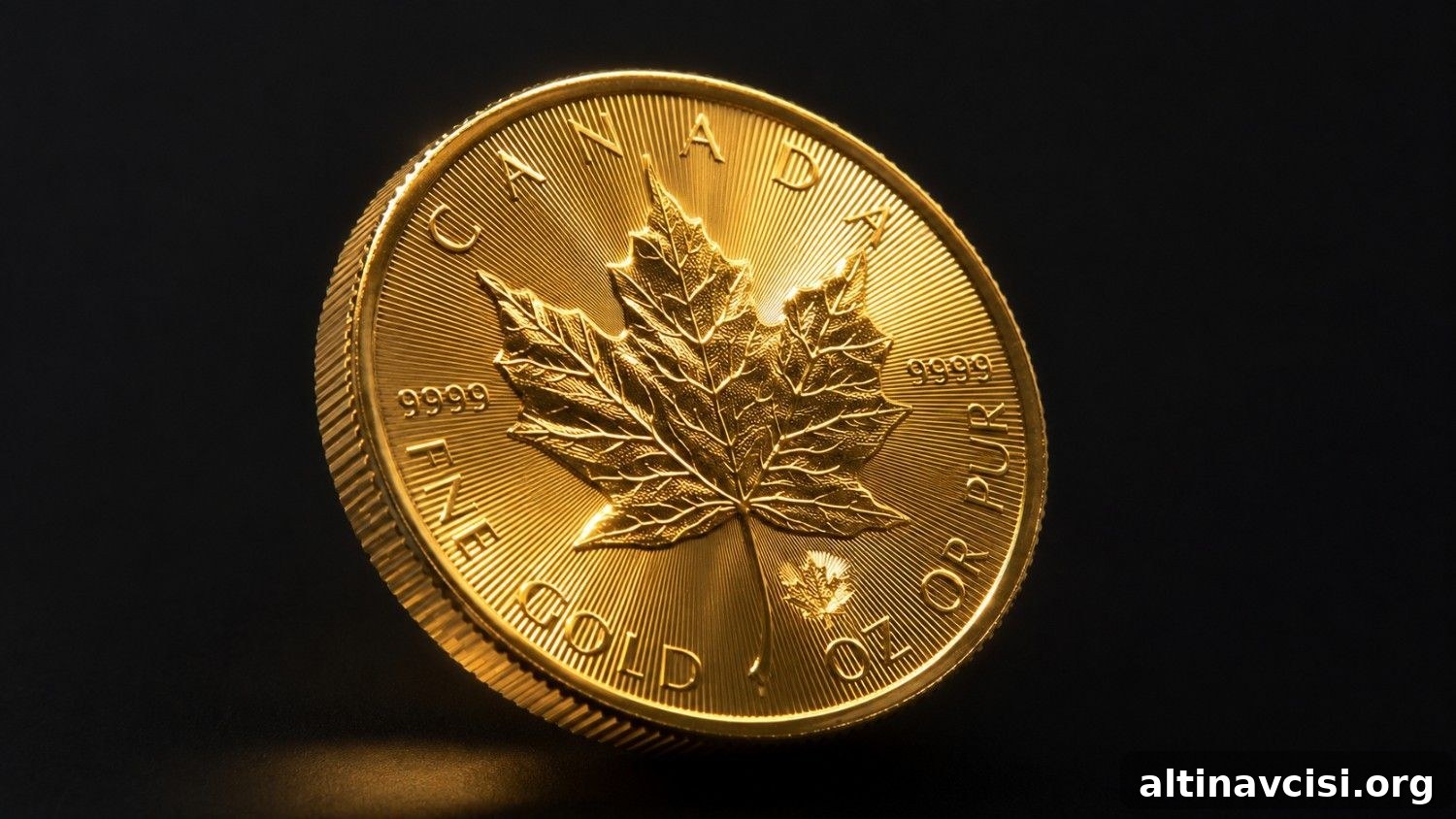
- The Canadian Gold Maple Leaf is a 99.99% pure gold bullion coin produced by the Royal Canadian Mint since 1979, and it was the first widely issued 24-karat government bullion coin.
- Each 1 oz Maple Leaf contains one troy ounce of .9999 fine gold and carries a $50 CAD face value guaranteed by the Government of Canada.
- The Maple Leaf meets IRS standards for inclusion in a self-directed Gold IRA, since U.S. rules require gold to be at least 99.5% pure.
- Typical dealer premiums for a 1 oz Maple Leaf range from roughly 3% to 6% above the gold spot price, though premiums fluctuate with supply and demand.
- Advanced security features — including a micro-engraved privy, precision radial lines, and the Royal Canadian Mint’s Bullion DNA system — make the Maple Leaf highly resistant to counterfeiting.
The Canadian Gold Maple Leaf is a globally recognized bullion coin, prized for its very high purity and consistent specifications. Issued by the Royal Canadian Mint, the Maple Leaf is available in multiple sizes, is widely accepted by dealers and refiners, and is suitable for use in retirement accounts that accept physical precious metals. This article explains the coin’s origins, purity, sizes, security features, IRA eligibility, pricing, storage options, and how it compares to other popular bullion coins.
Why Did the Royal Canadian Mint Create the Gold Maple Leaf?
The Maple Leaf emerged for political and market reasons as much as for numismatic ones. In the 1970s the South African Krugerrand dominated bullion markets, but international opposition to apartheid made the Krugerrand controversial and less marketable in many Western countries. The Royal Canadian Mint launched the Gold Maple Leaf in 1979 as a politically neutral alternative and chose an unusually high purity standard to distinguish the product.
While the Krugerrand was alloyed to 22 karats, the Maple Leaf started at 0.999 fine gold and was upgraded to 0.9999 fine by 1982. That move established the Maple Leaf as one of the first widely issued 24-karat government bullion coins and set a purity benchmark that other mints later followed.
How Pure Is the Canadian Gold Maple Leaf?
The standard Gold Maple Leaf is struck in 0.9999 fine gold, meaning 99.99% of the metal content is pure gold with no deliberate copper or silver alloying. The coin’s reverse explicitly states its fineness, and the Royal Canadian Mint’s quality control ensures consistent purity across production runs.
A handful of limited editions have been produced at 0.99999 fine (five nines) for collectors, but the widely available investment-grade Maple Leaf remains 0.9999. Compared with 22-karat coins such as the American Gold Eagle, the Maple Leaf contains more pure gold per gram of coin weight, making it attractive to investors who prioritize purity.
What Sizes Does the Gold Maple Leaf Come In?
The Royal Canadian Mint issues the Maple Leaf in several standard sizes to suit different budgets and strategies:
- 1 oz (face value $50 CAD)
- 1/2 oz (face value $20 CAD)
- 1/4 oz (face value $10 CAD)
- 1/10 oz (face value $5 CAD)
- 1/20 oz (face value $1 CAD)
- 1 gram (face value $0.50 CAD)
The 1 oz denomination is the most liquid and typically carries the lowest per-ounce premium. Fractional sizes, such as the 1/10 oz, are popular for smaller, incremental purchases but usually have higher percentage premiums because minting costs are spread over less gold content.
What Security Features Does the Gold Maple Leaf Have?
To combat counterfeiting, the Royal Canadian Mint has added multiple security elements to modern Maple Leafs:
- Micro-engraved maple leaf privy mark (since 2013): A tiny maple leaf on the reverse contains the last two digits of the production year and is visible under magnification.
- Precision radial lines (since 2015): Micron-level radial lines on both faces create a distinctive light-diffraction pattern that is difficult to reproduce accurately.
- Bullion DNA program: The Mint records unique surface characteristics of coin dies so participating dealers can authenticate coins with specialized scanners, effectively allowing each coin to be traced back to its die.
When these features are combined and a reputable dealer participates in authentication programs, buyers can be confident in a coin’s provenance and authenticity.
Is the Canadian Gold Maple Leaf IRA-Eligible?
Yes. The Maple Leaf meets the U.S. Internal Revenue Service’s fineness requirement for precious metals held in an IRA because its 0.9999 purity exceeds the 0.995 (99.5%) threshold. Unlike the American Gold Eagle, which qualifies via a specific statutory exemption despite being 22-karat, the Maple Leaf qualifies solely on its inherent purity.
Keep in mind that gold held in a self-directed IRA must be stored in an IRS-approved depository; it cannot be kept at home. If you plan to use Maple Leafs in a retirement account, consult a qualified tax advisor or a custodian experienced with precious metals IRAs to ensure compliance with all rules and procedures.
How Much Does the Gold Maple Leaf Cost?
The retail price of a Maple Leaf equals the gold spot price plus a dealer premium. Dealer premiums cover minting, distribution, and operating costs and vary with market conditions. For the 1 oz coin, premiums commonly range from about 3% to 6% over spot, though extremes can occur during periods of very high demand or supply constraints. Fractional coins usually carry higher percentage premiums, for example 8%–10% for a 1/10 oz coin.
Because spot prices change daily, consult a reputable dealer for current pricing. When comparing options, consider total all-in cost, dealer reputation, availability, and any shipping or insurance charges.
How Does the Gold Maple Leaf Compare to the American Gold Eagle?
Both coins are government-issued, widely traded, and usable in retirement accounts, but they differ in several practical ways:
- Purity: Maple Leaf is 0.9999 fine (24-karat); Eagle is 0.9167 fine (22-karat) with copper and silver alloyed for durability.
- IRA treatment: Maple Leaf qualifies based on purity; the Eagle qualifies by statute despite lower fineness.
- Durability: The Eagle’s alloy makes it harder and slightly more scratch-resistant; for vault storage this is rarely decisive.
- Premium and liquidity: Both are liquid worldwide. The Maple Leaf often trades at slightly lower premiums internationally, while the Eagle is dominant in U.S. retail markets.
How Do You Store and Sell the Gold Maple Leaf?
Common storage options include:
- Home safe: Immediate access and no ongoing fees, but higher theft risk and ineligible for IRA storage.
- Private vault or depository: Professional security, insurance, and allocated storage options; required for IRA holdings.
- Bank safe deposit box: Low cost and convenient but generally lacks insurance for precious metals unless you arrange separate coverage.
When selling, reputable dealers pay market-reflective prices and can authenticate Maple Leafs efficiently using visual checks and electronic authentication programs. Because the Maple Leaf’s purity and specifications are standardized, it is straightforward to sell to established dealers and refiners worldwide.
What Is the Sound Money Case for Owning the Gold Maple Leaf?
The Gold Maple Leaf is primarily a way to hold physical gold: a tangible monetary asset with millennia of historical use. Over long horizons, gold has preserved purchasing power differently than fiat currencies. Holding bullion like the Maple Leaf can serve as a portfolio diversifier and a store of value outside the banking system. For many investors, the combination of purity, mint credibility, and global liquidity makes the Maple Leaf a reliable vehicle for that purpose.
Deciding whether to hold gold — and how much — depends on your financial goals, risk tolerance, and time horizon. Treating bullion as a strategic position rather than a short-term trading instrument typically aligns better with its historical role as insurance against currency depreciation and financial uncertainty.
The Knowledge That Changes Everything

Two concise guides — free. Learn why gold matters and the structural forces that affect fiat currencies.
To receive these guides or market updates, contact a reputable dealer or sign up with a trusted newsletter service that does not store gold privately in customer accounts without clear custody arrangements.
Stay On Top of Gold & Silver Prices
Get timely market alerts and price updates delivered to your inbox.
Sign up with a trusted financial newsletter or follow reputable market data providers for live spot prices and historical charts.
People Also Ask
A government-issued bullion coin from the Royal Canadian Mint, first released in 1979 and commonly produced at 0.9999 fine gold. The 1 oz denomination carries a canonical face value of $50 CAD and is recognized in bullion markets worldwide.
For investors seeking physical exposure to gold, the Maple Leaf is a strong option due to its high purity, liquidity, and competitive premiums. Whether it is suitable depends on individual goals, allocation limits, and investment horizons; consult a financial advisor for personalized guidance.
Yes. The Maple Leaf’s 0.9999 purity exceeds the 0.995 fineness requirement for IRA-eligible gold. IRA-held precious metals must be stored in an approved depository and managed through a qualified custodian.
The Maple Leaf is purer (0.9999) while the Eagle is 22-karat (0.9167) and alloyed for durability. Both contain one troy ounce of gold in the 1 oz denomination, are widely traded, and are accepted in IRAs under their respective qualifying rules.
Issued sizes include 1 oz, 1/2 oz, 1/4 oz, 1/10 oz, 1/20 oz, and 1 gram. The 1 oz coin is the most liquid and typically offers the best per-ounce value.
Buy from reputable dealers and look for modern security features: the micro-engraved privy mark, precision radial lines, and verification through authentication programs. Professional dealers and refiners can authenticate coins quickly.
SOURCES
Royal Canadian Mint publications and standard U.S. tax code provisions for precious metals outline the coin’s specifications, security features, and IRA eligibility. Market spot prices vary by provider and change continually.
Disclaimer: This article is informational only and does not constitute financial or investment advice. Consult a qualified advisor before making investment decisions.
You May Also Like:
- The Federal Reserve and Long-Term Currency Erosion
- Class 3 Vault Standards for Precious Metal Storage
- American Gold Eagle: Investor Guide
- The Petrodollar System and Its Evolution
- Self-Directed IRAs for Precious Metals
- Gold Market Risk-Reward and Portfolio Allocation