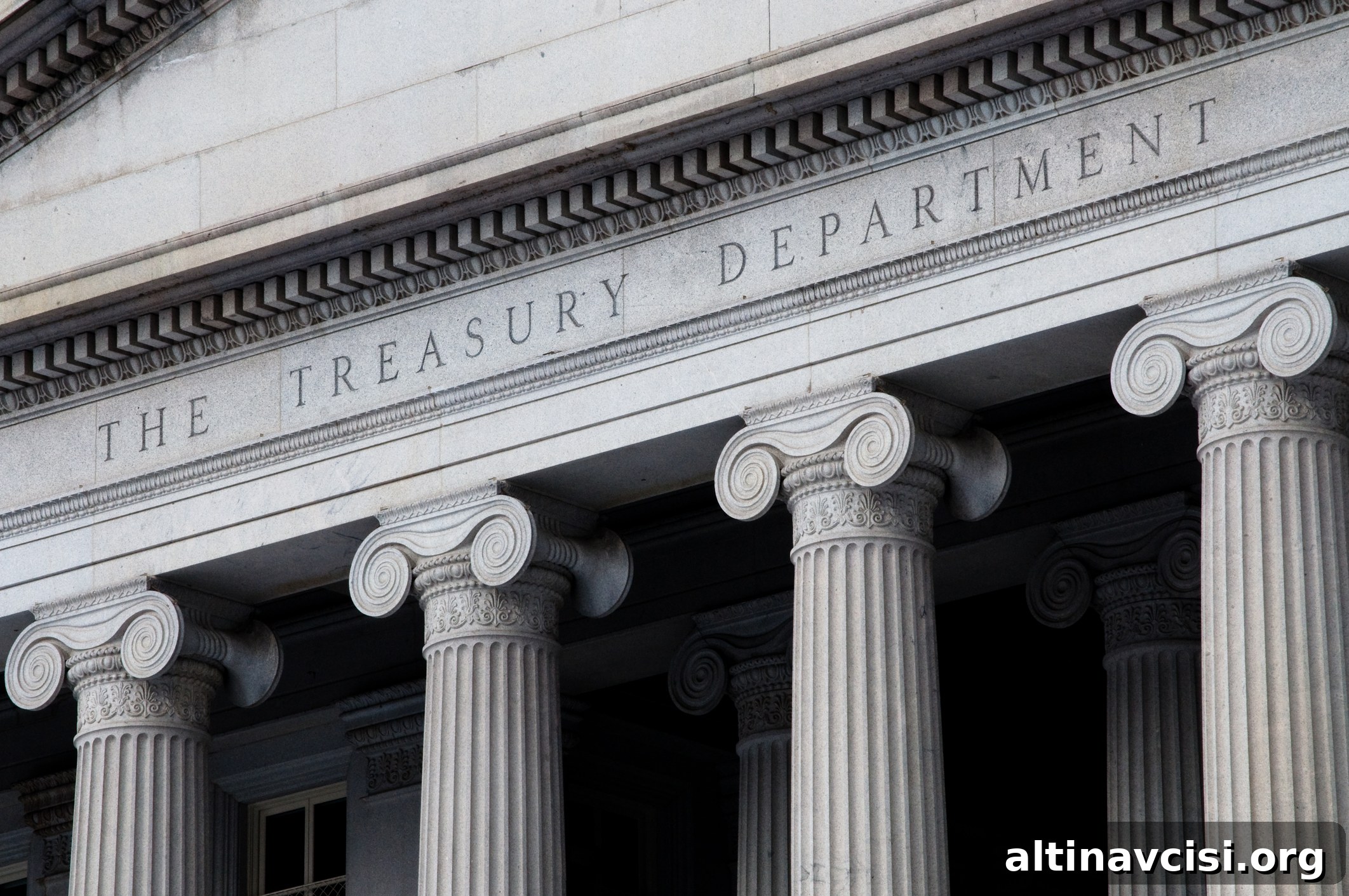
Treasury yields fell notably on Tuesday as U.S. markets reopened after the holiday weekend, following President Trump’s announcement that he would delay the immediate implementation of certain proposed import tariffs.
Investors reacted by bidding up Treasuries, pushing the 10-year yield down about 5.6 basis points to 4.574% and the 30-year yield lower by around 5.9 basis points to 4.801%.
The move reflected an early-market sense of relief that an abrupt shift in trade policy had been postponed, but analysts cautioned that the situation remains uncertain. Different forecasting firms have reached differing conclusions about whether the delay signals a permanent change of course or a temporary tactical pause.
For example, Jim Reid of Deutsche Bank argued that the delay could indicate a preference to use tariff announcements as a bargaining tool rather than to impose broad measures immediately. In that view, tariffs become part of a negotiation strategy designed to extract concessions from trading partners or to influence trade talks without triggering sudden market disruptions.
By contrast, economic research firm Capital Economics warned that significant tariffs could still be implemented later, projecting a higher probability that levies will be introduced by the second quarter of 2025. Their scenario includes the possibility of a blanket tariff of about 10% on many imports, along with much larger duties—potentially up to 60%—targeting goods imported from China. Such measures, if enacted, would have wide-ranging implications for global trade flows, corporate margins and inflation expectations.
These divergent views helped to shape a narrative of persistent market uncertainty. In the short term, traders appear to have interpreted the delay as a positive for fixed income, prompting a modest rally in Treasuries. That rally narrowed yields, reflecting an increased demand for government paper as investors reassessed the near-term outlook for trade policy and its implications for growth and inflation.
But longer-term investors and strategists remain cautious. If tariffs are ultimately imposed at the scale suggested by some forecasts, the effects could be stagflationary—raising input costs for businesses while weighing on global economic activity. Such an outcome would likely influence central-bank thinking and could push yields higher over time, offsetting the relief seen during the initial market response.
In addition to the tariff debate, market participants are watching for other signals that could influence Treasury yields, including economic data releases, corporate earnings, and statements from policymakers. Each of these factors will contribute to how investors price the risks associated with trade policy uncertainty and its potential effect on growth and inflation trends.
Overall, Tuesday’s decline in yields reflected immediate market relief at the delay in tariff implementation, but analysts emphasize that the underlying strategic intent and future policy steps remain unresolved. This leaves investors balancing a short-term easing of risk premia against the prospect of more disruptive tariff measures later, should political or economic conditions prompt a renewed push for tougher trade barriers.