Silver Rebound Accelerates at Twice Gold’s Pace


Last verified: November 27, 2026
On Friday, November 27, 2026, silver staged a notable rebound that narrowed the gold-silver ratio to roughly 83 from about 87 at Tuesday’s close. Silver gained roughly 5.5% while gold rose approximately 2%, a pattern that underlines silver’s greater volatility and a rebound driven largely by positioning and market sentiment. This move does not, on its own, indicate a durable change in trend: the Federal Reserve outlook has not materially shifted. As of 8:40 a.m. ET, gold was trading near $3,645 and silver near $44.
Key takeaways
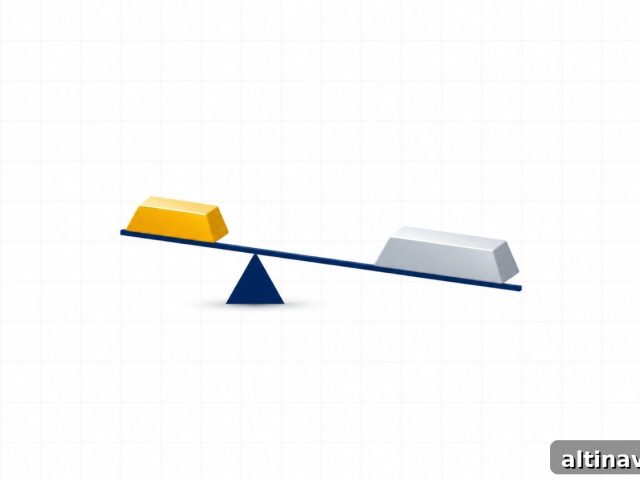
- The gold-silver ratio, the number of silver ounces required to purchase one ounce of gold, fell to about 83 on Friday from about 87 on Tuesday.
- Historical analysis from the CME Group shows silver tends to outperform in strong expansions and lag during economic stress, because much of silver demand is industrial.
- Futures markets price in roughly a 99% chance of a December Fed rate hike, so Friday’s price action reflects market positioning and sentiment more than an unexpected policy shift.
What does a falling gold-silver ratio mean?
The gold-silver ratio measures how many ounces of silver are needed to buy one ounce of gold. When the ratio falls, silver is gaining relative to gold. That change reflects relative value between the two metals rather than whether either metal is objectively cheap in dollar terms. Both gold and silver prices can be rising while the ratio narrows; the ratio simply communicates their price relationship.
CME Group research (August 17, 2022) shows the ratio has ranged from about 30 at the 2011 peak to roughly 120 in 2020. At approximately 83, the recent reading sits well within that historical span. The latest swing is relatively modest: the ratio moved from about 82 on November 16 to roughly 87 on November 24 after silver fell about 13% and gold around 8%. Friday’s rebound recovered roughly three-quarters of that earlier climb, signaling a short-term correction rather than an obvious regime change.

The Edge Every Investor Needs
Smarter precious metals investing starts here. The Nuggets Newsletter delivers market insights, Fed updates, global trends, and educational content.
Why did the silver rebound outrun gold on Friday?
Silver’s stronger bounce reflected both its larger prior decline and short-covering activity. Market commentators pointed to calmer equity markets and covering of bearish positions as primary drivers. Reports from November 27 noted that moves in Chinese policy signaling support for its stock market lifted global sentiment, and early trading showed silver rising sharply after midweek lows near $38.
Several analysts in India described the rebound as expected after the sell-off. Observers noted that open interest on India’s MCX exchange declined even as prices climbed — a pattern consistent with traders closing short positions. Those dynamics can accelerate a rally in a metal that had fallen more deeply than gold in recent sessions.
Does a falling ratio signal a lasting trend?
A lower gold-silver ratio does not, by itself, establish a lasting trend. The CME Group’s research explains that silver’s price cycles are more sensitive to economic expansions and contractions because a large share of silver demand comes from industry. According to the Silver Institute’s World Silver Survey 2026, industrial use accounted for about 58% of silver demand in 2025—roughly 657.4 million of 1.13 billion ounces—so silver responds both to investor appetite and to real economic activity.
Three points counsel caution before declaring a durable turnaround: first, the 10-year Treasury yield had rebounded toward the high 4% range as stocks recovered, which can raise the opportunity cost of holding non-yielding metals. Second, CME’s FedWatch tool shows markets were pricing in about a 99% probability of a quarter-point rate increase at the December Fed meeting, so policy expectations remain restrictive. Third, some strategists warned the move could be influenced by thin holiday trading around Thanksgiving and might not persist once normal volumes return.
Recent intramonth history illustrates how quickly the ratio can swing: silver outperformed gold after the October CPI report in early November, pushing the ratio near 77 on November 11, yet it moved back toward 87 by November 24. That volatility highlights why a single day’s action rarely changes the longer-term picture.
How will owners know if the silver rebound lasts?
Two developments will provide clearer evidence. First, a return to full U.S. trading on Monday, November 30, should reveal whether the rebound holds once liquidity normalizes. Thin holiday sessions can produce exaggerated moves that reverse quickly. Second, the Federal Reserve’s policy decision on December 8–9 will shape the path for yields and risk assets: a surprise in either direction could reinforce or undo the recent dynamics.
Until those events unfold, the gold-silver ratio remains a snapshot of relative value rather than a definitive directional signal. Owners should watch price action across both metals, open interest and positioning indicators, and macro drivers such as yields and industrial demand to assess whether silver’s bounce has staying power.
Stay On Top of Gold & Silver Prices
Get important market alerts sent straight to your inbox.
SOURCES
1. CME Group — What Makes Silver Prices Outperform, or Trail, Gold (August 17, 2022)
2. ActionForex — Stocks and Metals Rally as China Lifts Sentiment, but FX Rebound Defies Monthly Trend (November 27, 2026)
3. Business Standard — Gold, silver prices extend rebound on strong buying at lower levels (November 27, 2026)
4. Silver Institute — World Silver Survey 2026 press release (April 15, 2026)
5. CNBC — Market updates covering late November 2026
Disclaimer: This article is for informational purposes only and does not constitute investment advice. Past performance is not indicative of future results. Always consult a qualified financial advisor before making investment decisions.
You May Also Like:
- Banks Test a New Way to Use Physical Gold as Collateral
- Swiss Gold Tariff Exemption: What the U.S. Proposal Says
- TD Securities Gold Forecast: $5,000 in Late 2027?
- PCE Inflation at 3.8%: Gold and Silver Face Different Tests
- U.S. Money Supply Adds $1.3 Trillion in a Year
- China Gold Imports: What the Reported Record Means
- Natixis Gold Forecast: $3,340 Call vs. Central-Bank Data
- Gold and Silver Rebound as Dollar Eases: Owner Takeaways
Popular Topics
Picked from the archive
-
01
 Topics
Gold Price Drops Below $3,700 as Four Support Levels Break
-
02
Topics
Consumer Confidence Falls Again, Gold Sends Different Signal
-
03
Topics
May 2026 Gold Outlook: Why Institutions Still Forecast $5,000
-
04
Topics
Gold Prices Moved on Iran News — Iran Was Not the Driver
-
05
Topics
Gold Price Up 1.5% as ADP, ISM and Beige Book Weigh on Fed
-
06
Topics
China Moves Gold Reserves After 20-Month Buying Spree
-
07
Topics
Silver Price Drops 7% Since Friday Despite Lower Treasury Yields
-
08
Topics
Gold Nears $4,700, Silver Above $69: Markets Eye Friday Speech