Gold Bar Prices by Size: From 1 Gram to 400 Ounces
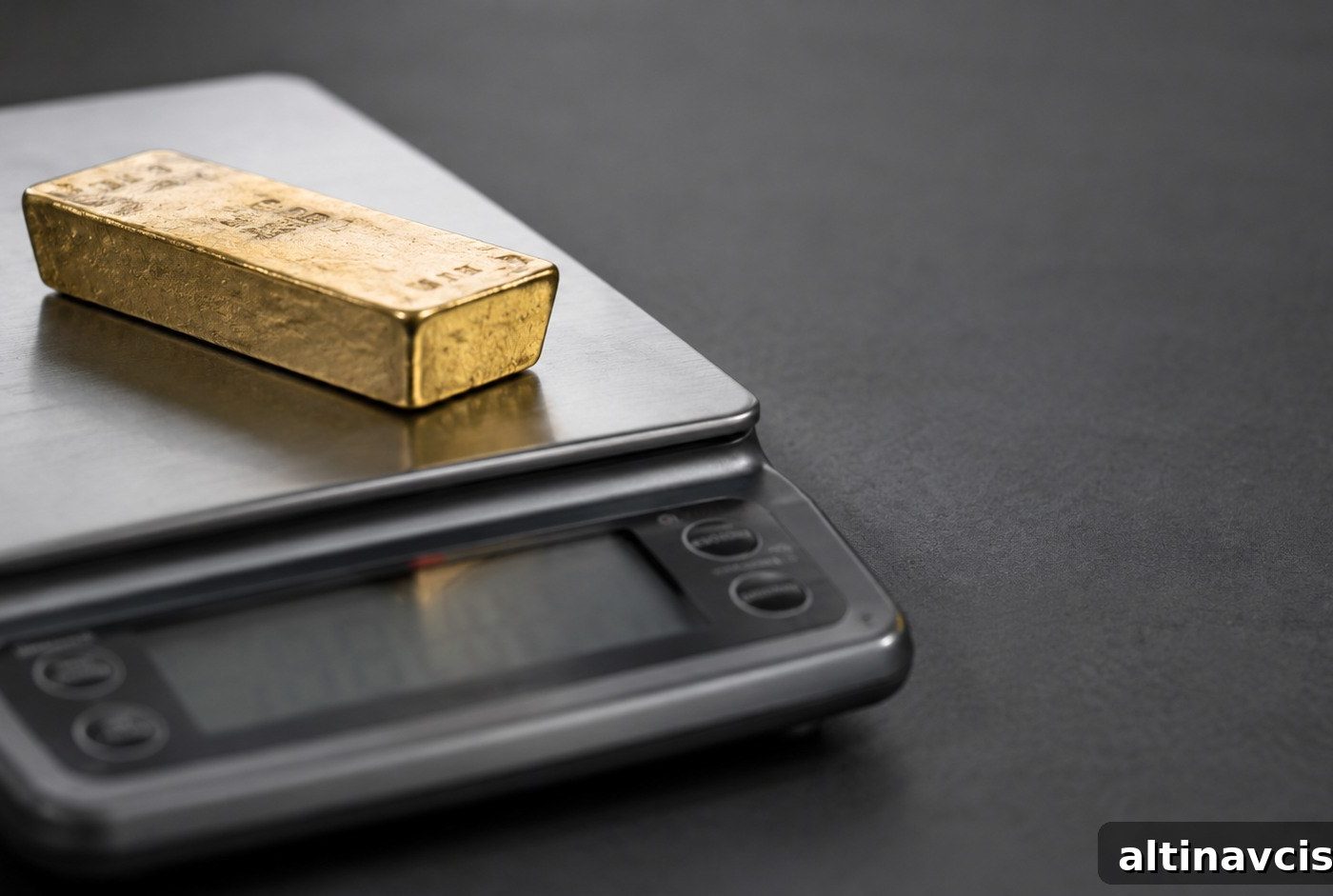
A gold bar’s intrinsic value is simply its weight in fine gold multiplied by the current gold price per troy ounce. To find a bar’s metal value, convert its weight to troy ounces and multiply by the live spot price. For example, a one-kilogram bar contains 32.150747 troy ounces. At $4,339.88 per troy ounce, that equals about $139,530 in metal value. A one-gram bar contains 0.032151 troy ounces, worth roughly $140 at the same price.
That is the core calculation. The reason this question can seem complicated is that refiners produce many standard sizes, and the price you pay to a dealer rarely equals the pure metal value—there is usually a premium for fabrication and distribution.
Key Takeaways:
- A gold bar’s metal value = its fine gold content in troy ounces × the current gold price per troy ounce. Nothing else determines the metal value.
- One troy ounce = 31.1035 grams, not 28.35 grams. Using a common (avoirdupois) ounce instead of a troy ounce overstates gold content by about 9.7%.
- Bar weights are fixed; gold prices move constantly. Even typical weekly moves can shift the dollar value of a large bar by thousands of dollars.
- Smaller bars cost more per ounce because mints charge fixed fabrication costs per unit, not per ounce.
- Size affects storage: small bars are easy to keep at home, while large bars require professional custody and insurance.
What actually determines a gold bar’s value?
Only two factors determine a bar’s metal value: its fine gold content (measured in troy ounces) and the current gold price per troy ounce. All market quotes and dealer listings use the troy ounce for precious metals. The National Institute of Standards and Technology defines the troy ounce as 31.1034768 grams; confusing it with the 28.35-gram avoirdupois ounce will produce a significant error.
Fineness—how pure the gold is—matters especially for large wholesale bars. The London Bullion Market Association (LBMA) Good Delivery Rules (2026 edition) require a minimum fineness of 995 parts per thousand for the large interbank bars and measure those bars by fine gold content rather than gross weight. Retail bars from reputable refiners are typically 999.9 fine. Since metal value is settled on fine content, two bars with the same gross weight but different fineness will have different values.
The Knowledge That Changes Everything

Two essential guides — yours free. Learn why gold matters and why fiat currencies repeatedly lose purchasing power.
How much is a gold bar worth, by size?
The table below lists common bar and coin sizes, their exact troy ounce content, and the metal value at a sample gold price. The grams and troy ounce columns are constants; the dollar values change with the spot price and should be recalculated whenever you need an up-to-date figure.
| Bar or coin size | Grams | Troy ounces | Metal value at $4,339.88/oz |
|---|---|---|---|
| 1 gram | 1 | 0.032151 | $139.53 |
| 2.5 gram | 2.5 | 0.080377 | $348.83 |
| 5 gram | 5 | 0.160754 | $697.65 |
| 10 gram | 10 | 0.321507 | $1,395.30 |
| 1/10 troy oz | 3.11 | 0.100000 | $433.99 |
| 20 gram | 20 | 0.643015 | $2,790.60 |
| 1 troy oz | 31.10 | 1.000000 | $4,339.88 |
| 50 gram | 50 | 1.607537 | $6,976.51 |
| 100 gram | 100 | 3.215075 | $13,953.02 |
| 10 troy oz | 311.03 | 10.000000 | $43,398.75 |
| 1 kilo | 1,000 | 32.150747 | $139,530.22 |
| 400 troy oz (Good Delivery) | 12,441 | 400.000000 | $1,735,950.00 |
To update any dollar value, multiply the troy ounce figure by the current spot price. The troy ounce column uses six decimals so your calculation reproduces the dollar figures exactly. For example, a 100 gram bar is always 3.215075 troy ounces: at $4,000/oz it contains $12,860 of metal; at $4,500/oz it contains $14,468.
The 400-troy-ounce Good Delivery bar shown at the bottom is the wholesale unit (about 12.4 kg of fine gold). Retail buyers rarely handle these bars; the international gold price itself is most directly tied to this wholesale bar. Note that under LBMA rules the weight band for these bars refers to fine gold content, so a bar with the minimum permitted fineness weighs slightly more on a scale than the fine ounce figure alone suggests.
Why do bar prices move so much?
Bar weights are constant while the gold price fluctuates continuously. Every dollar figure attached to a specific bar is therefore time-sensitive. In the 56 days ending 2 September 2026, the median absolute seven-day move in gold was 2.21%; the 90th percentile seven-day move was 7.09%. For a one-kilogram bar, a typical week can change metal value by about $3,100, while an unusually volatile week can move it by nearly $9,900.
The practical takeaway: keep the troy ounce column in mind and recalculate the dollar column whenever you need an exact current value.
What does a fixed budget actually buy?
Many buyers think in terms of dollars rather than bars. The table below shows how much gold a given budget would buy at the sample price, expressed in troy ounces and grams. These are metal-only amounts and exclude dealer premium.
| Budget | Troy ounces of gold | Grams of gold |
|---|---|---|
| $100 | 0.0230 | 0.72 |
| $500 | 0.1152 | 3.58 |
| $1,000 | 0.2304 | 7.17 |
| $5,000 | 1.1521 | 35.83 |
At metal value, $1,000 buys about 7.17 grams of gold—between the standard 5 g and 10 g bar sizes—while $5,000 buys slightly more than one troy ounce. These figures explain why gram bars and fractional coins exist: they match the budgets most buyers have available.
Why doesn’t the metal value match the price you pay?
Gold never reaches a buyer as raw metal; it is stamped, assayed, packaged and distributed. Those manufacturing and distribution costs are added on top of the metal value as a premium. Because many of these costs are fixed per unit, not per ounce, smaller bars and fractional coins carry a higher premium per ounce than larger bars.
That premium creates a trade-off: smaller units cost more per ounce but give the owner flexibility to sell part of a holding; larger bars are cheaper per ounce but are harder to divide when selling. Coins often cost more per ounce than similarly weighted bars because striking and minting add extra fabrication work.
Which size makes sense at which budget?
Under about $500, gram bars and fractional coins are the practical entry points despite their higher percentage premiums. Between roughly $1,000 and $10,000, sizes from ten grams up through one troy ounce offer markedly better premium efficiency while remaining easy to sell in single units. Above about $50,000, ten-ounce and kilo bars become materially more cost-efficient, and the focus shifts from purchase price to secure custody and insurance.
Where does each size need to be stored?
Storage is as important as price. Small gram bars can be kept in a locked drawer or home safe; homeowner policies often cover only a few thousand dollars in precious metals, so very small holdings typically remain economical at home. A single one-kilo bar, however, contains a large sum of value—well above typical homeowner insurance limits—so it becomes a custody issue. For high-value items, ask who holds the bar, whether the vault assigns specific serial-numbered bars, whether independent audits occur, and whether insurance covers full replacement value.
Home storage avoids counterparty risk because you physically possess the metal; professional storage replaces that with institutional protection against theft, fire, and other risks, backed by insurance and auditing. Each approach has trade-offs.
Can you get large-bar pricing at a small-bar budget?
Yes—through allocated vault programs that keep metal in wholesale-sized bars while issuing ownership in small, purchasable increments. Because the metal remains in large bars, per-ounce premiums can be close to wholesale levels even when you buy small amounts. The trade-off is that you typically cannot hold the physical metal yourself; ownership is represented by an allocation in a vault.
Whatever route you choose, the underlying arithmetic remains constant: a bar’s value equals its fine gold weight, quoted in troy ounces, multiplied by the market price. That calculation predates modern currencies and rests on physical quantity rather than promises.
Stay On Top of Gold & Silver Prices
Get important market alerts sent straight to your inbox.
People Also Asked
A one-kilogram bar contains 32.150747 troy ounces. At $4,339.88 per troy ounce it contains about $139,530 of metal. Multiply 32.150747 by the current gold price for an up-to-date value.
One gram is the most widely available small bar size (0.032151 troy ounces). Half-gram bars exist but are less common. Fractional coins such as 1/10 troy ounce are also popular entry points.
At $4,339.88 per troy ounce, $1,000 buys about 0.2304 troy ounces or 7.17 grams at metal value. Dealer premiums will slightly reduce the physical amount you receive.
Because minting, assaying, and packaging costs are charged per coin. A 1/10 ounce coin requires nearly the same work as a one-ounce coin but contains only one-tenth the metal, so those fixed costs raise the per-ounce price.
Nearly. The 400-troy-ounce Good Delivery bar is the wholesale unit most closely tied to the market spot price. LBMA Good Delivery Rules specify 350–430 fine ounces and a minimum fineness of 995.0 parts per thousand.
Brand does not change the metal content and therefore does not alter intrinsic metal value. However, bars from well-known refiners resell more easily and may fetch better prices in secondary markets.
SOURCES
1. London Bullion Market Association — Good Delivery Rules: Technical Specifications (2026 edition; accessed 2 September 2026).
2. National Institute of Standards and Technology — Conversion Factors for Precious Metal Sales (revised March 2015; accessed 2 September 2026).
3. Gold price reference recorded 2 September 2026: $4,339.88 per troy ounce.
Disclaimer: This article is informational only and is not investment advice. Past performance does not predict future results. Consult a qualified financial advisor before making investment decisions.
You May Also Like:
- What Happens to Your Gold If Your Storage Company Goes Bankrupt?
- Silver Price Prediction: One Bank Cut Its Target 30%
- Will Gold Fall Further in 2026? Institutional Target Revisions
- Allocated Silver vs SLV: Institutional Redemption Issues
- IRS Rules for Precious Metals IRAs in 2026
- Why Your Pension Can Own Gold and Your 401(k) Still Can’t
- Central Bank Gold Custody: Where Nations Store Gold
- Permanent Portfolio: Harry Browne’s 25% Gold Rule
- Australian Gold Kangaroo: A Bullion Coin Backed by Law
Popular Topics
Picked from the archive
-
01
 Topics
Gold Technical Analysis: A Complete Investor’s Guide
-
02
Topics
Is Gold Jewelry a Smart Investment? Common Buyer Mistakes
-
03
Topics
Why Investors Are Buying Gold After Today’s Price Drop
-
04
Topics
Must You Report Gold in Foreign Vaults? FBAR and FATCA
-
05
Topics
How Gold Prices Are Determined: East-West Market Forces
-
06
Topics
Why Silver Dropped Three Times More Than Gold: The PPI Story
-
07
Topics
Silver Demand Across Industry, Jewelry and Investment
-
08
Topics
Why Gold Falling Below $4,400 Did Not Rattle Wall Street