Gold Rises to 3-Month High as Oil Falls Before Iran Sanctions
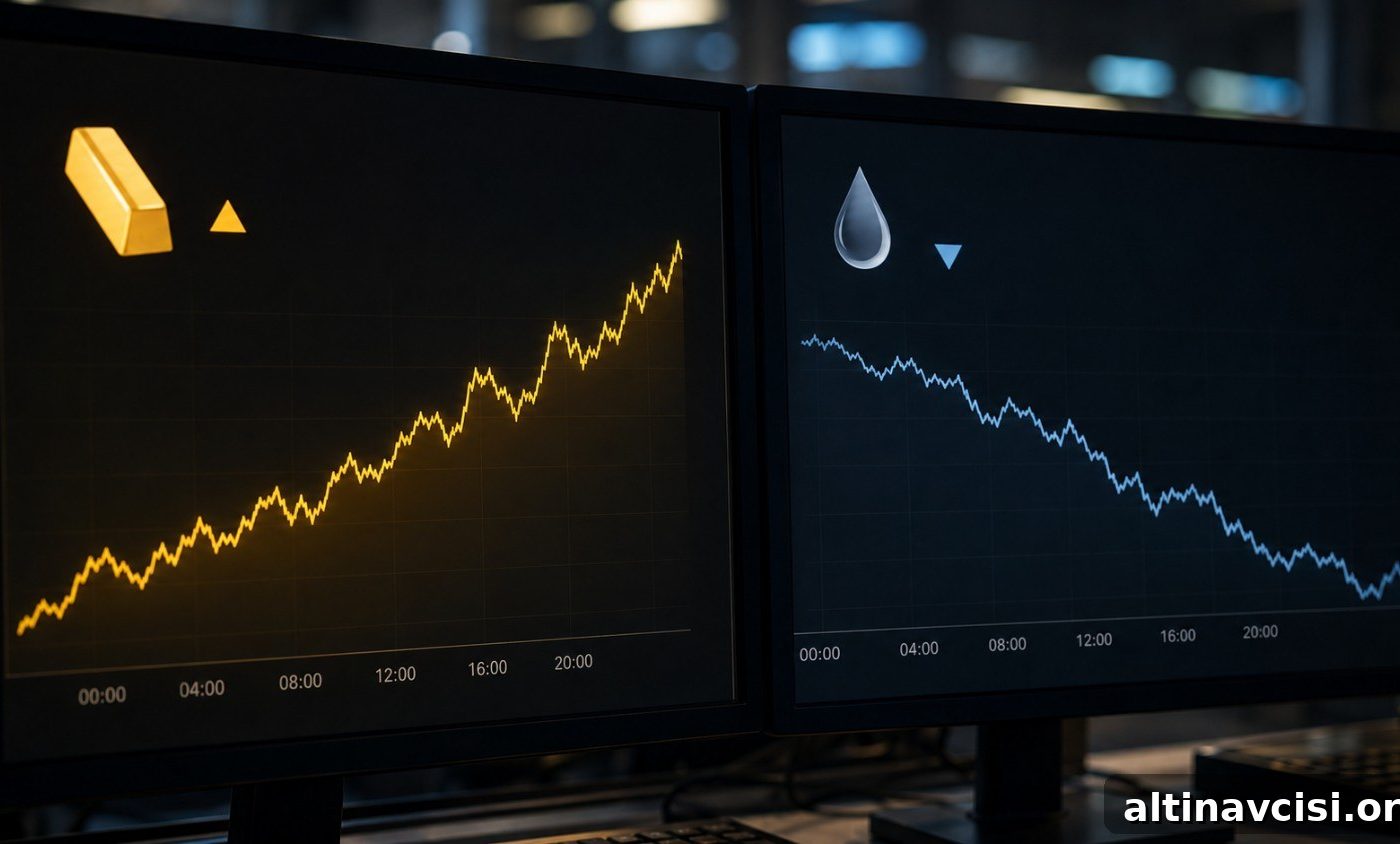
In a few hours, the U.S. Treasury will try to redefine how the world trades with Iran. Markets, however, are already responding to expectations rather than waiting for the details. Gold, silver and oil are moving — and not in the way you might expect given the headlines about tougher sanctions.
Today’s market action shows a clear divergence: oil is slipping while gold is climbing. That split is the central story for traders and investors watching the announcement.
What Are Gold and Silver Prices Doing Today?
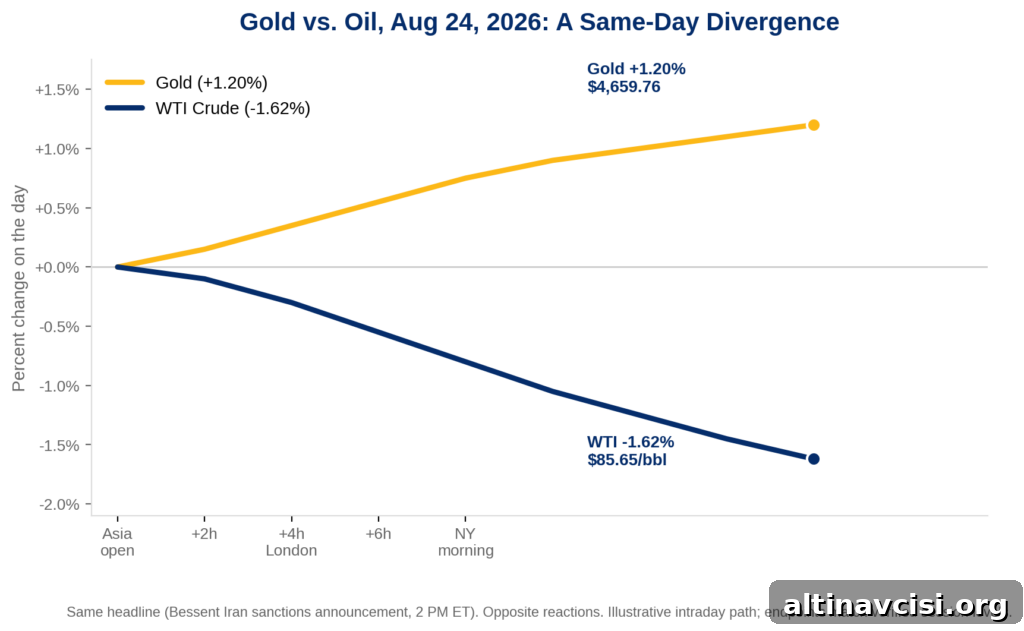
This morning, gold is trading near $4,659.76 per ounce, up about 1.2% on the day and at its strongest level in roughly three months. Silver has risen to about $69.36, up roughly 0.45% after an earlier dip. The gold-to-silver ratio sits near 67.18, reflecting gold’s stronger gain relative to silver in this session.
By contrast, crude oil is moving lower. West Texas Intermediate (WTI) is down roughly 1.6% to about $85.65 per barrel, and Brent is down roughly 1.4% near $93.09. Historically, a Middle East escalation tends to push both oil and gold higher; today’s opposite moves highlight two different forces at work.
What Is the Treasury Announcing This Afternoon?
U.S. Treasury Secretary Scott Bessent is scheduled to hold a press briefing at 2:00 PM ET to unveil a new package of sanctions targeting Iran, a plan he has described publicly as “the toughest sanctions in history.” In recent statements he framed the effort as an “economic D-Day,” designed to isolate any country that continues trading with Tehran — including large buyers of Iranian oil.
At the moment, markets are trading on expectations and rhetoric, not on the detailed text of the measures. That distinction matters: prices can move ahead of official action because traders anticipate the likely effects, or because they judge that most of the impact is already priced in.

The Edge Every Investor Needs
Smarter precious-metals investing starts with timely insight. The Nuggets newsletter delivers market analysis, policy updates and educational content to help you make informed decisions.
Subscribe for concise market alerts and commentary on gold, silver and macro drivers. (Subscription form removed for privacy and security.)
Why Is Oil Falling Ahead of Tougher Iran Sanctions?
If traders expected the new sanctions to sharply reduce Iranian oil supply, crude would typically rally into the announcement. Instead, oil is down, suggesting the market is discounting the potential supply shock. Traders seem to be signaling either skepticism that the measures will bite as hard as the rhetoric suggests, or the view that the market has already absorbed most of the risk during a week of escalating warnings.
Treasury Secretary Bessent himself has warned that oil markets may be underestimating the economic pressure intended by the sanctions. From his perspective, crude prices are not fully reflecting the risk the Treasury aims to create. How that gap resolves will influence oil, but it does not explain why gold has risen today.
What Is Driving Gold Higher Today?
Gold’s advance today is being driven largely by a separate, more persistent factor: an expanded Treasury buyback program for longer-dated government bonds. Over the past week the U.S. Treasury has stepped up repurchases of long-term debt, a move intended to support market functioning and to ease long-term borrowing costs after weak auction demand. Those buybacks have put downward pressure on long-end yields and weakened the dollar — both supportive for gold.
A weaker dollar reduces the local-currency cost of gold for foreign buyers, and lower real yields reduce the opportunity cost of holding a non-yielding asset like gold. That fiscal-market interaction is a more durable influence on precious metals than the immediate headlines about sanctions.
Earlier in the year, geopolitical escalation produced a different result: oil spikes raised inflation expectations, pushing real yields higher and temporarily weighing on gold. Today’s pattern — oil down, gold up — shows that the fiscal channel (Treasury intervention and its effect on yields and the dollar) is the dominant driver of gold’s move right now, not battlefield risk.
How the Treasury Buyback Program Links to Gold
The Treasury buyback program is a fiscal tool distinct from Federal Reserve policy. Under the program, the Treasury repurchases its own longer-dated securities while funding operations with short-term bill issuance. The objective is to smooth functioning in the long-end of the market and manage the government’s borrowing costs. Because this is a Treasury operation, it operates independently of the Fed’s interest-rate decisions.
For investors holding gold or silver as part of a long-term allocation, that distinction matters. Monetary policy moves by the Fed can be reversed quickly; fiscal interventions that signal persistent difficulties in auction demand or balance-sheet dynamics can have a longer-lived effect on yields and therefore on precious-metals demand.
What to Watch After the 2 PM Announcement
After the Treasury press conference, focus on two things. First, observe oil’s reaction in the hours that follow. A sharp rise in crude would indicate the market believes sanctions will meaningfully restrict Iranian oil flows; that could trigger another wave of safe-haven buying in gold on top of the fiscal-driven move. A muted oil response would reinforce the market’s current reading: strong rhetoric but limited immediate supply impact.
Second, keep an eye on events later in the week that will influence real yields: a major speech at the Jackson Hole symposium and the upcoming Personal Consumption Expenditures (PCE) inflation release. Both will have more bearing on the direction of real yields — and therefore on gold’s medium-term path — than a single Treasury announcement.
Stay On Top of Gold & Silver Prices
Get concise market alerts delivered to your inbox.
Sign up to receive timely updates on precious-metals markets and macro drivers. (Form and third-party widgets removed.)
SOURCES
1. Gold and silver spot prices, gold-silver ratio – goldsilver.com price charts
2. WTI and Brent crude prices, Aug 24, 2026 – CNBC coverage of oil prices and U.S. sanctions on Iran
3. Bessent press conference timing and “economic D-Day” framing – Reuters via U.S. News reporting
4. Bessent quote on oil-market interpretation – CNBC reporting, Aug 20, 2026
5. Treasury bond buyback program details – GoldSilver commentary on Treasury buybacks
Disclaimer: This article is informational only and does not constitute investment advice. Past performance is not indicative of future results. Consult a qualified financial advisor before making investment decisions.
You May Also Like:
- Gold’s speculative positioning reached a long-term high, but buying was limited.
- Gold and silver hit multi-month highs for related reasons tied to dollar weakness and yields.
- Rising national debt and institutional shifts are shaping longer-term gold narratives.
- Gold and silver can move in opposite directions on the same macro report — understanding the mechanism matters.
- Previous attempts to punish Iran economically produced muted gold responses; details matter.
- Recent gold pullbacks have been linked to Treasury buybacks more than to ETF flows.
Popular Topics
Picked from the archive
-
01
 Topics
Why Gold Prices Rose While the World’s Top Gold Miner Slumped
-
02
Topics
How Real Interest Rates Drive Gold Prices: Investor Guide
-
03
Topics
Silver Slides While Gold Holds as Markets Reduce Risk
-
04
Topics
Use the 50-Day Moving Average to Read Gold and Silver Trends
-
05
Topics
Five Key Reports Shift Gold Prices and September Fed Pivot Odds
-
06
Topics
3 Fed Officials Voted to Hike Rates: What It Means for Gold
-
07
Topics
Gold Near $4,700: Market Chaos May Be a New Floor
-
08
Topics
Gold Price Nears $5,000 as Silver Approaches $100